Rahul Somvanshi
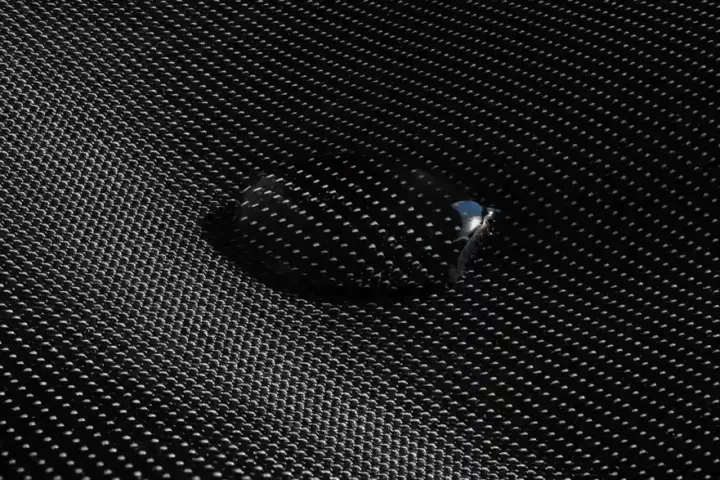
The University of Edinburgh and Max Planck Institute for Polymer Research study could inform low-maintenance solar surfaces that may reduce the need for washing. The researchers found that reducing friction between a particle and a surface can aid removal by a drop. Their work offers a design principle for easy-clean surfaces that could inform solar coatings: particle–surface friction matters alongside water repellency.
The Science Advances paper lists Dr. Abhinav Naga, Franziska Sabath, Prof. Doris Vollmer and Prof. Halim Kusumaatmaja as authors. The team combined confocal microscopy experiments with lattice Boltzmann simulations to study how drops interact with particles. The simulations used ARCHER2 and CIRRUS at EPCC; the research was supported by EPSRC.
The researchers identified at least six droplet–particle interaction scenarios and introduced a dimensionless capillary capture parameter that predicts particle removal across a range of particle and surface properties. The University of Edinburgh release cites previous research estimating global solar-panel dust losses at more than £2 billion annually, mainly from reduced output and cleaning costs. The findings suggest that durable, low-friction hydrophobic coatings could support easy-clean surfaces.
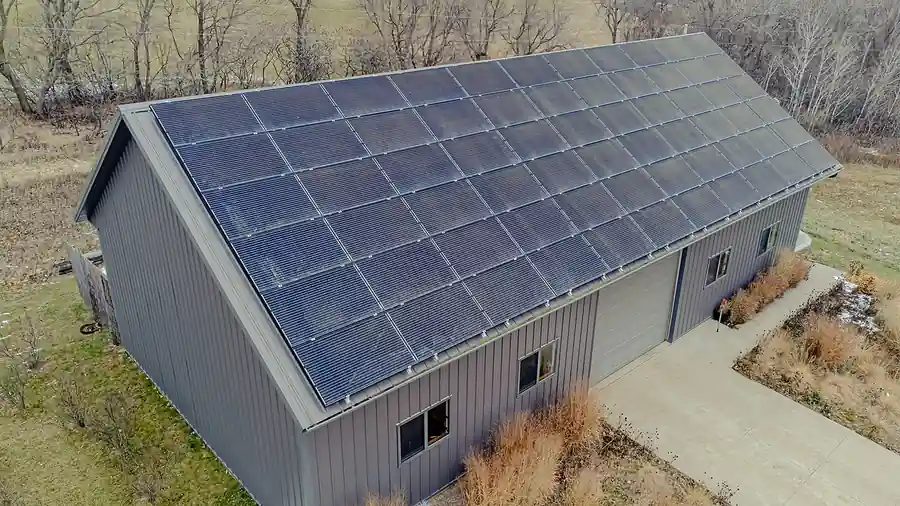
For installers and owners, a possible future benefit is reduced need for panel washing. The team’s findings suggest that reducing particle–surface friction, alongside water repellency, could guide more durable easy-clean coatings. The University of Edinburgh release identifies skyscraper windows and surfaces used to help conserve historic buildings as possible applications.
Why solar panel dust costs over £2 billion annually
The paper states that particulate contaminants decrease solar-panel power output. Dust also creates cleaning costs. The University of Edinburgh release notes that cleaning solid surfaces can require substantial water, energy and detergents. It cites previous research estimating global solar-panel dust losses above £2 billion a year.
Rain offers a natural cleaning opportunity, but a drop does not always carry dust away. Whether removal occurs depends on the interplay of capillary and friction forces as a drop interacts with a particle. The team’s confocal microscopy experiments and lattice Boltzmann simulations examined those interactions.
The result complements work to improve solar performance and lifecycle. Researchers have reported progress on perovskite tandem solar cells, while a separate solar panel recycling pilot explores recovering valuable materials. Easier cleaning adds another design consideration: keeping panels productive through their time in use.
Six ways raindrops remove—or miss—dust particles
The study identified at least six droplet–particle interaction scenarios. They describe different outcomes when a drop collides with a particle on a surface. The researchers also introduced a dimensionless capillary capture parameter that helps predict particle removal across a wide range of particle and surface properties. The authors say the framework provides a basis for designing and optimizing easy-clean surfaces.
The key finding is that reducing friction between dust and the surface is critical to removal. Water repellency alone does not determine removal; particle–surface friction also matters. This suggests that designers should consider low-friction hydrophobic surfaces rather than relying on maximum water repellency alone. The University of Edinburgh release says these surfaces may offer greater durability than superhydrophobic surfaces. More durable low-friction coatings could offer a route to easy-clean surfaces, potentially including solar applications. The release also identifies skyscraper windows and surfaces used to help conserve historic buildings as possible applications.
Karmactive has covered the UK rooftop solar installation record. The coating research may inform future approaches to reducing solar-surface cleaning needs, alongside advances in cell performance, including work on perovskite solar cell efficiency.
By linking particle removal to friction, the study introduces a framework that could inform future assessment of easy-clean surface designs. Its at-least-six interaction scenarios and predictive parameter may inform the design of easy-clean surfaces. Their durability and performance in solar arrays remain to be demonstrated. A possible future benefit for panel owners is less frequent washing, if suitable coatings are developed and validated in real-world solar arrays.