 Rahul Somvanshi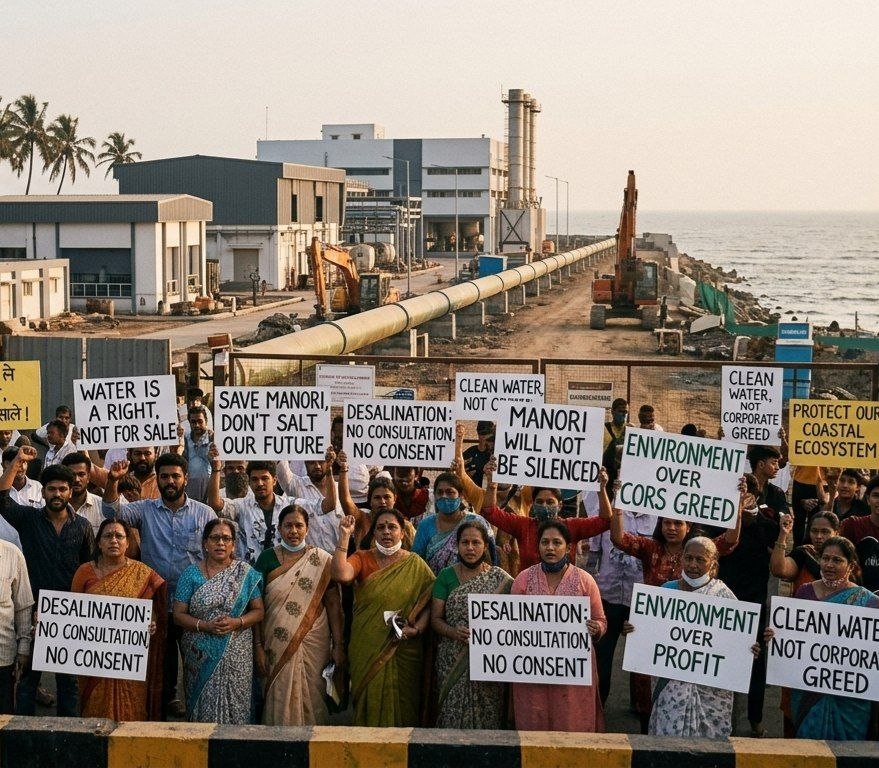
Mumbai is charting a new course for water security with the launch of Maharashtra’s first large-scale seawater desalination plant at Manori in the northern suburbs. The Brihanmumbai Municipal Corporation’s ambitious project marks a significant shift in how the city addresses its chronic water scarcity, moving beyond traditional dam-based strategies to harness the Arabian Sea.
The Manori facility will operate in two phases, with the first producing 200 million litres daily (MLD) by 2029 and a second phase ramping up to 400 MLD by approximately 2030. The initial phase carries an estimated cost of ₹4,007 crore and will be developed on a 12-hectare site with a 20-year operations contract awarded to Israeli technology leader IDE Technologies, which will supply reverse osmosis equipment and handle day-to-day management. Hyderabad-based GVPR Engineers manages the civil construction, with tunnelling contractor Afcons undertaking the seabed work valued at ₹2,241 crore over 45 months.
The project’s infrastructure footprint extends roughly 7 kilometres into the sea through three tunnels totalling roughly 7 kilometres combined and 2.8 metres in diameter, which will draw seawater intake and discharge treated brine. This engineered approach minimizes environmental disruption while serving a sprawling metropolis of over 20 million residents. The Coastal Regulation Zone clearance, secured in April 2026, paves the way for construction to commence.
From a consumer perspective, the water produced will carry an added cost of 17 paise per litre above existing charges—a modest increment that reflects the capital intensity and operational complexity of desalination technology. “All necessary permissions have been received. The full-fledged work on ground will start post-monsoon,” said Abhijit Bangar, Additional Municipal Commissioner of BMC.
The renewable energy component distinguishes Manori from conventional desalination plants. Solar panels, wind turbines, and battery storage will power operations, reducing carbon emissions and aligning with India’s renewable capacity targets. This design choice addresses not only water scarcity but also energy sustainability concerns.
IDE’s Nayan Shah highlighted the technology’s proven track record. “The first 200-MLD phase will account for only around 5 per cent of Mumbai’s current daily water requirement. But that is precisely the point. The project is intended to diversify Mumbai’s water sources rather than replace existing reservoirs,” he noted. The company’s two-decade commitment to operations ensures continuity and technical expertise through the project’s lifecycle.
The Manori facility forms part of BMC’s broader 1,040 MLD water strategy, which incorporates the Gargai dam and a separate Versova desalination plant. Together, these projects aim to provide diversified sources that reduce dependency on the monsoon-fed lakes that historically supply the city. With population growth and climate variability reshaping water availability, the multi-pronged approach reflects pragmatic planning — especially as sea-level rise threatening Mumbai adds urgency to securing alternative water sources.
Industrial Minister Uday Samant situated the project within Maharashtra’s infrastructure ambitions. “The contract was awarded in December 2025 and the project is expected to be completed within four years,” he said, underscoring the state’s commitment to leveraging seawater resources.
The project timeline suggests preliminary tunnel work could begin late 2026 or early 2027, with the desalination facility itself coming online before the 2029 deadline. Parallel construction of the Gargai dam and Versova plant means Mumbai will see water supply enhancements rolling out across multiple years, creating a buffer against supply disruptions.
While desalination remains energy-intensive and costlier than conventional water sourcing, cities worldwide have adopted the technology as climate pressures intensify. For Mumbai, the Manori plant represents a calculated bet on long-term resilience, trading upfront capital expense for independence from increasingly unpredictable freshwater supplies.
Sources: ThePrint, Hindustan Times, Desalination News, Free Press Journal, IDE Technologies, PropNewsTime, Raw News Today, Education Post