 Sonali Tiwary
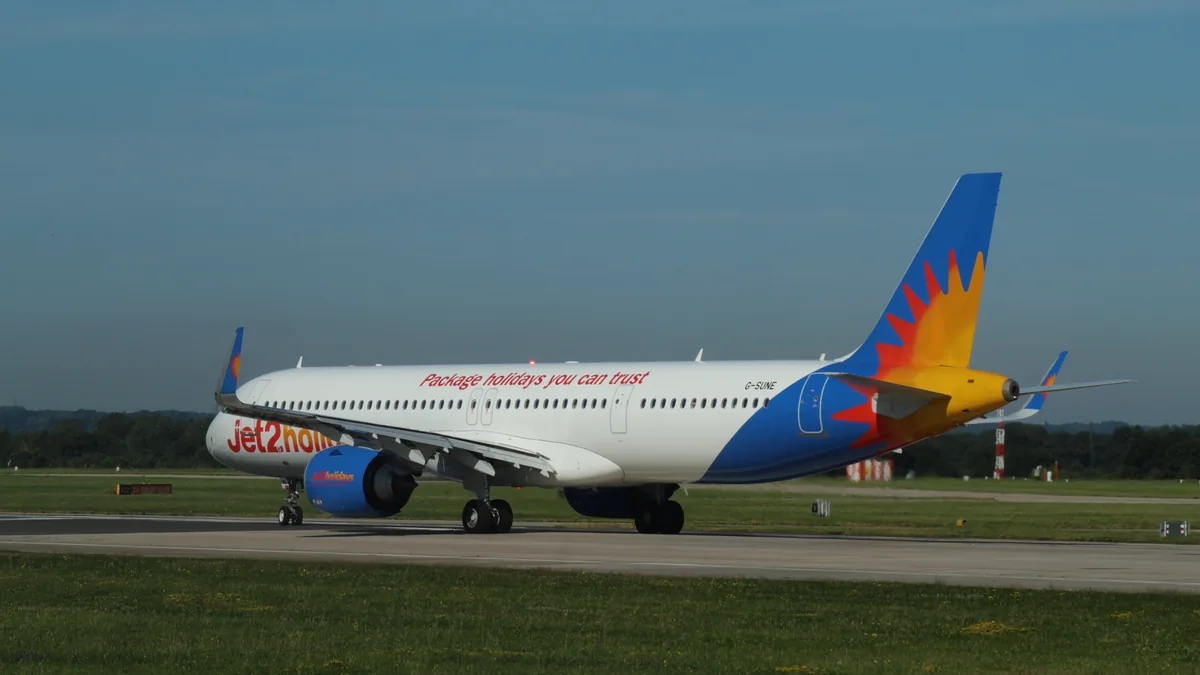
If you have ever watched your phone battery die somewhere over the Atlantic, Jet2’s latest upgrade will feel personal. The airline has begun fitting a new generation of ultra-lightweight seats across its Airbus A321neo fleet, with in-seat power. They are available on the new Kestrel-equipped A321neo aircraft. This is not a premium add-on. Jet2 in-seat power is now a standard feature on the upgraded aircraft.
The seats are called Kestrel seats, built by Mirus Aircraft Seating in Norfolk. The first flight operated Manchester–Tenerife on 20 November. Beyond the charging ports, the design adds up to two inches of knee room compared with the previous generation. The rollout will cover 155 A321neos as they are delivered through 2035.
If you are flying on Jet2’s newest Airbus A321neo aircraft, you can now charge phones and tablets directly from your seat via integrated in-seat power. The ultra-lightweight slimline seats also provide up to two extra inches of knee room.
The new seating saves 420 kg per aircraft. That saving is worth approximately 40 tonnes of fuel and 125 tonnes of CO2 equivalent per aircraft each year. That is a meaningful number for an airline trying to reduce emissions without grounding planes. The refit also shows how small engineering choices, like a curved seat back, can deliver real gains without touching the cabin layout. For more on how airlines are reshaping their networks, see UK airline route changes. For a broader look at how fleets are becoming more efficient, read about commercial fleet efficiency.
Yes, Jet2 has introduced in-seat power on its new Airbus A321neo fleet. Built into its new ultra-lightweight Kestrel seats, the power lets passengers charge phones and tablets during flight, alongside up to two inches of additional legroom.
The rollout will take years to complete across all 155 aircraft. When it is done, it will have quietly removed thousands of tonnes of CO2 from Jet2’s annual footprint. Shorter legs. Charged phones. Fewer emissions. That is a reasonable trade.