 Sonali Tiwary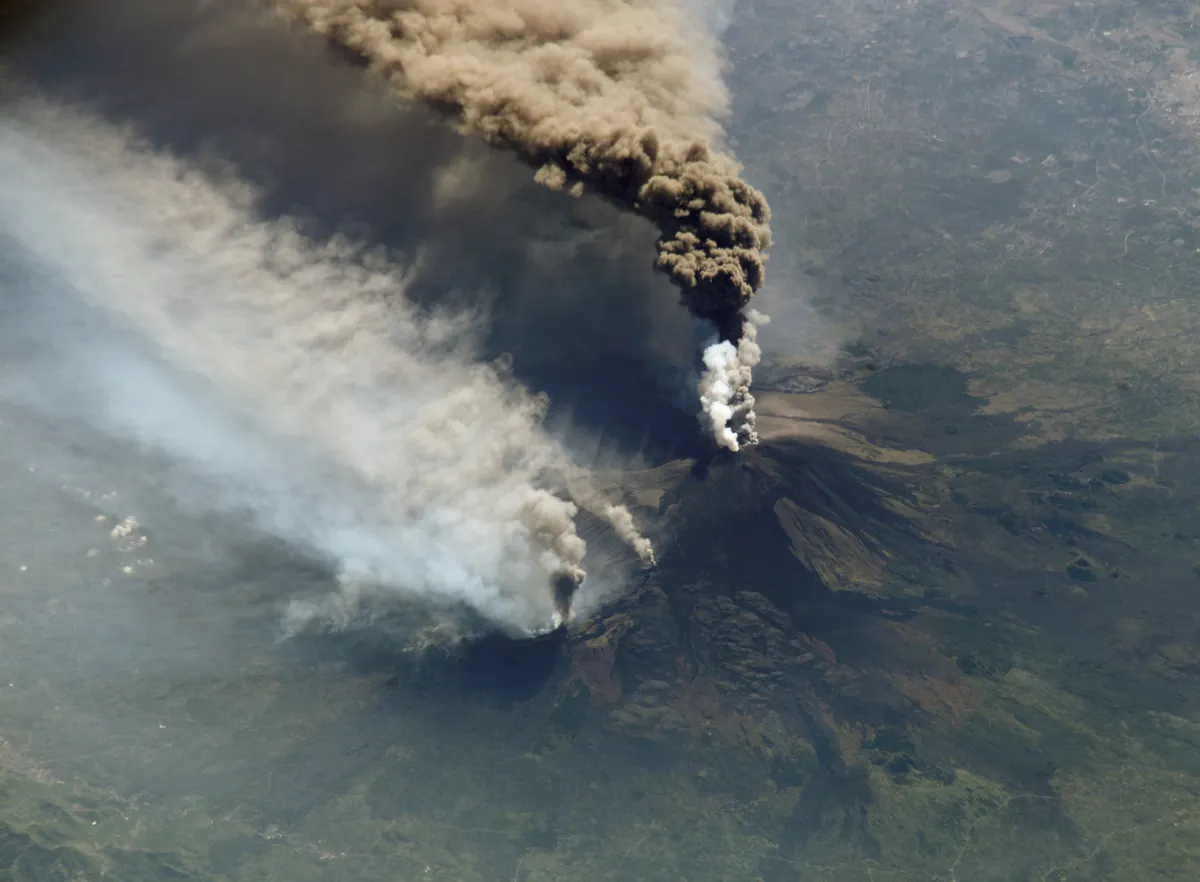
Europe’s most active volcano Mount Etna erupted on August 8, 2026, opening a new eruptive phase from its Southeast Crater that sent volcanic ash to an altitude of 7,300 meters. The eruption triggered the most severe aviation disruption at Catania-Fontanarossa Airport in at least two decades [compared to Indonesia’s Mount Lewotobi eruption which grounded 90 flights], stranding thousands of passengers during the height of the Mediterranean summer holiday season.
Between August 6 and August 12, approximately 1,974 flights were scheduled at Catania airport, of which 630 were diverted to alternative airports, while more than 700 additional flights were canceled entirely. The Italian Civil Aviation Authority (ENAC) confirmed that all arrivals remained suspended.
Thousands of passengers were stranded inside Catania’s terminal for up to four days, with some reporting sleeping on plastic chairs and airport floors. The airport activated its emergency coordination protocols during the extended closure.
The European Union Aviation Safety Agency (EASA) identified volcanic ash as one of aviation’s most serious hazards, with fine silicate particles capable of damaging aircraft engines and abrading windshields. The 1982 British Airways Boeing 747 incident—where all four engines failed after flying through Mount Galunggun’s ash cloud—remains the definitive cautionary precedent for pilots.
The INGV Catania Observatory continued monitoring Etna’s activity through real-time seismic and gas monitoring systems, issuing volcanic ash advisories through the Toulouse Volcanic Ash Advisory Center coordination network.
Catania airport serves as the primary gateway for eastern Sicily’s tourist destinations including Taormina and the Etna archaeological parks. The airport’s closure overlapped with Italy’s ongoing red-alert heatwave, compounding the region’s travel crisis.
Flight operations gradually resumed from August 15, though Etna’s monitoring agencies warn that the current eruptive phase could produce further ash events as Sicily’s heatwave persists.