 Sunita Somvanshi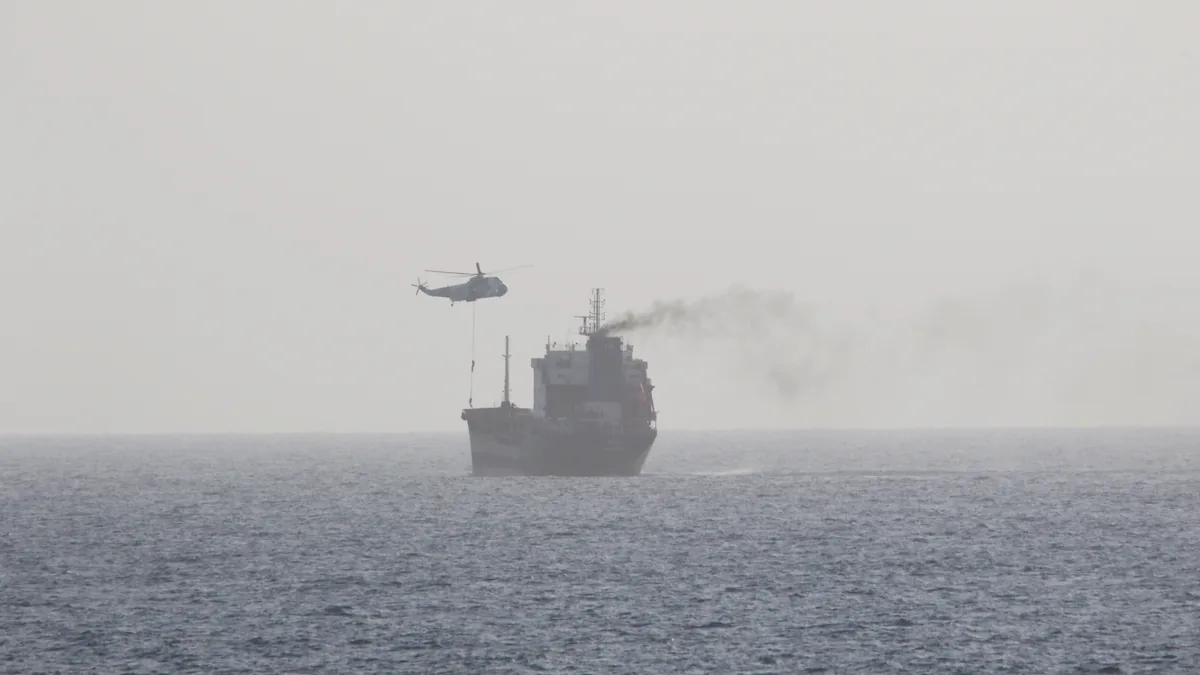
The clearest sign of how serious the Strait of Hormuz situation has become is not in the headline strike numbers. It is in what the ships are doing when they transit the strait — switching off their tracking systems so nobody knows where they are.
In the days following a series of exchanges between Iran’s Islamic Revolutionary Guard Corps and the United States in early September 2026, maritime tracking data indicated that only one oil tanker transited the Strait of Hormuz with its Automatic Identification System switched on during at least one 24-hour period. The rest went dark.
The IRGC claimed responsibility for strikes on 10 vessels — 8 oil tankers and 2 US warships — on September 9, 2026, describing the action as retaliation for US strikes on Iranian tankers. CENTCOM separately announced the destruction of five Iranian crude oil carriers. Jordan’s Ministry of Defence confirmed its air defences intercepted 18 of 20 Iranian ballistic missiles during the exchanges. Independent confirmation of the full scope of IRGC strike claims remains limited.
If you’re watching oil prices, the Strait of Hormuz attacks matter less for supply than for insurance. Ships are going dark — transiting without their tracking systems active. When insurers cannot verify vessel positions, risk premiums rise — a cost that shipping operators can pass through to freight rates, which can eventually affect fuel prices. The attacks have not demonstrably stopped oil flow yet, but the change in shipping behaviour is a warning sign.
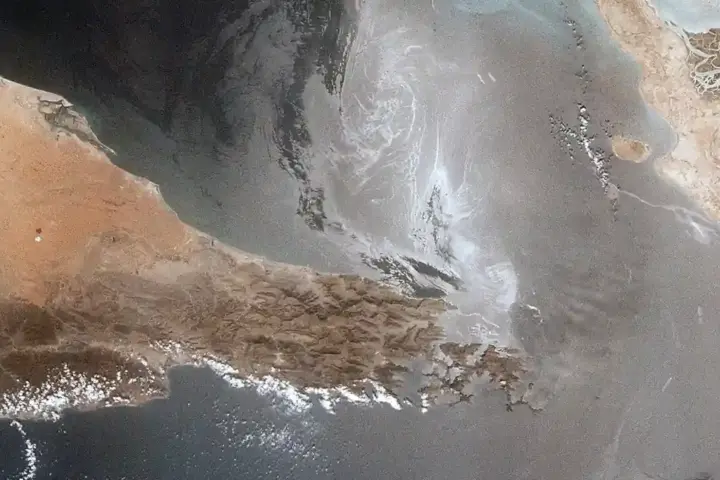
The Strait of Hormuz sits between Iran and the Arabian Peninsula. Approximately one-fifth of the world’s oil — around 20 million barrels per day — passes through it, making it the most important single oil transit chokepoint on the planet. See the latest Hormuz shipping disruption tracker for vessel count updates. Pipeline routes can bypass part of the Strait, but their combined capacity is far below the volume that normally moves through Hormuz. Saudi Arabia and the UAE hold pipeline bypass capacity of roughly 4.7 million barrels per day — a fraction of the daily Hormuz flow.
When tankers switch off AIS tracking, insurers cannot verify a vessel’s position or calculate exposure accurately. The oil itself continues to move — what changes is how much it costs to move it.
How many tankers has Iran attacked in Hormuz?
Iran’s IRGC claimed strikes on 10 vessels — 8 oil tankers and 2 US warships — on September 9, 2026, as retaliation for prior US strikes on Iranian tankers. Independent confirmation is limited. The Strait of Hormuz handles roughly one-fifth of global oil trade, and the escalating exchanges follow a pattern of tit-for-tat strikes that has developed over several weeks.
The Strait of Hormuz remains open. Oil supplies have not been demonstrably cut. What the dark-fleet shift tells you is that normal shipping operations have changed and that the pricing mechanism, not the physical flow, is where you will first see the pressure. Monitor UKMTO advisories and the US Energy Information Administration for updates on shipping flows.