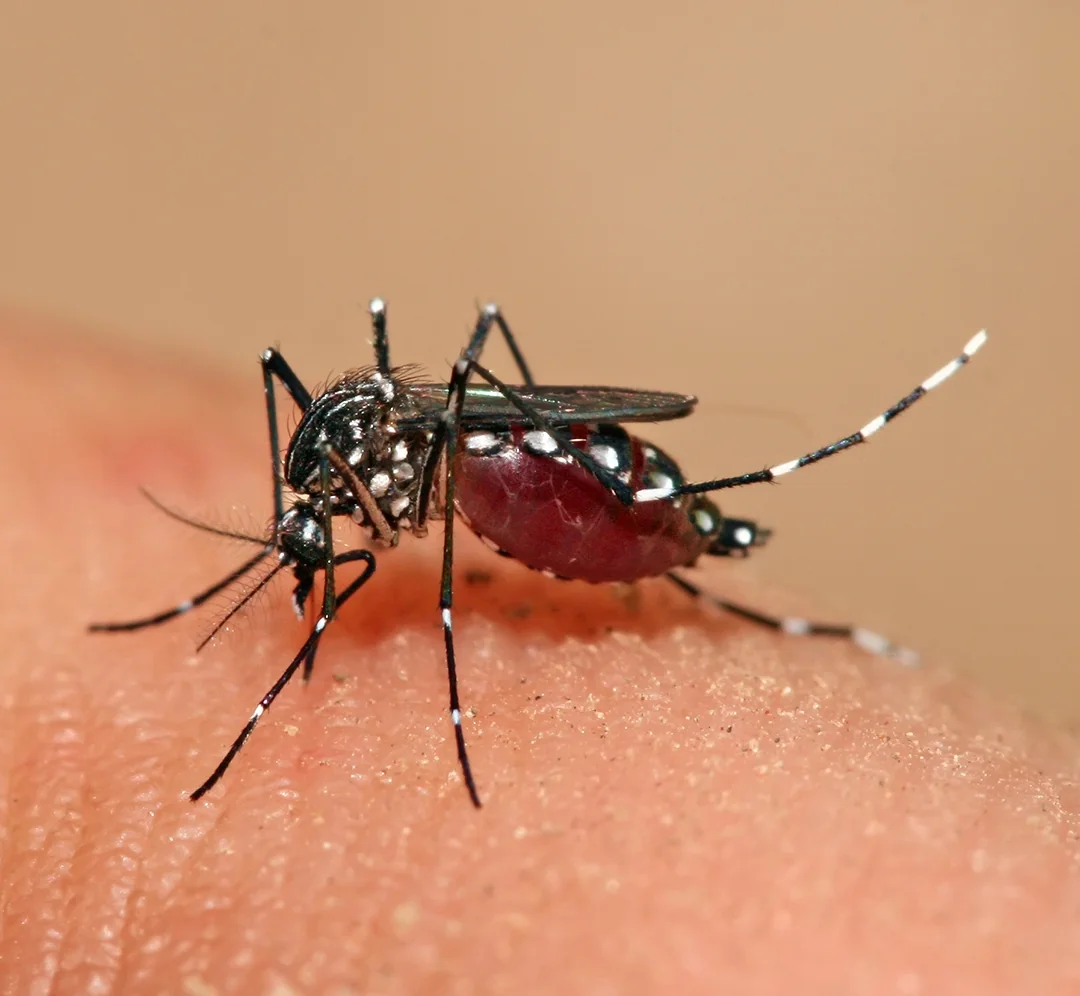
Broward County has confirmed its first locally acquired dengue case of the year, becoming the eighth Florida county to report local transmission during what is already the largest dengue outbreak in continental US history. For South Florida residents, this is a change in geographic reach — not an isolated new case.
The Florida Department of Health in Broward County (DOH-Broward) confirmed the locally acquired case on October 5 and issued a mosquito-borne illness advisory for the area. Florida has logged 252 locally acquired dengue cases in 2026, the largest continental US dengue outbreak in decades. The primary vector is Aedes aegypti, a container-breeding daytime mosquito common across urban South Florida. The outbreak has been concentrated mainly in Hillsborough County, which accounts for 223 of the 252 cases; Broward’s confirmation marks its spread into South Florida.
With locally acquired dengue now confirmed in Broward County, any fever appearing within 14 days of potential mosquito exposure — particularly when accompanied by severe headache, eye pain, or joint aches — requires medical evaluation rather than home rest. Unlike most viral infections, taking aspirin or ibuprofen when dengue is suspected should be avoided, as these medications can increase bleeding risk. Acetaminophen is the recommended fever reducer. Homeowners should promptly drain standing water from all outdoor containers to prevent larvae from maturing near patios and yards.
What’s Spreading — and How
Dengue cannot spread directly between people through casual contact, saliva, or respiratory droplets. Transmission happens only when an infected Aedes mosquito bites a human. Symptoms typically appear within 14 days after being bitten by an infected mosquito, and can include sudden high fever up to 104°F (40°C), severe pain behind the eyes, intense joint and muscle aches sometimes called “breakbone fever,” fatigue, and a mild skin rash.
Earlier coverage of Florida’s dengue situation focused on the Tampa Bay region, where Hillsborough County has driven most of this year’s cases. South Florida’s Broward confirmation involves local transmission — the mosquito population itself is carrying the virus through residential neighborhoods.
Aedes aegypti breeds in small containers rather than ponds or swales. A flower pot saucer, a blocked gutter, or a bottle cap holds enough water for larvae to mature. DOH surveillance notes that repeated tropical moisture plumes through September extended the mosquito breeding window beyond typical seasonal patterns.
Why Florida Keeps Seeing Local Dengue Outbreaks
Year-round warmth, high humidity, and hurricane-season rainfall create near-constant breeding habitat in urban South Florida. When travelers return from dengue-endemic regions — the Caribbean, Central and South America, Southeast Asia — infected mosquitoes that bite them can establish local transmission chains within the same residential block.
DOH-Broward and Broward County Mosquito Control are coordinating active surveillance, prevention, and control efforts. The DOH-Broward website lists current advisories and guidance by area. Bi-weekly arboviral surveillance reports will track whether the Broward case remains isolated or expands to additional cases.
\
\ .karmactive-push-footer { max-width: 720px; margin: 32px auto 0; padding: 22px 24px; border-radius: 14px; background: \#f0f4f8; border: 1px solid \#d8e4ea; text-align: center; font-family: \-apple-system, BlinkMacSystemFont, “Segoe UI”, Roboto, sans-serif; } .karmactive-push-footer h4 { margin: 0 0 6px; font-size: 1.15rem; color: \#102a43; } .karmactive-push-footer p { margin: 0 0 16px; font-size: 0.92rem; color: \#4a5568; line-height: 1.5; } .karmactive-push-actions { display: flex; gap: 10px; justify-content: center; flex-wrap: wrap; } .karmactive-push-btn { display: inline-flex; align-items: center; gap: 6px; min-height: 44px; padding: 10px 20px; border: 0; border-radius: 999px; font-size: 0.92rem; font-weight: 700; cursor: pointer; text-decoration: none; transition: transform 0.15s ease, box-shadow 0.15s ease; } .karmactive-push-btn:hover { transform: translateY(-2px); } .karmactive-push-btn:active { transform: translateY(0); } .karmactive-push-btn.primary { background: \#63b89c; color: \#082032; box-shadow: 0 6px 16px rgba(99, 184, 156, 0.35); } .karmactive-push-btn.secondary { background: \#fff; color: \#102a43; border: 1.5px solid \#d8e4ea; } .karmactive-push-status { margin-top: 12px; font-size: 0.84rem; color: \#5a6e7e; min-height: 1.2em; } @media (max-width: 600px) { .karmactive-push-footer { margin-left: 0; margin-right: 0; border-radius: 10px; padding: 18px 16px; } .karmactive-push-actions { flex-direction: column; } .karmactive-push-btn { width: 100%; justify-content: center; } } \
\
\
\
\
🔔 Enable push notifications
\
Subscribe by email
\
\
\
\
\
(function () {
var btn \= document.getElementById(‘karmactivePushBtn’);
var status \= document.getElementById(‘karmactivePushStatus’);
if (\!btn) return;
function setStatus(msg) {
if (status) status.textContent \= msg;
}
function fallback() {
setStatus(‘Push notifications are not supported in this browser. Try the email option above.’);
}
btn.addEventListener(‘click’, function () {
try {
/\* OneSignal v16+ deferred SDK \*/
if (window.OneSignalDeferred && Array.isArray(window.OneSignalDeferred)) {
setStatus(‘Opening notification prompt…’);
window.OneSignalDeferred.push(function (OneSignal) {
if (OneSignal && OneSignal.Notifications && typeof OneSignal.Notifications.requestPermission \=== ‘function’) {
OneSignal.Notifications.requestPermission()
.then(function () {
setStatus(‘You will receive push notifications when new articles are published.’);
})
.catch(fallback);
} else {
fallback();
}
});
return;
}
/\* OneSignal direct object \*/
if (window.OneSignal && OneSignal.Notifications && typeof OneSignal.Notifications.requestPermission \=== ‘function’) {
OneSignal.Notifications.requestPermission()
.then(function () {
setStatus(‘You will receive push notifications when new articles are published.’);
})
.catch(fallback);
return;
}
/\* Older OneSignal SDK \*/
if (window.OneSignal && typeof OneSignal.push \=== ‘function’) {
setStatus(‘Opening notification prompt…’);
OneSignal.push(function () {
if (typeof OneSignal.showSlidedownPrompt \=== ‘function’) {
OneSignal.showSlidedownPrompt();
} else {
fallback();
}
});
return;
}
fallback();
} catch (e) {
fallback();
}
});
})();
\

Latest from Health

2026 Nobel Prize Honors Optogenetics: How Light Can Control Brain Cells
Russian Plague Lab Death Remains Unconfirmed as U.S. Says It Is Willing to Help

Four Daily Habits Slow Muscle Loss as You Age; Progressive Resistance is Key

Healthy Festival Foods: Avoid Deep-Fried Durga Ashtami Offerings

Nathan Charles, Rugby’s Only Known Elite Player With Cystic Fibrosis, Diagnosed With MND at 37

Sustainable Rangoli: Natural Colors for Dussehra Celebrations

Bike Saddle Nose-Down Tilt May Ease Numbness — UCI Competition Rules Cap Angle Under 9 Degrees

Alan Alda at 90: “It’s Just a Hobby” — 12 Years Living With Parkinson’s, Still Working and Juggling

28.3% Weight Loss, 65% Below BMI 30: Eli Lilly’s Retatrutide Phase 3 Data Just Reset the Bar for Obesity Drugs

York Potty-Training Pilot Cuts Unprepared Reception Children From 11% to 6% — Suffolk Considers Rollout
High LDL Is Dangerous Even in Fit, Healthy People — What Cardiologists Say About the Viral Claims

AI Skin Cancer Triage Freed the Equivalent of 8,500 NHS Dermatology Appointments in 16 Months
CPSC Recalls 37,000 Squishy Toys Over Fatal Water Bead Ingestion Risk — Check Models 3655 and 3984
Walgreens Eye Drops Recalled: 750,000 Units Pulled Over Sterility Concerns — Check Your Lot Number