If you buy sustainably certified cold-water halibut from North Atlantic fisheries, a municipal dispute off Greenland’s coast came close to threatening the supply chain that certifies it. The Avannaata municipal council approved a bounty to cull 1,000 Greenland sharks — the oldest living vertebrates on Earth — before Greenland’s fisheries authorities stepped in to stop it.
The Avannaata municipal council in northwest Greenland passed a motion offering 300 Danish kroner (about $45 USD, £34 GBP) per shark heart, targeting up to 1,000 animals. Local longline fishers targeting Greenland halibut and Atlantic cod reported catastrophic gear losses. Fisher Henrik Jensen said he lost up to 6,000 hooks and 30,000 DKK in a single day when sharks consumed hooked fish and shredded lines. The plan was halted after Greenland’s fisheries ministry questioned its legal basis, ruling that the municipal authority lacked the standing to issue such a wildlife mandate.
With the cull blocked before any sharks were killed, inshore longline fishers continue facing thousands of dollars in daily gear damage. Without government subsidies for shark-excluding hook designs or loss compensation, the conflict between fishers and the species remains unresolved. For international seafood buyers, the standoff draws attention to the sustainability status of West Greenland’s cold-water halibut, which relies on Marine Stewardship Council certification for access to many European and North American retail markets.
Why These Sharks Make Any Cull Extraordinarily Difficult to Justify
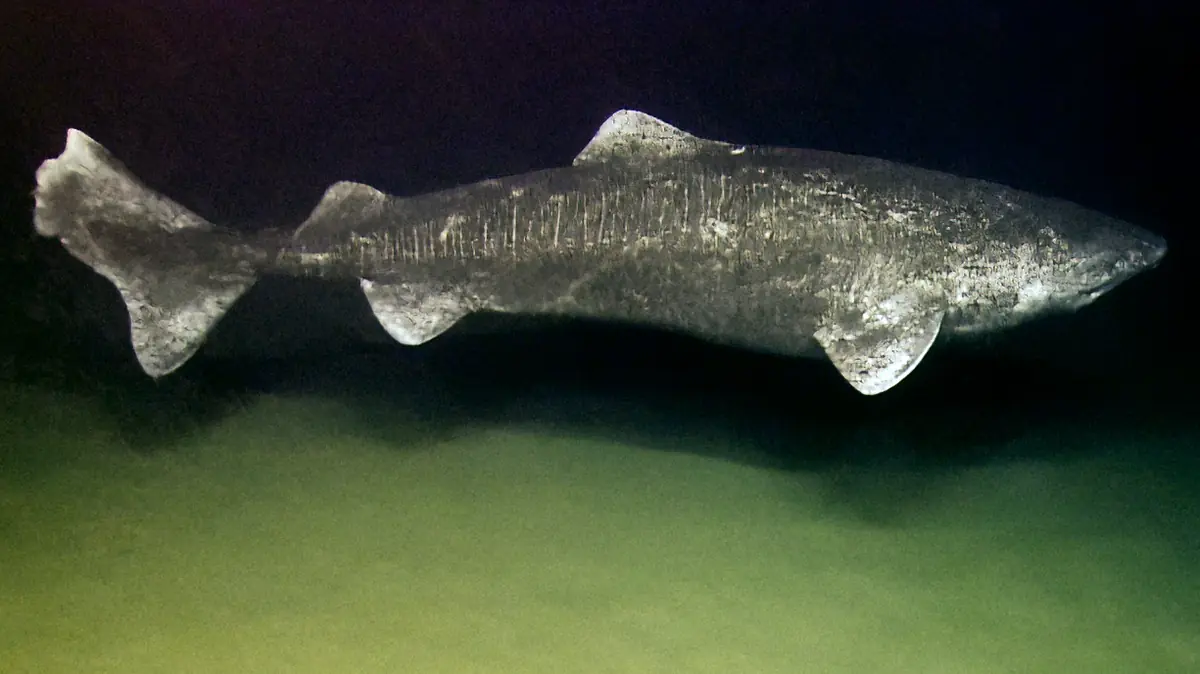
Greenland sharks (Somniosus microcephalus) grow less than one centimeter per year and don’t reach sexual maturity until roughly 150 years of age — when they measure approximately four meters in length. They can live beyond 400 years, making them Earth’s longest-lived vertebrates by a large margin. The International Union for Conservation of Nature lists them as Vulnerable on its Red List, citing extremely slow population recovery times that exceed a century.
Conservationists at the IUCN Shark Specialist Group have pointed out that removing large numbers of individuals risks eliminating century-old cohorts that cannot biologically replace themselves within any human planning horizon. The numbers involved aren’t just large — they represent generations that took 150 to 400 years to develop.
There’s also a practical problem: a localized cull likely wouldn’t work. Satellite tagging research shows Greenland sharks are capable of traveling over 1,000 kilometers across their range in the Canadian Arctic, Greenland, and Svalbard regions. Culling animals in Disko Bay or the Ilulissat Icefjord area would not stop sharks from entering those same fjords from distant open-water feeding grounds.
The Legal and Trade Conflict
The cull attempt exposed a gap in Greenland’s shark management framework. In international offshore waters, the Northwest Atlantic Fisheries Organization’s 2022 binding measures — co-sponsored by the United States and Canada — already prohibit commercial vessels from retaining Greenland sharks on board. But coastal inshore waters within three nautical miles lack any formalized national management plan.
The municipal council tried to exploit that inshore gap using an unregulated pest-control authority. Greenland’s fisheries ministry, on reviewing the motion, questioned whether municipalities have the legal standing to issue wildlife cull mandates of this kind, and the plan was dropped before implementation.
Jenseeraq Poulsen, Executive Director of Oceans North Kalaallit Nunaat (ONKN), has publicly stated that the organization does not support culling and that gear-based solutions — including modified hook designs and deterrents — are a more appropriate direction. Greenland’s fisheries authorities are reviewing the inshore management framework, with the outcome expected to determine whether artisanal fishers and one of the ocean’s oldest species can share the same Arctic waters.
*Is the Greenland shark cull currently taking place?* No. The Avannaata municipal council approved a 300-kroner bounty per shark heart, but Greenland’s fisheries ministry questioned the plan’s legal basis before any culling began, and the proposal was dropped.
*How old do Greenland sharks get, and why does that make culling risky?* Greenland sharks can live beyond 400 years and don’t reproduce until approximately age 150. Because a single generation spans more than a century, removing even a few hundred individuals can permanently eliminate cohorts that took hundreds of years to develop.
*Are Greenland sharks protected by international law?* Yes, in international waters. Since 2022, NAFO has required commercial vessels in its regulatory area to immediately release accidentally caught Greenland sharks, prohibiting their retention, landing, and commercial sale.
\
\ .karmactive-push-footer { max-width: 720px; margin: 32px auto 0; padding: 22px 24px; border-radius: 14px; background: \#f0f4f8; border: 1px solid \#d8e4ea; text-align: center; font-family: \-apple-system, BlinkMacSystemFont, “Segoe UI”, Roboto, sans-serif; } .karmactive-push-footer h4 { margin: 0 0 6px; font-size: 1.15rem; color: \#102a43; } .karmactive-push-footer p { margin: 0 0 16px; font-size: 0.92rem; color: \#4a5568; line-height: 1.5; } .karmactive-push-actions { display: flex; gap: 10px; justify-content: center; flex-wrap: wrap; } .karmactive-push-btn { display: inline-flex; align-items: center; gap: 6px; min-height: 44px; padding: 10px 20px; border: 0; border-radius: 999px; font-size: 0.92rem; font-weight: 700; cursor: pointer; text-decoration: none; transition: transform 0.15s ease, box-shadow 0.15s ease; } .karmactive-push-btn:hover { transform: translateY(-2px); } .karmactive-push-btn:active { transform: translateY(0); } .karmactive-push-btn.primary { background: \#63b89c; color: \#082032; box-shadow: 0 6px 16px rgba(99, 184, 156, 0.35); } .karmactive-push-btn.secondary { background: \#fff; color: \#102a43; border: 1.5px solid \#d8e4ea; } .karmactive-push-status { margin-top: 12px; font-size: 0.84rem; color: \#5a6e7e; min-height: 1.2em; } @media (max-width: 600px) { .karmactive-push-footer { margin-left: 0; margin-right: 0; border-radius: 10px; padding: 18px 16px; } .karmactive-push-actions { flex-direction: column; } .karmactive-push-btn { width: 100%; justify-content: center; } } \
\
\
\
\
🔔 Enable push notifications
\
Subscribe by email
\
\
\
\
\
(function () {
var btn \= document.getElementById(‘karmactivePushBtn’);
var status \= document.getElementById(‘karmactivePushStatus’);
if (\!btn) return;
function setStatus(msg) {
if (status) status.textContent \= msg;
}
function fallback() {
setStatus(‘Push notifications are not supported in this browser. Try the email option above.’);
}
btn.addEventListener(‘click’, function () {
try {
/\* OneSignal v16+ deferred SDK \*/
if (window.OneSignalDeferred && Array.isArray(window.OneSignalDeferred)) {
setStatus(‘Opening notification prompt…’);
window.OneSignalDeferred.push(function (OneSignal) {
if (OneSignal && OneSignal.Notifications && typeof OneSignal.Notifications.requestPermission \=== ‘function’) {
OneSignal.Notifications.requestPermission()
.then(function () {
setStatus(‘You will receive push notifications when new articles are published.’);
})
.catch(fallback);
} else {
fallback();
}
});
return;
}
/\* OneSignal direct object \*/
if (window.OneSignal && OneSignal.Notifications && typeof OneSignal.Notifications.requestPermission \=== ‘function’) {
OneSignal.Notifications.requestPermission()
.then(function () {
setStatus(‘You will receive push notifications when new articles are published.’);
})
.catch(fallback);
return;
}
/\* Older OneSignal SDK \*/
if (window.OneSignal && typeof OneSignal.push \=== ‘function’) {
setStatus(‘Opening notification prompt…’);
OneSignal.push(function () {
if (typeof OneSignal.showSlidedownPrompt \=== ‘function’) {
OneSignal.showSlidedownPrompt();
} else {
fallback();
}
});
return;
}
fallback();
} catch (e) {
fallback();
}
});
})();
\


Latest from Environment
Yemen Says It Retook Mocha From the Houthis: Why the Red Sea Port Matters

Large Female Pythons Drive Everglades Collapse; Biologists Shift to Targeted Removal Strategy

Vietnam Plans a 135,000-Seat Stadium in Hanoi by August 2028 — at $35 Billion on 73 Hectares
‘Once-in-a-Decade’ Camera Trap Catches Jaguar Crossing Guatemala-Honduras Corridor — The Forest Strip It Used Is at Risk
Catherine Breed Swims 900 Miles Down the California Coast Through Prime White-Shark Territory
Gulf of Mexico Storm Watch: NHC Says 50% Chance Over 7 Days — Here’s What Forecasters Actually Predict

“Flávio Bolsonaro 47%, Lula 45%”: Brazil’s Amazon Hangs in the Balance — What the Runoff Means

USDA Proposes Rescinding Roadless Rule: How It Affects 58.5M Acres & What to Do
IMD Alert: Bay of Bengal Weather System Brings Heavy Rain to Coastal India

Manipur’s Indigenous Communities Are Reaching Toward China After India Failed Them

Cheyenne’s Data Center Boom: Who Really Pays the Price?

4.8 Victoria Earthquake Shakes Melbourne as 21,000 Felt Reports Logged
98 km/h Ulladulla Tornado Damages 15 Properties as SES Works Through Night
Mangrove Deforestation at Turzen Point, Chargut