 Karmactive Staff
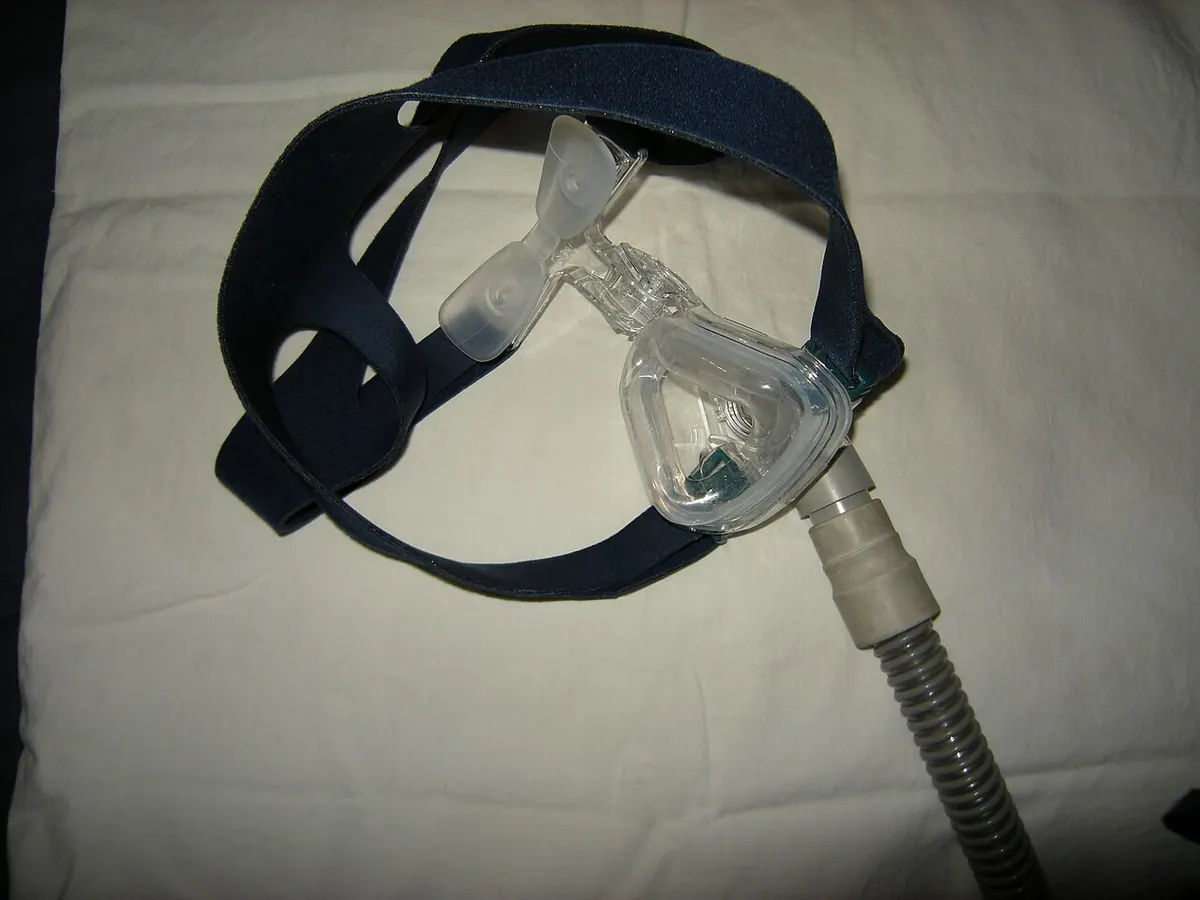
If you use a Luna G3 BPAP machine at home for sleep apnea, do not stop your therapy and do not change the settings on your own. The manufacturer is recalling 7,533 devices because one software setting can make the machine record the wrong pressure data. The U.S. Food and Drug Administration published the notice on November 19, 2026.
React Health, doing business as 3B Medical, Inc., issued the voluntary correction for the Luna G3 BPAP System, model LG3800-30VT. The UDI-DI number is 06948538365731. The devices were distributed in the United States and Puerto Rico. The problem appears only when a feature called Targeted VT is turned on. In that mode, the machine does not record the actual delivered pressure on the internal SD card, and it does not send the data to the React Health Connect cloud system.
The device still delivers the tidal volume your clinician set, within the minimum and maximum pressure limits. The danger sits in the reports. A clinician who reads a faulty history could change settings based on numbers that never matched what the machine delivered, and that could delay the right therapy. Patients should keep using the device as prescribed and contact their provider or DME supplier.
Which Luna G3 BPAP devices are affected
The correction covers the Luna G3 BPAP System, model LG3800-30VT, with UDI-DI 06948538365731. React Health says 7,533 devices were distributed in the United States and Puerto Rico. The affected serial numbers are listed in Appendix A of the original notice.
The company first notified customers on October 8, 2026. It published an update on November 17, 2026, and the FDA posted the notice on November 19, 2026. Users who have not turned on Targeted VT are not affected by the data error.
React Health has received 15 complaints tied to the issue, including 2 serious adverse reports. The agency and the company describe this as a correction rather than a removal of the product from the market.
Why Targeted VT causes inaccurate pressure reporting
The issue is a data storage and transmission error that appears while Targeted VT is enabled. A bilevel positive airway pressure machine delivers air at two pressure levels, one for breathing in and one for breathing out. Targeted VT is a mode that adjusts pressure to reach a set tidal volume, the amount of air moved with each breath.
When the mode is on, the device fails to record the real delivered pressure statistics on the internal SD card. It also fails to transmit those numbers to React Health Connect, the cloud-based management system that clinicians and DME providers use to review therapy. The machine still delivers therapy within the clinician-defined minimum and maximum pressures, and it still reaches the set tidal volume within tolerance.
That is why the hazard is in the records rather than in the air the patient receives. Historical reports can show pressures that did not match what the device actually delivered.
Should patients keep using their Luna G3 tonight?
Yes. The FDA notice tells patients to continue using the Luna G3 BPAP System as prescribed until they hear from their healthcare provider. Do not independently change the prescribed therapy settings, and do not stop respiratory therapy without guidance.
Patients should contact their healthcare provider or DME supplier to check whether their device is affected and to arrange the firmware correction. They should also complete the Customer Recall Notification Response Form from the October 8, 2026 notice and email it to 3B-Recall@reacthealth.com within seven days so React Health can send the firmware update.
Anyone who obtained the device through a DME provider should contact that provider to install the firmware correction. Patients who experience an adverse reaction can report it to the FDA through MedWatch at 1-800-332-1088.
How to get firmware version G3-2.00.80 and contact React Health
React Health has built firmware version G3-2.00.80 to fix the pressure-data reporting issue. The update arrives on an SD card, so the device does not need permanent replacement. The company is working with DME providers and healthcare facilities to distribute the cards.
After the firmware is installed, the original recall instructions direct users to erase historical usage data through the device’s Clinical Menu, then Maintenance, then Erase Data. Data collected before the upgrade stays in the device and in the cloud apps as it was recorded, so those older reports should be read with care.
React Health asks clinicians and DME providers to turn off Targeted VT on affected devices right away, quarantine unused stock, and review any historical therapy data with the limitation in mind. Customer support is available at 863-226-6285, Monday through Friday, 8:00 a.m. to 5:00 p.m. Eastern Time. Media inquiries go to George Koos at 321-794-3811.
Other product corrections have moved through the same safety system. The Viatris telmisartan-amlodipine recall, the Par Health argatroban injection recall, and the FDA acetaminophen recall were all posted as soon as regulators confirmed the risk.
If you use one of these machines, the next step is a phone call, not a setting change. Contact your provider or DME supplier, ask whether your serial number is covered, and request the firmware card. Keep the device in use until a clinician tells you otherwise.