 Karmactive Staff
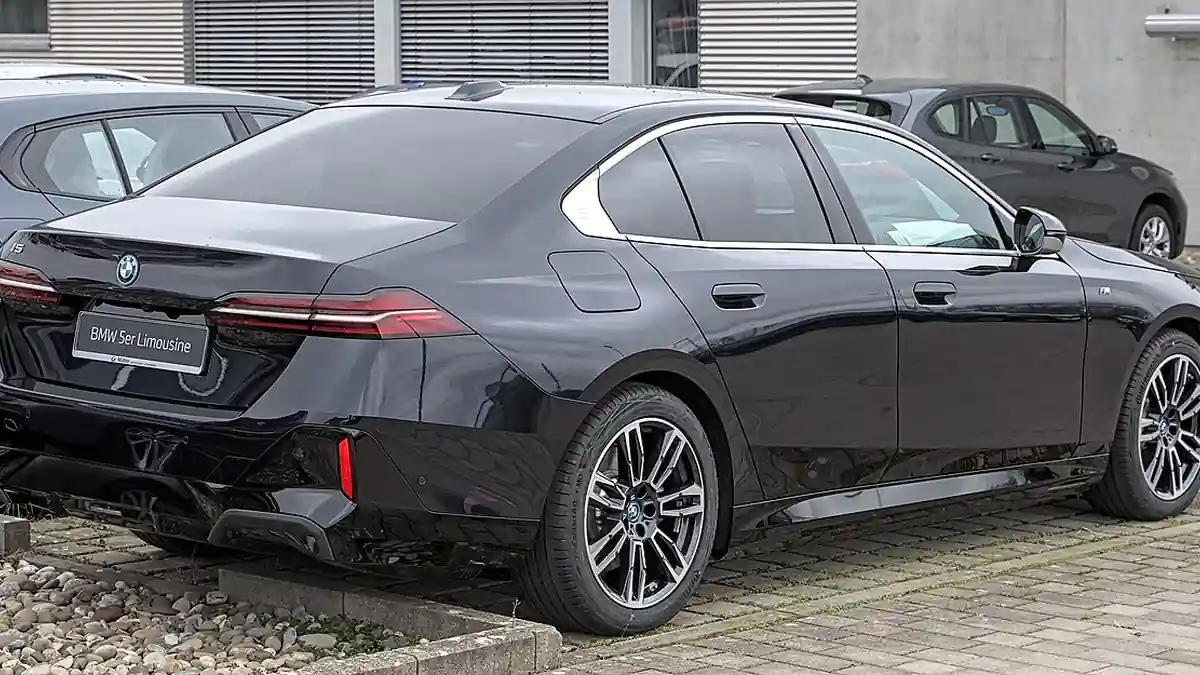
If your car appears on the new BMW i5 i7 recall list, check it before your next charge. BMW of North America is recalling 286 electric sedans after a supplier shipped charging hardware loaded with testing software instead of the production version. That mix-up can create an electric shock hazard while the high-voltage battery charges.
The National Highway Traffic Safety Administration campaign number is 26V731. BMW filed its Part 573 safety recall report on November 4, 2026, and NHTSA issued its acknowledgment letter on November 12, 2026. The supplier is TE Connectivity Solutions GmbH of Schaffhausen, Switzerland. BMW estimates that 0.2 percent of the recalled vehicles have the defect. No crashes, injuries, or deaths have been reported.
The direct risk for owners is an electric shock during charging. BMW will update the high-voltage battery charging software free of charge at authorized dealers. Owner notification letters and the NHTSA vehicle identification number lookup begin December 25, 2026. Owners can reach BMW Customer Service at 1-800-525-7417 and the NHTSA Vehicle Safety Hotline at 1-888-327-4236.
Why BMW Is Recalling 2026–2027 i5 and i7 Electric Sedans
The recall traces back to charging ports built by TE Connectivity Solutions GmbH. Those units left the supplier with testing software installed rather than the software meant for production cars. When an affected sedan charges, the incorrect software can fail to manage the high-voltage battery safely. Federal regulators describe the result as an electric shock hazard that increases the risk of injury.
BMW says the problem is limited to a narrow production window. The recall covers 286 cars in total, and the company estimates that only 0.2 percent of them carry the defect. Federal rules still require a formal recall whenever a safety defect is identified, even at low volume. This is the same pattern seen in other recent filings, including the Ram 1500 airbag wiring recall and the Ford F-150 NHTSA recalls.
Affected BMW Models, Production Dates, and Unit Counts
The 2027 BMW i7 appears in two versions. The i7 xDrive50 and i7 xDrive60 account for 50 units produced between June 15, 2026 and July 23, 2026. The 2026 and 2027 BMW i5 covers three versions: the i5 xDrive40, i5 eDrive40, and i5 M60 xDrive. Those models account for 236 units produced between May 12, 2026 and July 22, 2026.
Owners who want to confirm whether their car is included can call an authorized BMW dealer or BMW Customer Service with their 17-digit vehicle identification number now. The public NHTSA lookup goes live on December 25, 2026. Until then, the production-date ranges above offer a useful check. A car built outside those windows is not part of this campaign.
How Testing Software Ended Up in Charging Units
TE Connectivity Solutions GmbH notified BMW about the issue on October 8, 2026. BMW decided to run a voluntary safety recall on October 28, 2026. The company then told dealers and filed the federal Part 573 report on November 4, 2026. NHTSA’s Office of Defects Investigation acknowledged the filing on November 12, 2026.
A voluntary recall means BMW chose to act without waiting for a federal order. Automakers use this route when a supplier defect is caught early. The recall does not require hardware replacement. The remedy is a software update for every affected vehicle.
The Part 573 report is the formal document an automaker files with NHTSA. It lists the affected population, the defect description, the production dates, and the planned remedy. BMW’s filing states that the charging port software may not control the high-voltage battery as intended. NHTSA reviews the filing and then publishes its acknowledgment letter, which is what happened on November 12, 2026.
Free Dealer Fix Timeline and What Owners Should Do Now
Authorized BMW dealers will update the high-voltage battery charging software at no cost. Owner letters start mailing on December 25, 2026, the same day the NHTSA vehicle identification number search goes live. Drivers who receive a letter should book a dealer visit promptly. The update corrects the charging software so the battery manages power correctly.
Charging an electric car at home or at a public DC fast charger is routine for millions of drivers. A software fault in the charging path is a different kind of hazard, and it can appear without warning. Owners who notice unusual behavior during charging should stop and contact BMW. For broader context on battery and charging safety, see our solar power bank fire risk safety guide.
BMW has reported zero accidents and zero injuries linked to this defect. The company opened the recall after its internal defect determination in late October, and federal rules required the filing within days. Owners will get clear instructions by mail, and the dealer fix will be free.