 Govind Tekale
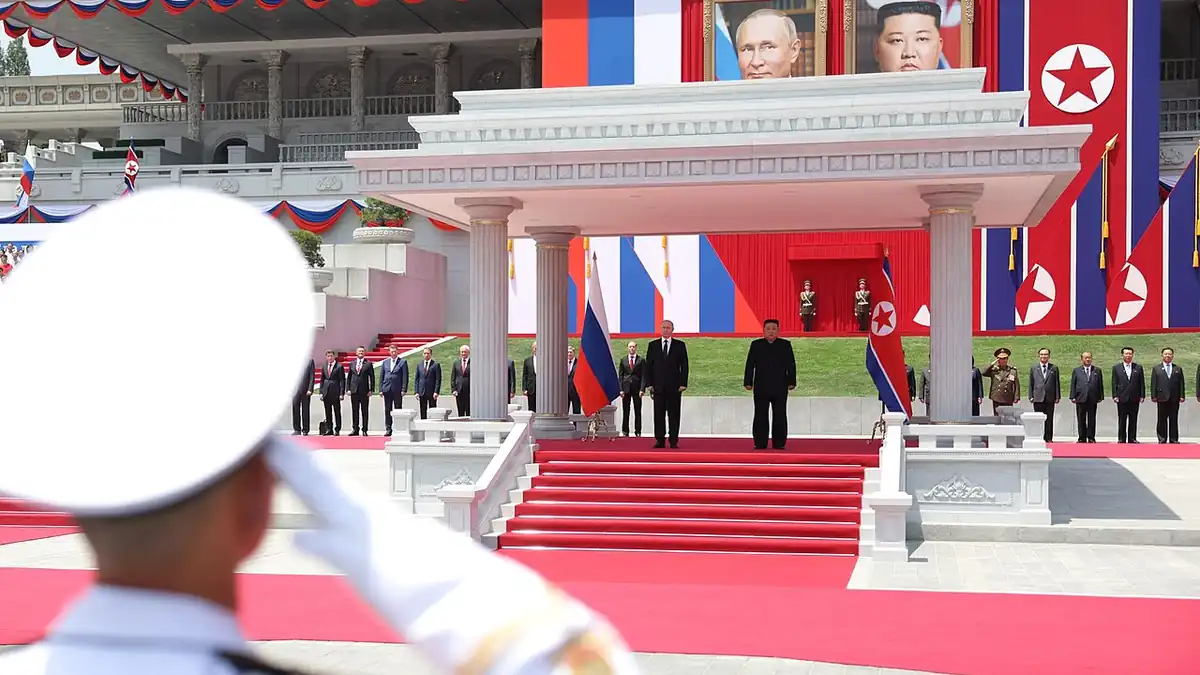
During the APEC summit in Shenzhen this week, headlines filled with speculation that Donald Trump, Vladimir Putin, and Kim Jong Un were brokering some kind of historic trilateral deal on Chinese soil. That story was wrong on nearly every detail. No Trump-Kim handshake took place. The real diplomatic action unfolded 4,000 miles away in Moscow.
At the Shenzhen APEC summit, Trump told reporters he was “open to” meeting Kim Jong Un, framing it as a potential diplomatic opportunity. The comment was delivered during a press gaggle. North Korean state media coverage during the summit window showed no sign of a trip to China. China’s Ministry of Foreign Affairs said it had no information about any invitation, and the APEC Secretariat said it had no relevant information — leaving no confirmed path for a sideline encounter. At the same time, senior North Korean envoy Jo Yong Won was in Moscow meeting President Vladimir Putin in a separate round of high-level talks.
Do not expect an imminent breakthrough or sudden de-escalation on the Korean Peninsula. Trump’s remark about meeting Kim was an uncoordinated probe that drew no matching response from North Korean protocol channels. With Pyongyang’s alliance with Moscow now deepened through these direct talks, North Korea has a functioning Russian defense partnership that makes a cosmetic bilateral summit with Washington far less urgent for Kim’s regime at this point.
Beyond the Shenzhen Headlines: Moscow’s Defense Talks with Pyongyang
The Jo Yong Won-Putin meetings are the more consequential development. Senior North Korean and Russian officials discussed deepening defense cooperation during the Moscow visit. The partnership builds on a Comprehensive Strategic Partnership Treaty signed in June 2024, with North Korea supplying artillery shells and infantry battalions to Russian operations in return for missile guidance technology and satellite intelligence access.
South Korea’s foreign ministry said it was closely monitoring the visit, and officials in Seoul and Tokyo have expressed concern over deepening military ties between Moscow and Pyongyang. The Shenzhen episode fits a pattern of public diplomatic statements generating media cycles while institutional channels stay quiet — a dynamic also visible in the administration’s posture during the Iran dirty bomb intelligence report. KCNA’s heavy documentation of Kim’s domestic tour this week mirrors the bureau’s conduct during past periods when international scrutiny of his location spiked, as seen in reporting on the Kim Jong Un death rumors and KCNA photo releases from October 2026.
Trump’s public summit feeler was read by many observers as aimed as much at Beijing as at Pyongyang. By floating a direct Kim conversation during Xi Jinping’s home-ground event, Trump could pressure China’s preferred role as the sole diplomatic broker between North Korea and the West. Xi’s leverage over Pyongyang depends on Kim remaining isolated from Washington. Any viable US-North Korea dialogue track would reduce that leverage considerably.
Did Trump meet Kim Jong Un at the Shenzhen summit?
No. Trump publicly stated he was open to such a meeting, but no bilateral session took place. North Korean state media showed no sign of a trip to China during the APEC summit.
The near-term outlook for Northeast Asia is shaped more by the Moscow-Pyongyang partnership than any potential Washington-Pyongyang conversation. Joint Russia-North Korea defense commission meetings, expected in coming weeks, will determine the operational depth of that alliance and how far Seoul and Tokyo need to adjust their own defense postures in response.