Tejal Somvanshi
Being told you have a cyst in your brain is frightening, especially when you feel well. The story of Davina McCall has led many people to ask if the same could happen to them. This explainer sets out what happened to her and what a colloid cyst can mean for an ordinary person. The case dates from November 2024. It is not breaking news.
In November 2024, TV presenter Davina McCall, then 57, had a craniotomy to remove a benign colloid cyst. That is the Davina McCall brain surgery colloid cyst story in brief. A craniotomy is an operation where a surgeon temporarily removes part of the skull. The cyst was 14mm wide. It was spotted during a health scan offered after a menopause talk she gave for a company. Her partner Michael Douglas said the surgery went “textbook”. She recovered in ICU as a precaution. In April 2025, McCall said a final MRI showed the cyst was “not coming back”.
For you, the practical point is simple. A cyst picked up on a scan does not always mean surgery. Some surgeons recommend watch and wait if the cyst is small and causes no symptoms. If you have been given this result, ask your doctor how big the cyst is and whether it affects fluid flow. Ask how often it should be checked. For more on how a scan leads to a diagnosis, see our piece on brain tumour MRI diagnosis.
Colloid cysts typically form in a fluid-filled cavity in the centre of the brain, called the third ventricle. The cysts are themselves filled with fluid. They are often spotted during a scan for something else.
The concern is what happens as a cyst grows. It can block the flow of cerebrospinal fluid, or CSF. That can cause headaches, vision problems, nausea and loss of consciousness. In extreme cases, without treatment, these cysts can cause coma and even sudden death. This is why size and position matter so much when doctors decide what to do. Other work on brain growths is covered in our look at brain tumour research.
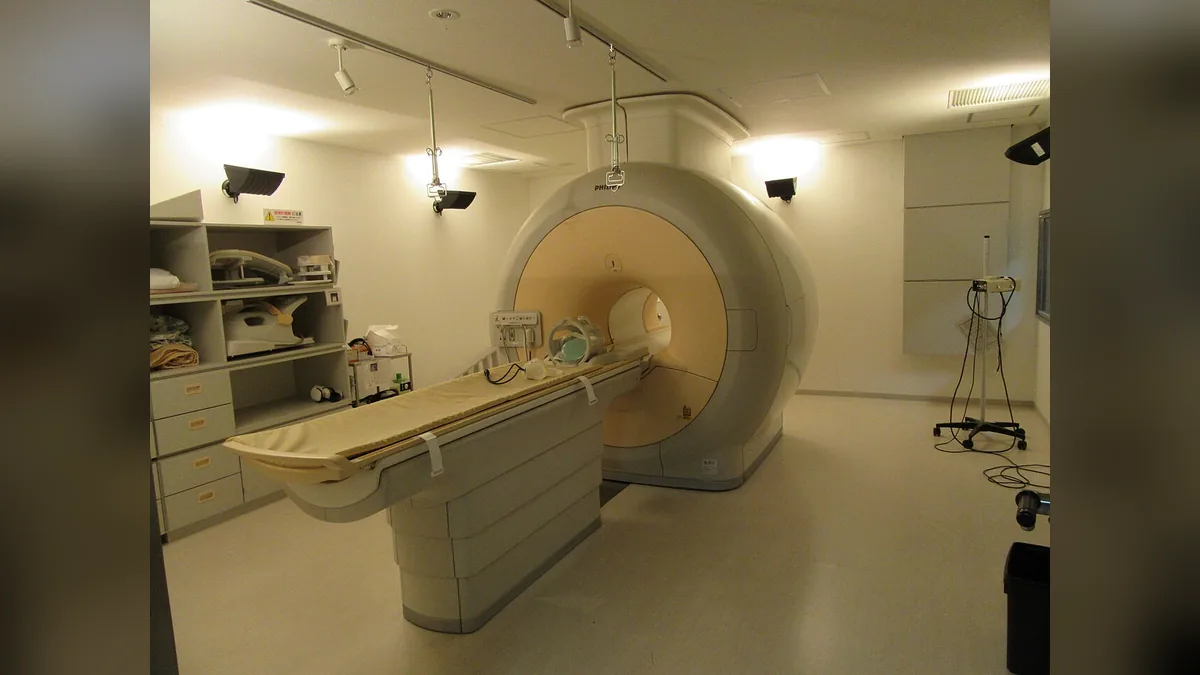
One detail stands out in McCall’s case. She was not looking for a brain problem. The cyst came to light because a company offered a health scan after her talk on menopause. Cysts like this are often spotted during a scan for something else. That is how hers reached a doctor’s attention.
How uncommon are colloid cysts and the brain surgery to remove them? Very uncommon. McCall described the condition as “very rare – three in a million”. Colloid cysts account for less than 2% of all primary brain tumours. That works out at about three in a million people a year. Surgery is reserved for cysts around 10-14mm or those blocking fluid flow. Small cysts with no symptoms may simply be watched.
To recap, Davina McCall had a 14mm benign colloid cyst removed in November 2024 after a scan offered following a work talk. Surgery went well, and an MRI in April 2025 showed the cyst was not coming back. These cysts are rare. If you have been told you have one, your doctor can explain whether it needs treatment or checks.