 Tejal Somvanshi
You lie awake in the dark, body exhausted but mind still cycling through the day’s unfinished pressure. By the time you finally drift off, the alarm is only a few hours away — and the deep, restorative sleep your brain needed never arrived. This is not unusual. Roughly one in three adults does not get sufficient sleep overall, and those disrupted nights often cut short or suppress REM sleep — the stage where the brain processes emotional memory, consolidates learning, and rebuilds its capacity to handle stress the following day.
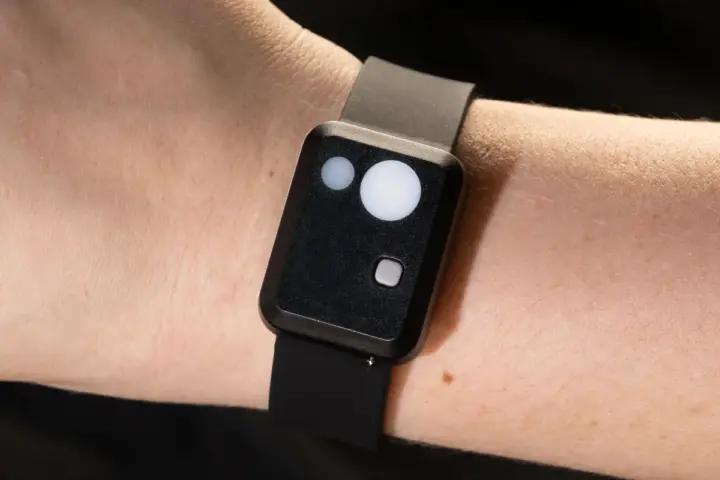
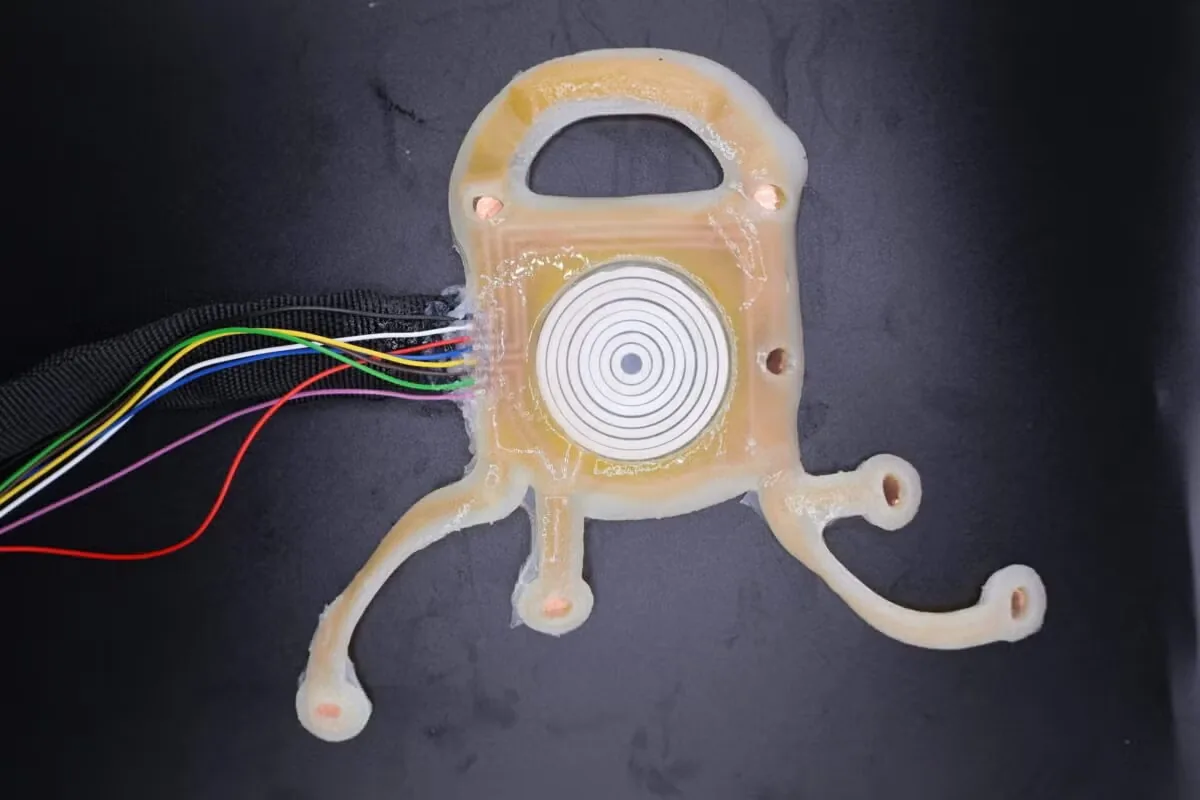
A research team at the University of Texas at Austin has built a wearable ultrasound patch REM sleep device called NEUSLeeP that may change this substantially. Published June 4, 2026, in Nature Communications, the peer-reviewed study followed 28 adult participants and found that the patch helped people reach REM sleep 43 minutes faster than in control conditions. The patch adheres to the temple, delivers low-intensity focused ultrasound pulses toward the subthalamic nucleus (STN) — a deep brain structure involved in regulating arousal and sleep-stage transitions — and reads continuous EEG, eye-movement (EOG), and muscle-tone (EMG) data to adjust its stimulation in real time. Rather than running on a fixed program, NEUSLeeP responds to each user’s actual brain state from one moment to the next, working with the brain’s own sleep architecture rather than around it.
Why Reaching REM Faster Has Cascading Effects
Missing REM sleep is not simply a matter of feeling groggy. Chronic shortfalls in this stage disrupt the brain’s ability to regulate mood, suppress fearful memories, and consolidate new information. For the roughly 13 million Americans living with PTSD and the 21 million with major depressive disorder, inadequate REM sleep is a side effect — it is one of the mechanisms that keeps both conditions entrenched. The same dynamic runs through the relationship between cumulative sleep loss and long-term mental health, where even partial deficits compound over weeks into measurable cognitive and emotional decline.
NEUSLeeP’s defining advance is its closed-loop architecture. A standard sleep tracker watches your brain and shows you data the next morning. NEUSLeeP’s onboard electrophysiological sensors — capturing EEG, eye-movement (EOG), and muscle-tone (EMG) readings — monitor your brain patterns continuously while you sleep, and the ultrasound emitter uses that live signal to decide precisely when to fire and at what intensity. When the system detects the brain approaching a state favorable to REM entry, it delivers a timed pulse toward the subthalamic nucleus. If the brain’s pattern shifts, the stimulation shifts with it immediately. This real-time responsiveness is what separated the 43-minute gain from the smaller improvements produced by earlier single-method approaches. Focused ultrasound also reaches structures too deep for transcranial magnetic stimulation to target consistently, and unlike sedative medications, it leaves no metabolic residue in the bloodstream by morning.
Heart Rate Variability and the Depth of Overnight Recovery
The 2026 study measured a second marker beyond REM timing: heart rate variability, or HRV, which reflects how well the autonomic nervous system balances activation and recovery during sleep. Participants using the active NEUSLeeP device showed improved HRV compared to those in the sham condition. Higher nighttime HRV correlates with better emotional resilience, lower baseline cardiovascular reactivity, and faster physiological recovery from stress exposures — dynamics that connect directly to how the body rebuilds its capacity to absorb pressure between demanding days. The HRV finding suggests the device may support how quickly you enter restorative sleep but the quality of biological repair that takes place once you arrive there.
The study’s 28-participant sample is the clearest constraint on what these results can claim right now. That enrollment is appropriate for a proof-of-concept trial, where the primary objectives are demonstrating biological plausibility and confirming safety. The cohort included both healthy sleepers and participants with insomnia symptoms, with meaningful gains observed across both groups — but the trial is not large enough to establish whether the effect holds across different age groups, more severe clinical diagnoses, or varying clinical histories. The UT Austin team has indicated that larger randomized controlled trials are planned, with particular attention to populations where REM deficits carry the highest clinical stakes: veterans with PTSD, patients with treatment-resistant depression, and people recovering from traumatic brain injury. Those follow-on trials will determine whether the 43-minute result scales.
What NEUSLeeP Is Not — and Why That Distinction Matters
This needs to be stated directly: NEUSLeeP is not a clinical treatment for PTSD, depression, insomnia, or any other diagnosed condition. The Nature Communications paper documents a proof-of-concept finding from a small early-phase study. Regulatory clearance for therapeutic use would require multiple additional trial phases spanning several years. Anyone currently managing a diagnosed sleep or mental health condition should continue working with their existing healthcare team. The science here is genuine and the direction is worth watching — but the path from a 28-person university study to an approved clinical tool is long, and not guaranteed.
Is the NEUSLeeP wearable ultrasound patch safe to wear on the head?
No adverse events were reported across the 28 participants in the trial. Focused ultrasound at the low intensities used in NEUSLeeP carries an established safety record from prior non-sleep neuroscience research, though longer-term data will be required before any consumer or clinical version enters the market.
How is this different from white noise machines or light therapy devices?
White noise and light therapy act on sleep’s environment or circadian timing. NEUSLeeP targets the subthalamic nucleus with ultrasound pulses timed directly to real-time electrophysiological readings, intervening in the neural mechanism of sleep-stage transition — not its external surroundings.
When will NEUSLeeP be available to consumers?
No commercial or clinical release date has been announced. Consumer availability is likely several years away at minimum, pending expanded trials and regulatory review. Tracking how wearable neurostimulation devices move through regulatory review will offer the clearest signal of when that might realistically change.
The Bigger Picture Behind One Night’s Sleep
The gap between a restless night and a genuinely restorative one may eventually narrow through hardware as much as through behavioral change. If NEUSLeeP’s core findings hold across larger and more diverse populations, the device marks a meaningful shift in how sleep medicine thinks about REM — not as a behavior to be coached but as a biological process that a closed-loop system can actively support in real time. The science is at an early stage. The question now belongs to the larger trials ahead and the regulatory process that follows them.