Rahul Somvanshi
“`html
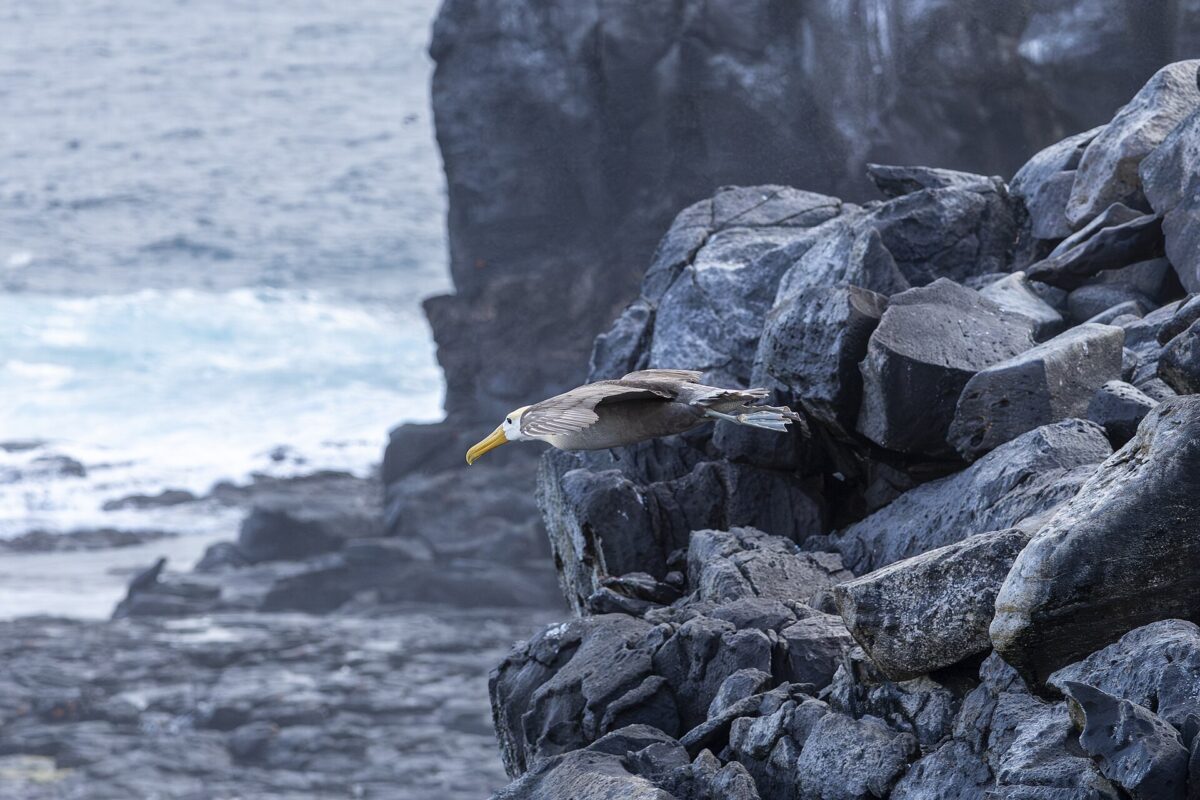
Every year, longline and trawl fishing vessels set hooks and cables across vast stretches of ocean that overlap with the feeding grounds of albatrosses, petrels, and other seabirds. These birds are drawn to bait and discarded fish waste, and in the process many are hooked, entangled, or struck by cables and drown. Bycatch — the accidental capture of non-target species in fishing gear — is the single greatest threat seabirds face at sea, according to BirdLife International’s Marine Flyways program, which says it works directly with fishing fleets on the problem. One of the simplest tools developed to reduce it is the bird-scaring line, also called a streamer or tori line: a rope rigged with colorful, flapping streamers towed behind a vessel to keep birds away from hooks or cables as gear enters the water.
A crisis measured in species, not just numbers
The scale of the problem is reflected in the conservation status of albatrosses themselves. BirdLife International’s albatross conservation page states that “15 of the world’s 22 albatross species are on the brink of extinction,” and links this decline to the expansion of commercial longline fishing. In response, BirdLife and the RSPB (the Royal Society for the Protection of Birds) launched the Albatross Task Force in 2005, working alongside governments, communities, and fishers on board vessels to introduce methods that prevent seabird bycatch.
The technical case for streamer lines
Streamer lines did not emerge from a single study or campaign; they are one of several mitigation measures evaluated by international bodies that track seabird bycatch. The Agreement on the Conservation of Albatrosses and Petrels (ACAP), an intergovernmental treaty body, maintains a series of bycatch mitigation fact sheets covering potential mitigation measures for longline and trawl fisheries. According to ACAP, these fact sheets assess each measure’s effectiveness, its limitations, and the degree to which it has actually been adopted as best practice — an acknowledgment that a mitigation tool can work in principle but still fail to reduce bycatch in practice if it is poorly deployed, inconsistently used, or not enforced.
At a global level, BirdLife International’s Marine Flyways program states that mitigation measures — a category that includes streamer lines — have been shown to cut seabird deaths by up to 98% where they are properly adopted. That figure describes the upper end of outcomes achievable through bycatch mitigation measures generally, across fisheries where they have been studied; it is a global, aggregate claim about the technology’s potential, not a finding specific to any one country’s fishery.
The Namibia claim: what is attributed, and what isn’t confirmed
In an Instagram post dated October 22, 2026, BirdLife International stated that bird-scaring lines contributed to a 98% reduction in seabird bycatch in Namibia’s longline fishery and a 95% reduction in its trawl fishery, and attributed these improvements to a fisheries regulation requiring the lines’ use that it dated to 2015.
Those are the figures as stated by BirdLife International in that specific post. During the reporting for this article, independent confirmation of the Namibia-specific baseline bycatch rate the reduction is measured against, the methodology used to calculate it, the existence and exact terms of a 2015 regulation, and the 98%/95% figures themselves was not located. Namibia does not appear by name in the three BirdLife and ACAP source pages cited above, each of which addresses bycatch mitigation at a global or multi-fishery level rather than reporting country-specific outcome statistics for Namibia. This does not mean the Namibia figures are inaccurate — BirdLife International and its Albatross Task Force partners have long-running, on-the-water programs in Southern African fisheries, and the organization is a primary source with direct access to fleet-level data that is not always published in full on its general web pages. It means that, as of this reporting, the specific claim rests on BirdLife’s own public statement rather than on a separately verifiable regulatory text, published dataset, or peer-reviewed study that this reporting was able to locate and examine independently.
Why the distinction matters
Bycatch-reduction percentages are sensitive to how they are calculated — what counts as the “before” baseline, which gear types and vessel classes are included, whether figures reflect observed bycatch on monitored trips or modeled estimates across an entire fleet, and whether compliance with any underlying regulation was itself monitored over time. ACAP’s fact-sheet framework exists precisely because mitigation measures that test well in controlled trials do not always deliver the same results fleetwide, where enforcement, training, and gear quality vary by vessel and by crew. None of this is a reason for skepticism toward streamer lines as a technique — the broader evidence base behind bird-scaring lines, longline mitigation, and the Albatross Task Force model is well documented by BirdLife and ACAP. It is a reason to hold country-specific statistics, including the Namibia figures, as attributed claims from a credible but singular source until a regulation, dataset, or independent study specific to Namibia can be reviewed directly.
Transparency note
This article relies on three publicly available BirdLife International and ACAP web pages, cited above, plus a dated public statement from BirdLife International’s Instagram account. No additional primary sources — academic papers, government fisheries records, or Namibian regulatory documents — were reviewed in preparing this piece, and online retrieval beyond the materials already gathered was not conducted for this report. Readers seeking to verify the Namibia-specific bycatch-reduction figures or the cited 2015 regulation should consult Namibia’s fisheries authority directly or request the underlying data from BirdLife International and the Albatross Task Force.
“`