Storm Austen Brought Down a Section of Brighton’s West Pier on Friday—It’s Not the Palace Pier and It Wasn’t Storm Boelo

October 24, 2026
3 mins read
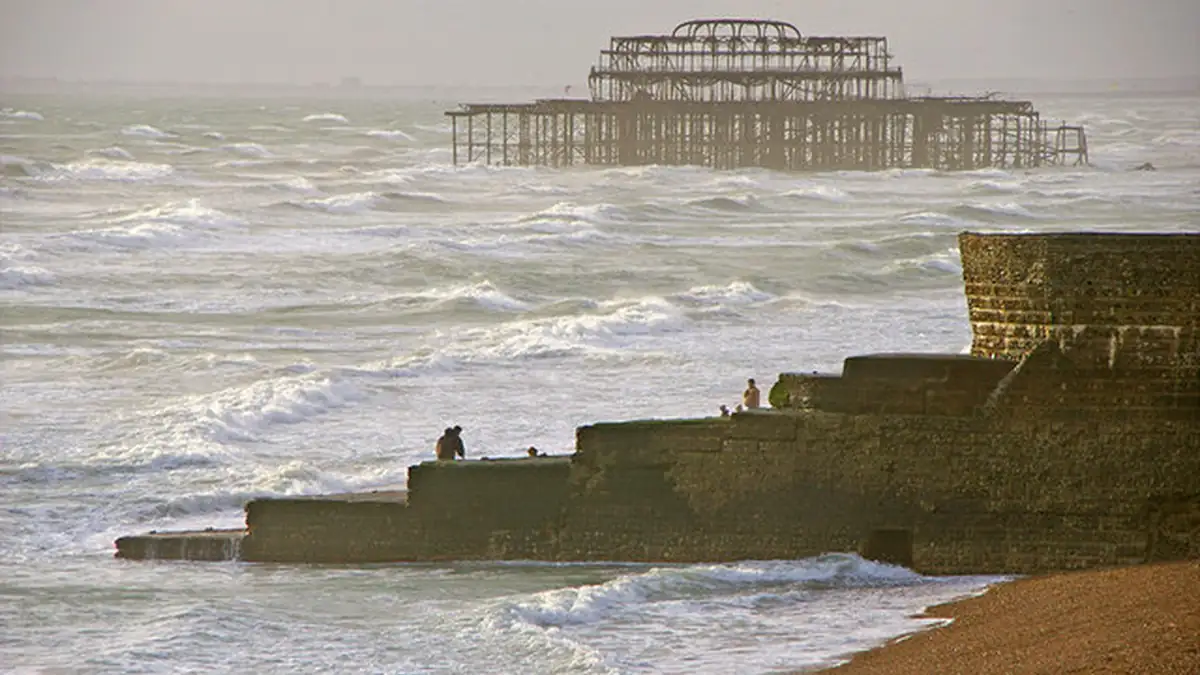
Rough waves breaking over a concrete beach groyne in Brighton, England, with the skeletal ruins of the West Pier visible offshore.
Storm Austen tore away another section of Brighton's Grade I-listed West Pier on Friday — a different storm and a different pier than many headlines implied, with the working Palace Pier unaffected. (Photo: Christine Matthews / Geograph Britain and Ireland, CC BY-SA 2.0)

International headlines reporting “part of the famous Brighton pier” has collapsed have caused widespread confusion. The pier that partially collapsed was the West Pier—a derelict Victorian structure that has stood as a rusted skeleton since fires in 2003—and the storm was Austen, which passed the Sussex coast on Friday October 23, not the later Storm Boelo. The working Brighton Palace Pier, where visitors walk and play, was not affected.

A section of the West Pier fell into the sea during Storm Austen on Friday October 23, 2026, according to local reports from Brighton. The West Pier Trust confirmed the ruin is in a state of active collapse and has been for three decades. The Brighton Palace Pier, the operating visitor pier at the eastern end of the seafront, was separate from the incident.

The West Pier was built in 1866 and was the first pier in England to receive Grade I listed status. It closed to the public in 1975 following structural problems. Fires in 2003 destroyed its pavilion and further damaged the deck. Since then the West Pier has stood as a rusted iron framework, documented in annual condition surveys.

The confusion matters for anyone planning to visit Brighton. AP’s wire report used the phrase “part of famous Brighton pier collapses”—technically accurate in the sense that the West Pier is historically famous—but easily misread as referring to the active Palace Pier that millions of visitors use each year. The Palace Pier remains open.

The West Pier’s history and the naming confusion

The West Pier Trust has campaigned for decades for the pier’s restoration. The trust has noted that the structure has been in active deterioration for years, and that storm damage has caused previous partial collapses of sections before this incident.

Storm Austen brought strong winds to the Sussex coast on Friday before weakening, echoing the kind of coastal storm surge risk covered in previous coastal flood advisories. Further high winds from Storm Boelo were forecast to follow over the weekend. The West Pier ruin is located at the western end of Brighton’s seafront.

The naming confusion is partly structural: both are referred to as Brighton piers, both are historic, and the West Pier’s rusted skeleton is as photographed as the Palace Pier’s illuminated facade. Any further deterioration of the West Pier will produce the same headline ambiguity.

Brighton Palace Pier remains open. A further section of the West Pier—the derelict 1866 iron structure at the western end of the seafront—fell into the sea during Storm Austen on Friday October 23. Historic England has not yet confirmed the extent of the damage or any implications for the Grade I listing.

Sonali Tiwary

Sonali Tiwary is an aviation technology writer and aeronautical engineer who brings her technical expertise to Karmactive.com's coverage of the aerospace industry. With engineering studies completed through The Aeronautical Society of India, she specializes in breaking down complex aviation innovations, emerging mobility technologies, and the latest developments in sustainable aviation. Sonali's passion for flight technology drives her to explore and explain how cutting-edge aerospace solutions are shaping the future of air transportation, making the fascinating world of aviation accessible to all readers.

Leave a Reply

Your email address will not be published.

Road surface displaying an urban 20mph speed restriction marking on an asphalt street
Previous Story

UK Councils Spent £41.9m on 20mph Limits Over Three Years — and Some Are Now Spending Again to Reverse the Roads

Exterior view of a large Tesco supermarket entrance in the United Kingdom
Next Story

Tesco Supreme Court Equal Pay Bid Refused: 16,000 Workers Clear Legal Hurdle as £4bn Sector Liability Looms

Latest from Culture

Sustainable Halloween Decorations for Eco-Conscious Homes

Halloween decorations transform residential and commercial spaces into festive environments, yet the seasonal nature of holiday displays encourages annual purchasing cycles that generate substantial waste. Most mass-produced decorations utilize petroleum-based plastics designed

Pumpkin Waste and Sustainability at Halloween

Pumpkins have become emblematic of autumn celebrations, yet the post-Halloween disposal of millions of carved jack-o’-lanterns represents an environmental challenge that most households overlook. Nearly half of harvested pumpkins end up in

Healthy Fasting Foods for Karwa Chauth: Nutritious Options

The Karwa Chauth fast runs from sunrise to moonrise—typically twelve to sixteen hours depending on geographic location and season—without consuming food or water. This extended period demands careful nutritional planning, particularly through

Healthy Halloween Treats: Nutritious Alternatives

Halloween remains strongly associated with candy and sweets, with traditional trick-or-treat activities centered on the exchange and consumption of confections featuring sugar as a principal ingredient. This candy-centric tradition has normalized excess

Sustainable Puja Decorations for Ahoi Ashtami Celebrations

Creating a beautiful and spiritually rich environment for Ahoi Ashtami celebrations need not require materials that harm the environment. Sustainable decoration practices allow families to honor traditions while protecting ecosystems and natural

Eco-Friendly Halloween Costumes: Homemade & Natural Ideas

Halloween, celebrated annually on October 31, has become synonymous with elaborate costumes that typically feature plastic-based, single-use materials derived from petroleum. Most store-bought costumes consist of polyester and plastic components designed to

Don't Miss