Anduril Dive-LD Drone Seized by Iran in Hormuz Carries 6,000M Depth Rating

September 13, 2026
1 min read
A 49er skiff sailing downwind with crew hiking out over choppy water
A 49er skiff cuts downwind in race conditions, matching the class association’s picture of an unusually open LA28 cycle. Close racing makes a spread of 16 podium teams from 15 nations more than a season statistic. [Source: Wikimedia Commons, CC BY-SA 4.0]

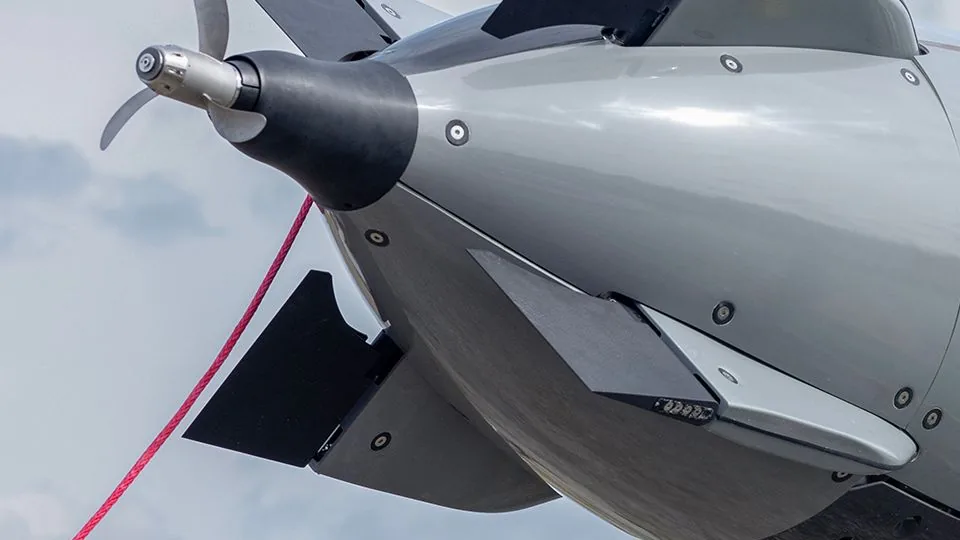
Iran says it captured a U.S. underwater drone near the Strait of Hormuz. The vehicle was not a crewed submarine in the traditional sense. It was an autonomous underwater vehicle, or AUV, an uncrewed, self-guided machine. The specific system is identified as Anduril's Dive-LD.

Iran’s Revolutionary Guards announced the capture. The U.S. Pentagon acknowledged the loss and described the circumstances differently, saying the older vehicle had malfunctioned more than a day earlier and did not contain classified systems or data.

Unlike a crewed submarine, an AUV such as the Dive-LD has no personnel aboard. Some early reports used the phrase “submarine drone,” but that framing is inaccurate; the verified facts identify it as the Anduril Dive-LD AUV.

Public specifications for the Dive-LD show a machine about 5.8 meters long and 1.2 meters in diameter, capable of up to 10 days on a single mission and rated to work at depths down to 6,000 meters.

The listed missions for this class of vehicle include mapping the seabed, surveillance and reconnaissance, mine warfare, seabed operations, hydrographic surveying, and pipeline and cable inspection. In 2024, the U.S. Navy’s Program Office for Advanced Undersea Systems and the Defense Innovation Unit selected Anduril, along with two other vendors, to prototype and develop large unmanned underwater vehicle platforms. The published specs show what the platform can do generally; they do not confirm exactly which sensors or software were on the specific vehicle involved.

Claims that Iran has reverse-engineered the vehicle are not established as fact by the primary material and remain unconfirmed.

The Strait of Hormuz is a critical shipping lane. The verified facts give a clear picture of the vehicle’s design and intended roles, even if the circumstances of the incident stay contested. For broader context on autonomous maritime systems, see this Saildrone Voyager explainer.

—
Sunita Somvanshi

With over two decades of dedicated service in the state environmental ministry, this seasoned professional has cultivated a discerning perspective on the intricate interplay between environmental considerations and diverse industries. Sunita is armed with a keen eye for pivotal details, her extensive experience uniquely positions her to offer insightful commentary on topics ranging from business sustainability and global trade's environmental impact to fostering partnerships, optimizing freight and transport for ecological efficiency, and delving into the realms of thermal management, logistics, carbon credits, and energy transition. Through her writing, she not only imparts valuable knowledge but also provides a nuanced understanding of how businesses can harmonize with environmental imperatives, making her a crucial voice in the discourse on sustainable practices and the future of industry.

Leave a Reply

Your email address will not be published.

Digital seismograph monitor screen displaying seismic waves representing real-time monitoring technology used in earthquake early warning systems.
Previous Story

RTX 5090 96GB Mod Appears on Alibaba as AI Buyers Chase Memory Over Warranty

Marcy Borders, the 9/11 “Dust Lady”: The Photo Survived, But So Did the Trauma
Next Story

Marcy Borders, the 9/11 “Dust Lady”: The Photo Survived, But So Did the Trauma

Latest from Technology

Ford Fathom home power: planned costs and equipment

Ford has announced the Fathom, a midsize electric pickup that is planned for production. The announced base manufacturer’s suggested retail price is $28,350, and the $1,595 destination charge brings the derived total

Don't Miss