Sunita Somvanshi
Britain and Canada came closer than any public reporting had shown to creating a combined NATO-aligned defense financing bank—before talks collapsed over where to put it. The decision is now final. Two banks will operate where one was planned, and defense manufacturers from Glasgow to Quebec must navigate two separate lending windows instead of one.
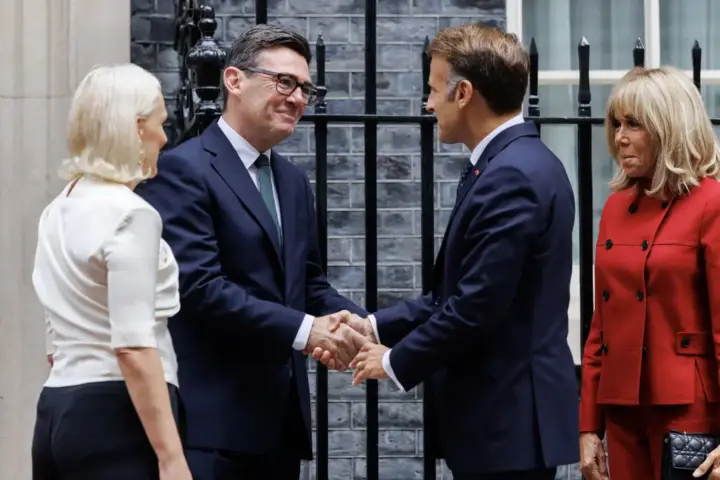
UK Chancellor John Healey and Canada’s finance minister in Prime Minister Mark Carney’s government announced on Sunday, October 25, that HM Treasury and the Department of Finance Canada had ended merger discussions. The joint statement, published on the UK government’s official website, confirmed the two countries would instead operate separate but “complementary” defense financing mechanisms. The UK-led mechanism—already running with Finland, Poland, and the Netherlands—has committed £400 million. Canada’s institution does not yet exist. It launches in 2027.
For defense manufacturers and mid-tier military suppliers across the UK, Canada, and Europe, the collapse means navigating two separate lending windows rather than one. Firms bidding on joint European weapons procurement will apply through the UK-led mechanism alongside Poland, Finland, and the Netherlands. Smaller suppliers seeking long-term loans to build domestic factory capacity must wait for Canada’s sovereign defense bank to open in 2027.
The £4.7 Billion Gap and the Ottawa Problem
The collapse rests on two issues the joint statement avoided naming. First: the UK refused to relocate the merged institution’s headquarters from British soil to Ottawa, the position Canada reportedly required. Second: Britain’s Defence Investment Plan faces a £4.7 billion funding gap—pressure that complicates expanding existing commitments to Poland, Finland, and the Netherlands.
Against that backdrop, merging with a Canadian institution not yet open for business—seeking headquarters outside the UK—was difficult to justify in Westminster. UK Treasury and defense spending coverage has tracked the Defence Investment Plan funding position since the spring Budget. NATO defense financing and European rearmament analysis has placed the broader €850 billion European rearmament gap as the context in which both mechanisms were designed to operate.
The official joint statement dresses the outcome as a harmonious fork in the road. Britain’s existing mechanism has committed £400 million and is operating with four nations. Canada’s bank has yet to launch. Both sides confirmed they will proceed on separate but coordinated tracks.
Why did the UK and Canada cancel their defense bank merger?
The UK and Canada ended talks to merge their defense financing institutions after failing to agree on membership terms and where to headquarter the joint entity—London or Ottawa. HM Treasury and Finance Canada agreed instead to run two separate, complementary banks.
Which countries are part of the UK’s multilateral defense bank?
The UK’s existing multilateral defense financing mechanism includes Finland, Poland, and the Netherlands alongside Britain. It has committed £400 million and focuses on reducing joint weapons procurement costs across member nations.
When will Canada’s new defense financing bank launch?
Canada’s sovereign defense bank is scheduled to begin operations in 2027. It is designed to provide long-term credit to domestic Canadian defense manufacturers building sovereign supply chain capacity.
John Healey has not announced how the UK will address the Defence Investment Plan funding gap. The upcoming UK budget is the next scheduled point at which that gap is expected to be addressed.
—
Reporting for this update was checked against an official source.