Trade Analysis

Canada Expands LNG Exports to Asia With 130 Cargoes Shipped as Pacific Energy Strategy Gains Momentum

Canada’s return to APEC after a decade away confirms where new export contracts are headed. 130 LNG tankers shipped to Asia from the Pacific coast.
📅 September 2026 ⏱️ 5 min read 📂 Energy / Trade
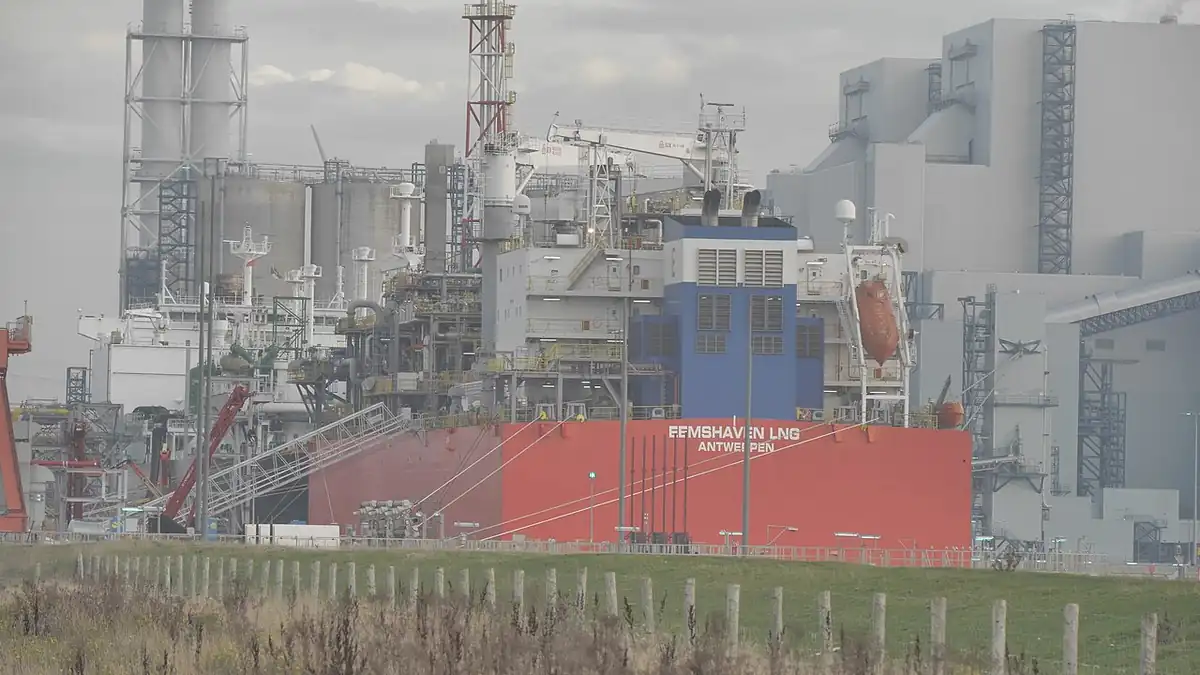
LNG carrier near a liquefied natural gas export terminal
LNG export terminals provide the infrastructure Canada is using to expand direct energy trade with markets across the Asia-Pacific region. Photo: Uberprutser via Wikimedia Commons — CC BY-SA 4.0.

If you work in Canadian LNG logistics or West Coast port infrastructure, Canada’s return to a major Asia-Pacific energy forum after a decade away confirms where new export contracts are headed.

Canada rejoined the APEC Energy Ministers’ Meeting in Beijing on September 8-11, 2026, after a ten-year absence, and Natural Resources Canada signed a new LNG offtake agreement in mid-September as part of the same push.

Between June 2025 and August 2026, Canada shipped roughly 470 billion cubic feet of LNG, about 9.7 million tonnes, to Asia in around 130 tanker shipments from its Pacific coast, using export routes that avoid US pipelines and ports entirely. Canada operates the only major LNG facility on North America’s Pacific coast. Canadian officials have also broken ground on new West Coast transmission infrastructure to support this export growth.

For related context on how Canada’s energy infrastructure is being reshaped, see Karmactive’s coverage of Canadian energy and infrastructure policy and Canada energy exports.

130
LNG tankers to Asia
June 2025 – August 2026
470 bcf
LNG exported
Approximately 9.7 million tonnes
10 yrs
APEC absence
Canada rejoined energy ministerial in September 2026
<1%
Gas exports outside US (2024)
Virtually all exports went to US market

Canada operates the only major LNG facility on North America’s Pacific coast

The Kitimat terminal in British Columbia provides direct shipping access to Asia-Pacific markets, with shipping distances to key Asian ports shorter than routes from the US Gulf Coast. Between June 2025 and August 2026, approximately 130 tankers carried LNG from this facility to Asian buyers, representing about 9.7 million tonnes of gas.

The pace of shipments averaged roughly one million tonnes per month during this period. For port operators and shipping contractors, the sustained tanker traffic represents a growing channel for long-term contracts that does not depend on US infrastructure or approval processes. The Canada Energy Regulator regulates the export of natural gas, including LNG, under the Canadian Energy Regulator Act.

For related Karmactive coverage on how Canadian energy projects are developing, see our analysis of Canadian LNG projects and Canada energy sovereignty.

Canada LNG Shipping Route to Asia-Pacific

Canada’s Pacific coast LNG terminal at Kitimat, British Columbia, provides direct shipping access to Asian markets, bypassing US pipelines and ports.

Export Origin — Kitimat LNG Terminal Diplomatic Engagement — APEC Meeting, Beijing

The shift in Canada’s export profile is measurable

As recently as 2024, virtually all of Canada’s natural gas exports went to the United States. The current pace of LNG shipments to Asia, combined with new transmission capacity and fresh offtake agreements, points toward that share climbing over the coming decade.

Officials have framed this as a sovereignty measure: building export capacity that allows Canada to sell energy and critical minerals to Asian markets on its own terms, rather than through infrastructure that runs through or depends on the United States. For more on how Canada’s energy trade strategy is developing, see Karmactive’s coverage of Canada energy sovereignty and Canadian infrastructure policy.

Canada-Asia Energy Engagement: Key Dates

The export push has moved from first shipments through diplomatic re-engagement and new offtake agreements.

June 2025
LNG Canada Begins Exports
Canada’s first major LNG export facility begins shipping from the Pacific coast to Asian markets. The Kitimat terminal has an initial capacity of 14 million tonnes per annum.
September 8-11, 2026
APEC Energy Ministers’ Meeting
Canada rejoins the APEC energy ministerial after a ten-year absence, signaling renewed engagement with Indo-Pacific energy partners. Parliamentary Secretary Corey Hogan leads the delegation.
Mid-September 2026
LNG Offtake Agreement Signed
Natural Resources Canada signs a new LNG offtake agreement as part of the APEC engagement push, expanding direct export contracts with Asian buyers.
2026-2030
Export Expansion
New West Coast transmission infrastructure and LNG terminal capacity come online to support growing Asia-Pacific exports. The Canada Energy Regulator has issued multiple long-term export licences.

Canada-Asia Energy Trade: Questions Answered

How much LNG has Canada exported to Asia? +
Between June 2025 and August 2026, Canada exported approximately 130 tankers carrying LNG to Asia, equivalent to 470 billion cubic feet or approximately 9.7 million tonnes of gas.
Why does Canada’s Pacific coast matter for LNG exports? +
Canada operates the only major LNG facility on North America’s Pacific coast. This provides direct shipping access to Asia-Pacific markets without relying on US pipelines, ports, or approval processes. Shipping distances to key Asian ports are shorter than routes from the US Gulf Coast.
What was Canada’s APEC engagement? +
Canada rejoined the APEC Energy Ministers’ Meeting in Beijing on September 8-11, 2026, after a ten-year absence. The engagement signals expanded energy collaboration with Indo-Pacific countries and reflects Canada’s renewed focus on strengthening trade and investment partnerships across the region.
How does this change Canada’s energy export profile? +
As recently as 2024, virtually all of Canada’s natural gas exports went to the United States. The current pace of LNG shipments to Asia, combined with new transmission capacity and offtake agreements, points toward that share climbing over the coming decade.
What is the role of the Canada Energy Regulator? +
The Canada Energy Regulator regulates the export of natural gas, including LNG, under the Canadian Energy Regulator Act. Export licences are required, and terms may be issued for up to 40 years. Currently, there are 24 valid export licences linked to LNG projects.

Track Canada’s Asia-Pacific energy contracts

New LNG offtake agreements and terminal capacity expansions are expected as West Coast infrastructure comes online.

Follow LNG Export Updates


Sunita Somvanshi

With over two decades of dedicated service in the state environmental ministry, this seasoned professional has cultivated a discerning perspective on the intricate interplay between environmental considerations and diverse industries. Sunita is armed with a keen eye for pivotal details, her extensive experience uniquely positions her to offer insightful commentary on topics ranging from business sustainability and global trade's environmental impact to fostering partnerships, optimizing freight and transport for ecological efficiency, and delving into the realms of thermal management, logistics, carbon credits, and energy transition. Through her writing, she not only imparts valuable knowledge but also provides a nuanced understanding of how businesses can harmonize with environmental imperatives, making her a crucial voice in the discourse on sustainable practices and the future of industry.

Leave a Reply

Your email address will not be published.

Students seated at desks while taking a Grade 12 written examination
Previous Story

MHT CET 2027 December Window and the Class 12 Marks Question: What Maharashtra’s 5-Member Panel Has Decided

A telecommunications tower with multiple antennas set against the sky.
Next Story

Senate Inquiry: Telstra Should Lose Triple Zero Control After July 2026 Outage Disrupted Emergency Calls

Latest from Business

Don't Miss