Tejal Somvanshi
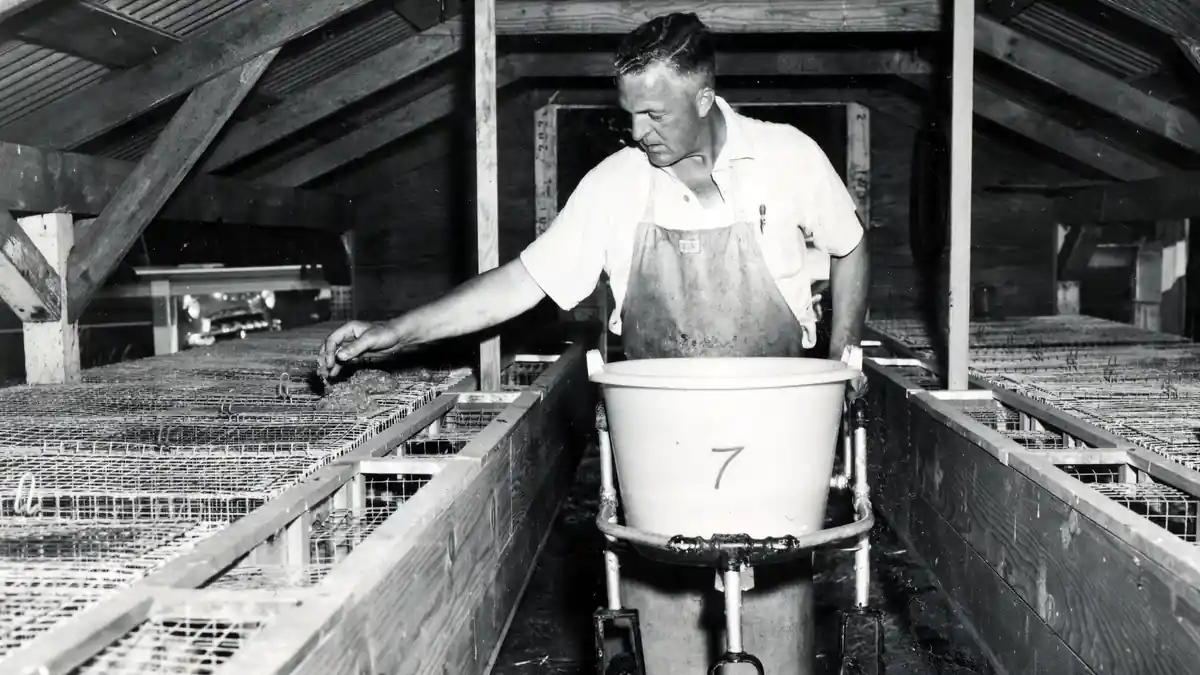
A worker at a Utah mink farm noticed redness in his eye—something farm owner Chase Fenn attributed to farm dust. Around him, H5N1 bird flu had been circulating through the animal sheds unchecked for roughly two months. No animals were culled. No workers were tested. The Utah mink farm bird flu outbreak that emerged from C&T Fenn Farms in Salt Lake and Utah counties has since produced a genomic record showing the virus adapted to mammals while regulators debated who held legal authority to act.
H5N1 was confirmed at C&T Fenn Farms on August 17, 2026, after the USDA’s National Veterinary Services Laboratories processed samples collected ten days earlier on August 7. State officials told Fenn he did not need to worry too much. The USDA stated that it does not regulate captive mink farms under the mandatory livestock disease culling and indemnity framework it applies to dairy cattle and poultry. The farmworker whose eye redness was visible to others at the facility was never given a viral swab. Under outbreak protocols applied to other agricultural species, a farmworker with symptoms consistent with H5N1 would ordinarily trigger an immediate occupational health referral. That did not happen at C&T Fenn Farms.
For rural clinic workers and agricultural employees in Utah, Idaho, and Texas, the regulatory standoff means H5N1 exposure is going unmonitored at the source. Because state officials declined to test exposed farmworkers or cull infected herds, clinicians cannot rely on state contact tracing to flag incoming cases. Any patient with livestock or fur-farm contact presenting with conjunctivitis—eye redness that appears in more than 90 percent of confirmed human H5N1 cases—warrants immediate viral swabbing, even in the absence of respiratory symptoms.
What the Genome Sequences Reveal
Virologists Thomas P. Peacock of the Pirbright Institute and Imperial College London, and Martha I. Nelson of the NIH National Library of Medicine, published a genomic analysis on October 22 at Virological.org drawing on ten whole-genome sequences deposited in the NCBI Sequence Read Archive under accession numbers SRR40350171 through SRR40350181. Every sequenced mink sample carried the PB1-K388R mutation—the same polymerase adaptation identified in the 2022 Spanish mink outbreak, which prompted an immediate government-ordered mass cull and facility lockdown. A second adaptation, PB2-M631L, was also present across the samples.
The virus belongs to the H5N1 B3.13 genotype that has circulated in US dairy cattle since 2024. Phylogenetic tracing places its closest known ancestor at a Texas dairy cattle operation sampled on May 28, 2026. The next confirmed detection is at the Utah mink farm, three months later, in a different state and a different host species, with no intermediate outbreaks recorded along the route. No H5N1 outbreaks in dairy cattle had been reported in Salt Lake County or Utah County during that interval, leaving an unexplained surveillance blind spot spanning the full period between the Texas sample and the August Utah confirmation.
European regulators responded to comparable findings differently. Finland and Spain ordered immediate culls and strict movement controls when H5N1 was detected in captive mink facilities. The USDA’s current regulatory structure does not classify domestic fur farms as livestock operations subject to mandatory disease response, so no equivalent legal mechanism existed in Utah—a gap that allowed an infected herd to remain in place while federal and state officials worked through a jurisdictional dispute that the virus had already resolved for itself.
Federal and state agencies spent months debating whether the USDA or state wildlife regulators held legal authority over captive fur farms. The NCBI genome sequences show the virus did not observe those boundaries. Utah mink caught the same B3.13 strain circulating in Texas dairy cows—regulators treated dairy and fur farms as separate legal silos while the pathogen treated them as a single connected ecosystem.
Why are mink farms dangerous for bird flu mutations? Mink respiratory tracts contain sialic acid cell receptors similar to those in human noses and throats, allowing both avian and human flu strains to bind easily. Housed in dense cages where they sneeze across aisles at close range, infected mink act as rapid genetic mixing vessels that select for mammal-to-mammal airborne adaptations—including the PB1-K388R mutation present in every Utah sample and in the Spanish outbreak that preceded a government-ordered cull.
No genomic sequences from C&T Fenn Farms after August 7, 2026, have been made publicly available. Whether PB1-K388R or PB2-M631L accumulated further mammal-adaptive changes in the weeks that followed the initial sampling remains unknown. The CDC has not announced updated monitoring protocols for the symptomatic farmworkers, and no follow-up sequences from the Utah facility have been posted to the NCBI Sequence Read Archive.
For related context, see Karmactive’s earlier coverage and latest explainer.