 Sonali Tiwary
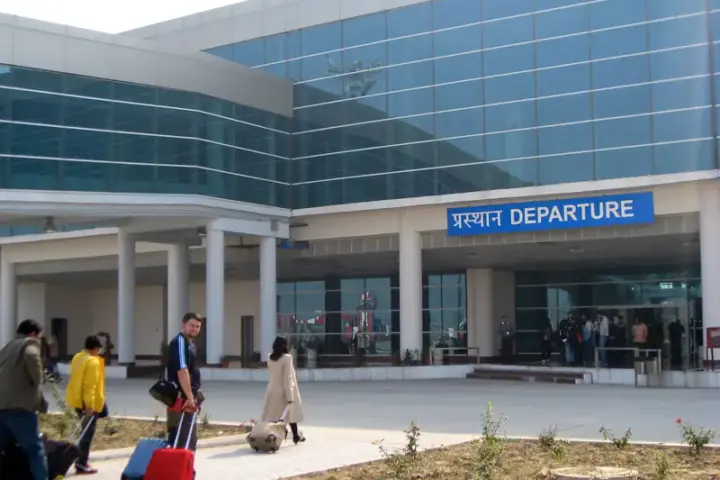
A dispute over where Mumbai’s international flights should operate from has surfaced in reporting since around October 25, 2026, with multiple outlets describing a proposed shift of roughly 265 weekly international departures away from Terminal 2 (T2) at Chhatrapati Shivaji Maharaj International Airport, with some flights reportedly earmarked for the newer Navi Mumbai International Airport. The figures circulating, including a share described as about a third of T2’s international schedule, are being reported as a proposal under discussion rather than a change that has already taken effect across the board. Several airlines are reported to have pushed back, and the matter has drawn in India’s civil aviation authorities, according to current coverage.
What is being reported
According to reporting from outlets including The Hindu, CNBC-TV18, Livemint, Fortune India and Rediff, the plan under discussion would move a significant block of international flights, cited at roughly 265 departures a week, out of T2 and toward Navi Mumbai’s airport. The reporting frames this as a proposal tied to redevelopment work at Terminal 1 (T1), rather than as a finalized reallocation. Coverage has not established that every airline or every route in that figure has actually moved; readers should treat the numbers as the scale of what is being discussed, not a completed transfer.
Why T1 redevelopment is driving the pressure
Mumbai’s airport has long run a two-terminal structure, with T1 historically handling a large share of domestic traffic and T2 consolidated with international and some domestic operations. The airport operator’s stated rationale, as reported, is that T1 needs renovation or redevelopment work, and that this work reduces available capacity at the airport during the construction period. That capacity squeeze is the reported reason additional flights are being asked to move elsewhere, with Navi Mumbai positioned as the release valve. This is a statement of the operator’s position as carried in current coverage, not an independently verified safety finding, and nothing in the reporting cited here establishes that T1 is unsafe to operate from.
Why moving airlines between airports is not like changing terminals
Shifting a flight from one terminal to another within the same airport is largely an operational housekeeping matter: ground staff, baggage systems and gate assignments adjust, but passengers still land at the same airport, use the same taxi and transit links, and connecting itineraries generally stay intact. Moving flights to a different airport altogether is a different proposition. Navi Mumbai International Airport is a separate facility, with its own access roads, taxi and rail connections, and its own relationship, or lack of one, to the metro and suburban transport networks that passengers use to reach South and Central Mumbai. An airline that splits its network across two airports also splits its ground infrastructure, crew bases, catering contracts and aircraft turnaround logistics, which is why airlines are reported to view the move as more than a scheduling adjustment.
The airline economics argument
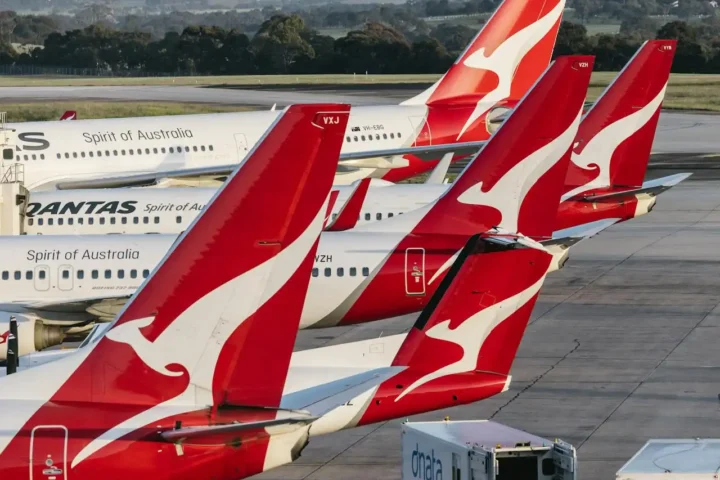
Reporting indicates that airlines, including a cited concern from Air France-KLM, have raised objections framed around consultation and operational duplication. The core argument attributed to carriers is that operating out of two airports in the same city multiplies fixed costs: separate check-in counters, separate crew and ground-handling arrangements, and separate contingency planning for weather or technical diversions. Airlines are also reported to be concerned about connecting passengers, who may need to transfer between a domestic flight at one Mumbai airport and an international flight at the other, a transfer that takes materially longer and carries more risk of missed connections than a same-terminal transfer. The International Air Transport Association’s reported position has echoed concerns about the pace and consultation process behind the proposed change, according to the coverage reviewed, rather than endorsing or rejecting the shift outright.
Why passenger connectivity is the central friction point
For travelers, the practical stakes are less about which terminal a flight departs from and more about how long it takes to get between the two airports and what that means for connections, cost and predictability. Navi Mumbai airport’s road and transit links to the existing airport and to the city are still being built out, according to available reporting, which is why airlines and passenger advocates flagged connectivity as a concern tied to any near-term shift. A split-airport city works well in markets where fast rail or highway links make the transfer routine; whether Mumbai’s connecting infrastructure is at that stage yet is part of what is under discussion.
Government mediation and what remains unsettled
Current reporting describes the central government, through its civil aviation ministry, as having intervened to pause or reconsider the pace of the proposed shift following airline objections, with further consultation reportedly expected between the airport operator, airlines and regulators. This is reported as an intervention to slow or revisit the process, not as a permanent cancellation of the broader plan to redistribute flights as T1 redevelopment proceeds. What is confirmed by reporting so far is that a proposal exists, that it has drawn formal objections from at least some airlines and from IATA on consultation grounds, and that the government has stepped into the discussion. What has not been established in the reporting reviewed is a finalized schedule of which flights, if any, will permanently relocate, on what timeline, or with what connectivity guarantees for passengers moving between Mumbai’s airports.