 Rahul Somvanshi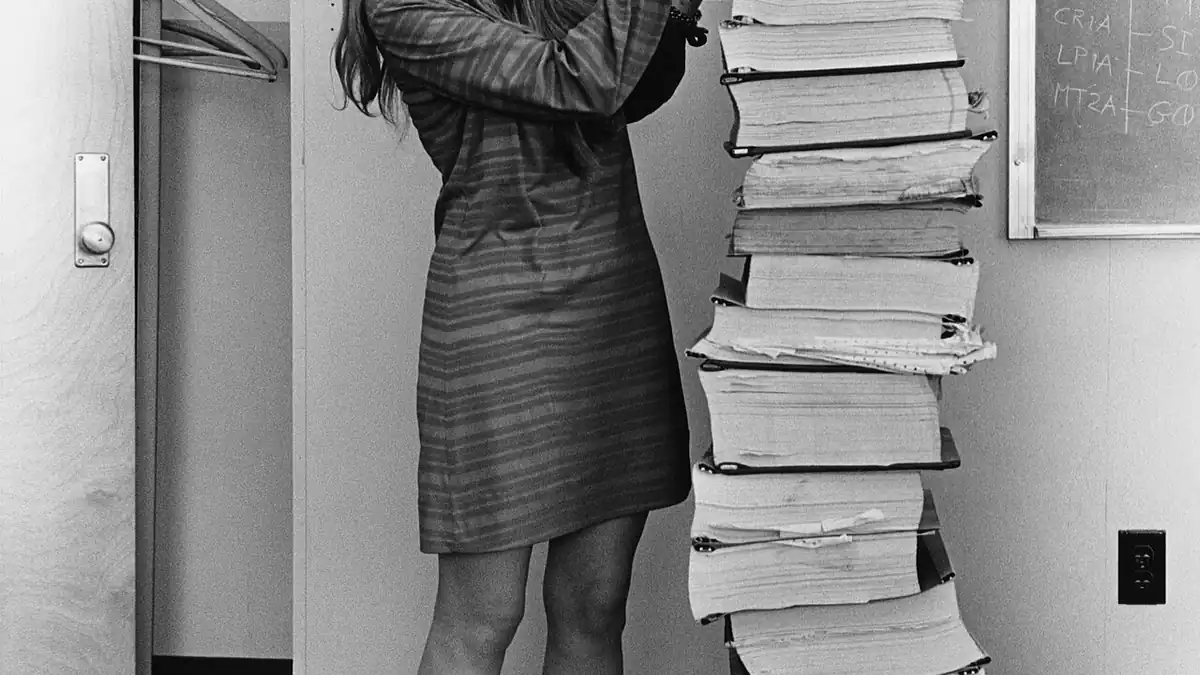
Margaret Hamilton died on September 30 at age 90. MIT announced her death on October 7. She directed the software engineering division that produced the flight code for NASA's Apollo program — and the specific decisions she made while writing it directly saved the Apollo 11 Moon landing from failure.
That last sentence is not a tribute. It is a technical fact, documented in mission records.
What She Built and Why It Mattered
Hamilton led the Software Engineering Division of the MIT Instrumentation Laboratory, where she oversaw a team of more than 400 people developing onboard flight software for both the Apollo Lunar Module and the Command/Service Module.
Her central technical contribution was a concept called priority-driven processing, or asynchronous executive scheduling. In simple terms: she built the Apollo Guidance Computer to behave like an emergency dispatcher rather than a queue. When the computer's workload exceeded its capacity, her architecture automatically identified which tasks were mission-critical and kept those running, while shedding background calculations that could wait.
The significance of this became clear at 102 hours, 38 minutes of mission elapsed time — approximately seven minutes before Apollo 11's lunar module Eagle touched down on the Sea of Tranquility.
Margaret Hamilton's passing marks the loss of the architect who built modern computing's safety foundations. Beyond the iconic photograph of code stacked to her height, Hamilton created the concept of software fault tolerance that allowed Apollo 11 to safely land on the Moon. Today's aerospace engineers, avionics designers, and software architects operate on principles she pioneered — proving that software requires the same mathematical discipline as physical flight hardware.
The 1202 Alarm
An improperly configured pre-flight checklist had left the rendezvous radar in the wrong electrical mode. That radar began flooding the Apollo Guidance Computer with spurious processing cycles during the final descent, pushing the computer past its operational limit.
The 1201 and 1202 program alarms began appearing on Armstrong's display. Mission Control in Houston had roughly 30 seconds to decide whether to abort.
Hamilton's priority architecture had already begun working. The computer automatically shed the radar's spurious background load while preserving the systems that actually controlled the landing: the landing radar, the engine throttles, and life support. The computer was overloaded — and still flew the mission.
Flight controller Steve Bales confirmed the landing could continue. Armstrong and Aldrin touched down.
MIT's records document that Hamilton coined the term "software engineering" deliberately. Hardware engineers at the time dismissed software as an informal process. She formalized it with the same mathematical rigor applied to physical aircraft components because, as she later recalled in MIT-preserved oral histories: "There was no second chance. We had to find a way to let the computer drop low-priority tasks so the thrusters and landing radar could keep firing."
A Legacy in Every Safety-Critical System Flying Today
Hamilton's Apollo architecture did not stay at NASA. Priority-driven interrupt scheduling — the principle that safety-critical functions must continue running even when a system is overloaded — is embedded in the software running commercial avionics, medical devices, spacecraft autonomous navigation systems, and the flight computers in every modern aircraft.
She received the Presidential Medal of Freedom in 2016. NASA awarded her the Exceptional Space Act Award. MIT's formal tribute describes a scientist who spent decades arguing that software deserved formal engineering treatment — an argument the Apollo 11 landing record settled in her favor.
How did Margaret Hamilton's software save the Apollo 11 Moon landing?
During Eagle's final descent, an overloaded rendezvous radar triggered 1201 and 1202 program alarms. Hamilton had engineered the flight software to use priority-driven processing, which automatically dropped low-priority radar background tasks while keeping landing radar, thruster controls, and life support running. Mission Control confirmed the landing could proceed, and Armstrong and Aldrin touched down approximately seven minutes later.
MIT and the Smithsonian Institution are expected to announce tributes and potential archival releases of Hamilton's unclassified flight software documentation. Her work on the Apollo Guidance Computer remains an active research subject in both computer science history and aerospace safety engineering.