 Sonali Tiwary
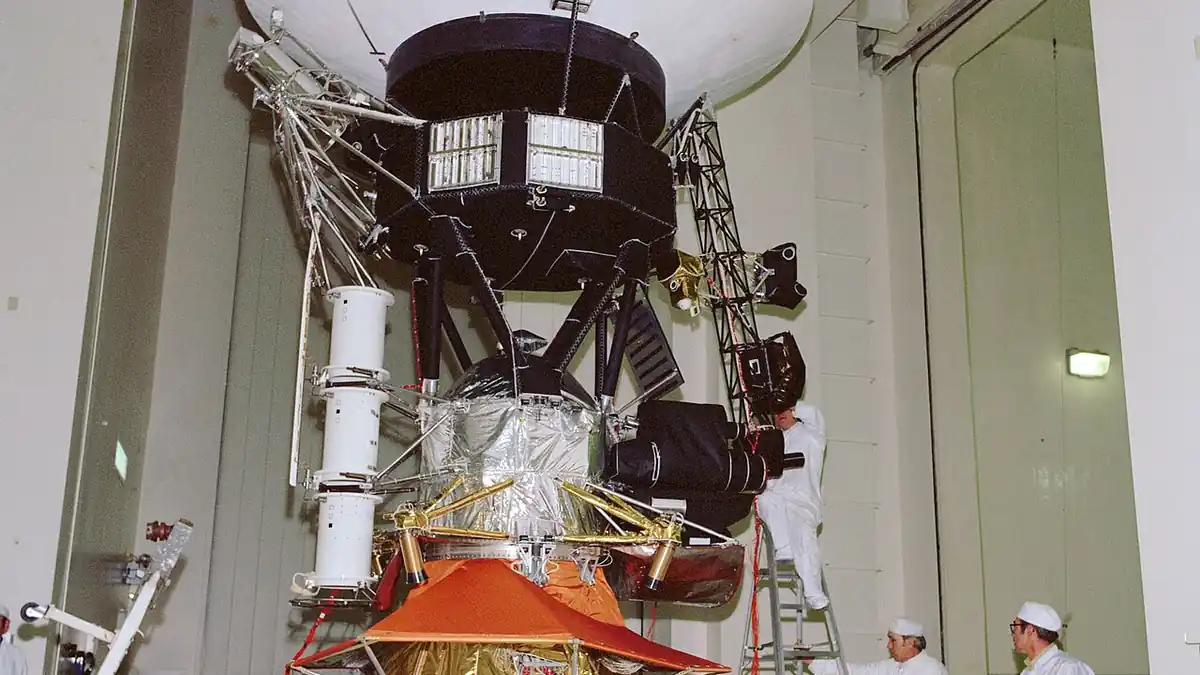
NASA’s Voyager 1 probe crossed the one light-day distance from Earth on November 18, 2026, at 5:16 a.m. EST. The Jet Propulsion Laboratory confirmed the milestone at about 173 Astronomical Units. It is not a physical boundary the probe passes through — it is the point at which a conversation with the most distant human-made object in existence takes two full days to complete.
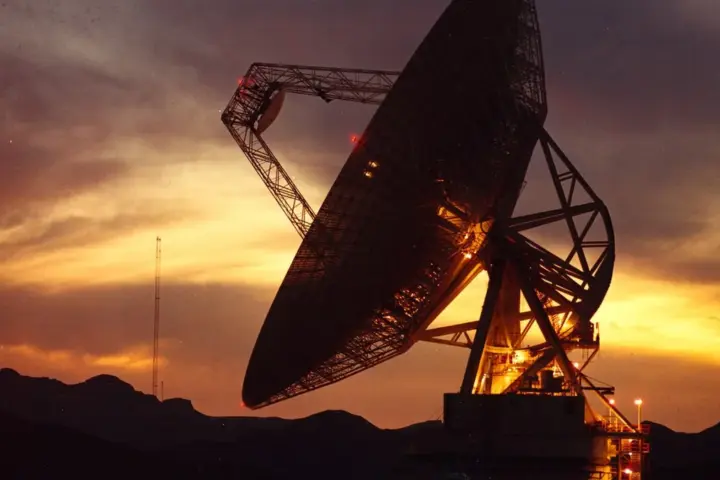
Voyager 1 launched on September 5, 1977. It has now traveled 16.09 billion miles — 25.90 billion kilometers — from Earth. One light-day is a measure of distance: how far light travels through a vacuum in exactly 24 hours. At 173.14 AU, every radio transmission sent from JPL’s Deep Space Network takes a full 24 hours to reach the spacecraft one way. Project Manager Suzanne Dodd and her team in Pasadena confirmed the probe was healthy and its science instruments were active at the moment of the Voyager 1 one light-day crossing.
Voyager 1 remains fully operational in interstellar space, transmitting continuous magnetic field and plasma wave data. Reaching one light-day means every radio command sent from mission controllers now takes a full 24 hours to reach the spacecraft, and its response requires another 24 hours to return — creating a mandatory 48-hour round-trip delay for all future telemetry checks and engineering decisions.
Voyager 1’s Power Budget and the Coming Instrument Shutdowns
The probe runs on a plutonium-238 radioisotope thermoelectric generator that loses a few watts of electrical output each year. JPL engineers have said they will need to switch off science instruments one by one in the coming years to keep the probe operating, with the spacecraft expected to go fully silent in the late 2020s.
Voyager 1 crossed the heliopause — the boundary where solar wind gives way to interstellar space — in August 2012. Since then, it has returned direct measurements of the interstellar medium that no prior instrument has taken. The NASA briefing ahead of this light-day crossing mapped the probe’s precise progress toward this target. The plasma readings gathered at the solar system’s edge, examined in NASA’s work on the 90,000°F heliosphere boundary, helped scientists revise their understanding of where our solar system ends.
At one light-day from Earth, mission controllers can no longer respond to onboard faults in real time. Any commanded fix takes 24 hours to arrive and another 24 hours to confirm. If an automatic shutdown triggers, the spacecraft must work through the recovery entirely by itself — using analog computing hardware that is 49 years old.
What does one light-day mean?
A light-day is a unit of astronomical distance equal to how far light travels through a vacuum in 24 hours — approximately 16.09 billion miles (25.90 billion kilometers). That span means radio transmissions now take exactly 24 hours one way between Earth and Voyager 1, requiring a full 48-hour round trip for any exchange.
Voyager 1 is traveling toward the constellation Ophiuchus at roughly 38,000 miles per hour. Its twin, Voyager 2, launched two weeks earlier in 1977 on a separate trajectory and remains closer to Earth. Voyager 2 is projected to pass its own one-light-day threshold around 2035. For now, Voyager 1 keeps transmitting from territory no probe has entered before.