 Sonali Tiwary
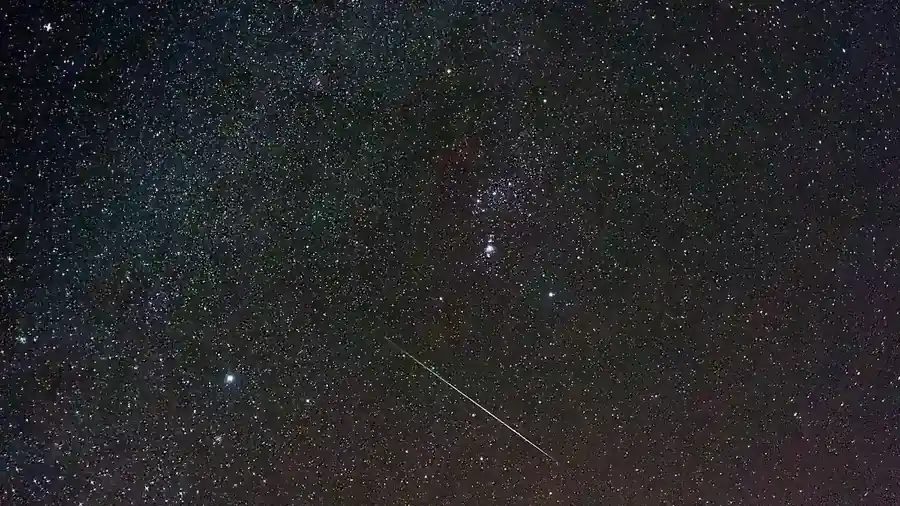
If you missed the peak of the Leonid meteor shower, you can still spot shooting stars in the night sky. While the shower has passed its maximum activity window, meteors will continue to streak across the darkness through the end of the month. Here is how and when to look.
The Leonid meteor shower reached its peak activity window around November 16–17, 2026, with viewing opportunities extending into the early morning of November 18 depending on local time zones. The International Meteor Organization (IMO) projected a peak Zenithal Hourly Rate (ZHR) of approximately 15 meteors per hour. A ZHR of 15 is a standardized theoretical rate calculated under perfect observing conditions with a dark sky and the radiant directly overhead; in practice, observers typically count fewer meteors under real-world conditions. The meteors originate from debris shed by comet 55P/Tempel-Tuttle and hit Earth’s upper atmosphere at roughly 71 kilometers per second (160,000 mph). A waxing moon illuminated approximately 39% of the night during the peak, hiding fainter meteors before setting.
If you missed the peak, observing remains viable. The IMO confirms that Leonid activity continues through November 30, though the rate of meteors declines steadily after the peak. For the best viewing odds, travel to a dark-sky location away from urban lighting. Allow your eyes at least 20 minutes to adjust to the dark, and plan to observe during the pre-dawn hours after the moon has set.
Meteors can appear anywhere in the sky, not just in the constellation Leo where the radiant lies. Meteors close to the radiant appear foreshortened with brief, compact trails because they are traveling almost directly toward the viewer. Looking slightly away from Leo allows observers to see longer, more dramatic ionization streaks. Lie back on a blanket or reclining chair to take in a wide view of the night sky, and avoid bright smartphone screens that disrupt dark-adapted vision. Karmactive has also covered rare astronomical night-sky viewing opportunities and cometary debris observations.
What is the best time to see the Leonid meteor shower? The best time is during the pre-dawn hours, between roughly 1:00 a.m. and dawn, after the moon has dropped below the horizon. Although the peak has passed, pre-dawn skies still offer the dark contrast needed to spot lingering cometary dust particles.
Many observers look directly at the constellation Leo, but that is not the most effective strategy. Because of optical foreshortening, meteors near the radiant create short flashes. Looking toward adjacent constellations reveals longer luminous streaks that remain visible for several seconds.
The 2026 Leonids have passed their peak, but the shower remains active through November 30. Astronomers note that no major meteor storm was anticipated this year, as Earth is not expected to encounter dense cometary dust clouds from Tempel-Tuttle until later in the century. A dark location, warm clothing, and patience offer your best chance to spot shooting stars this week.