 Rahul Somvanshi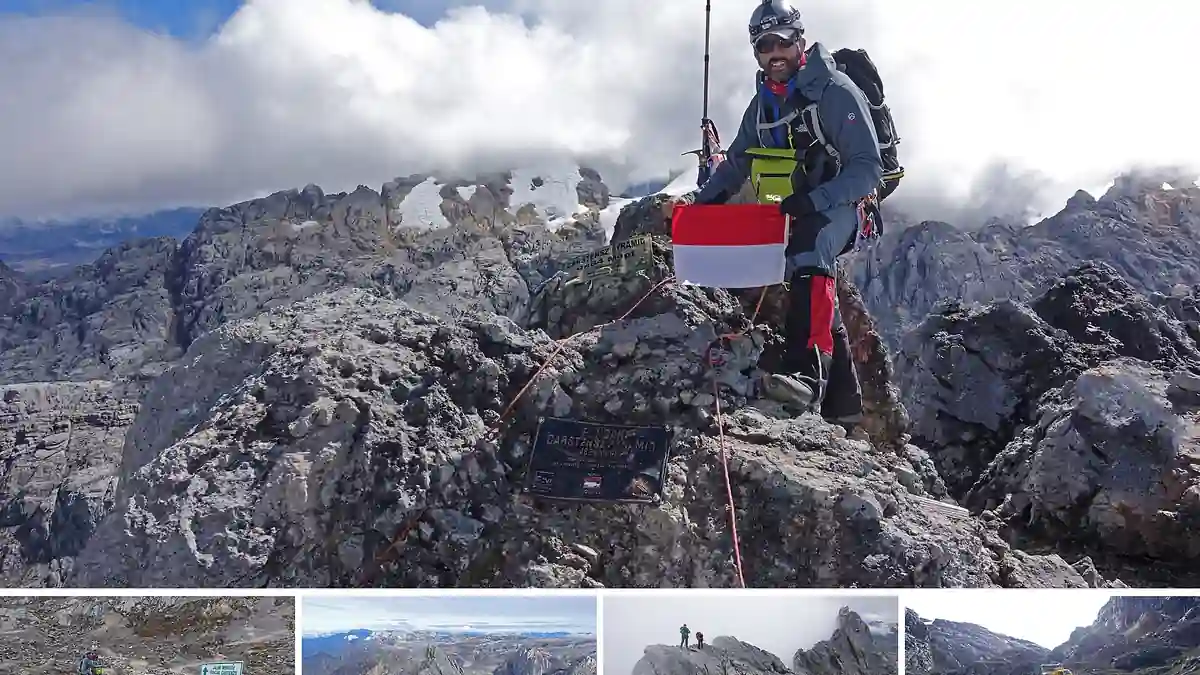
—
Indonesia's Last Glaciers on Puncak Jaya Are Vanishing—Here's the Timeline
The tropical glaciers on Puncak Jaya in Papua, Indonesia are on a documented path to complete extinction. A peer-reviewed study published in 2026 projects that the remaining ice could disappear by 2030, based on four decades of satellite imagery and field measurements. These are among the last remaining tropical glaciers outside the Andes and Himalayas.
From 1980 to 2024, Puncak Jaya’s tropical glaciers lost 7.28 square kilometers of ice cover, representing 97% of the area that existed in 1980. Of the six glaciers mapped at the start of that period, four have already disappeared entirely. What remains is fragmented into small, isolated ice formations that glaciologists classify as stagnant dead ice: structures that no longer flow under their own weight and cannot replenish through accumulation. The Indonesian Agency for Meteorology, Climatology and Geophysics has tracked the remaining surface through satellite monitoring and found ice thickness thinning at rates exceeding 2.5 meters per year. The mountain sits at 4,884 meters above sea level on the island of Papua.
The projected loss of Puncak Jaya’s glaciers would mark the disappearance of Papua’s remaining tropical ice. For science educators and policymakers, this serves as an unambiguous warning of how rapidly warming temperatures extinguish delicate cryospheric systems. Beyond ecological changes to local mountain runoff, the disappearance strips indigenous communities of sacred cultural heritage and may serve as a cautionary reference point for the fate of tropical glaciers in Africa and the Andes.
Why Rain Is Now Finishing What Temperature Started
The standard explanation for glacier retreat is rising air temperature melting ice from the surface down. What is happening at Puncak Jaya involves an additional mechanism that accelerates the collapse.
Warming summit air has changed the precipitation phase at high altitude. Storms that previously deposited snow on the ice cap now fall as liquid rain. Snow replenishes glaciers; rain does the opposite. On already-thinning ice, rainfall actively carves melt fissures and breaks apart ice structures that would otherwise persist for several more seasons. Without new snow accumulation, there is no mechanism for the remaining ice to recover.
This matters beyond the glaciers themselves. As the bare karst limestone beneath the ice becomes exposed, it absorbs solar radiation far more efficiently than white ice—a feedback called albedo collapse. The exposed rock warms faster, which accelerates melt of adjacent ice. The World Glacier Monitoring Service includes the site in its global tropical glacier monitoring.
For the Amungme and Damal peoples, whose ancestral traditions identify the ice peaks as sacred resting places, the loss is not recorded in glaciology journals. Ice cores from sites like these can contain irreplaceable paleorecords—climate data from centuries before modern monitoring began. Once the ice is gone, those records are gone with it.
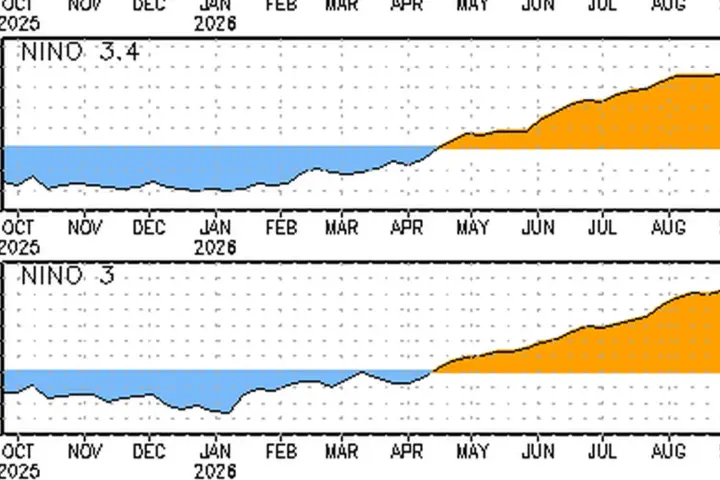
The 2030 projection is a scientific estimate based on current conditions, not a guaranteed date. Sustained El Niño conditions bringing above-average warmth to the region could accelerate the timeline.
Why are Indonesia's glaciers disappearing?
Indonesia’s Puncak Jaya glaciers are melting due to rising atmospheric temperatures combined with El Niño weather patterns that bring sustained warmth to the region. As summit temperatures consistently exceed freezing, snowfall has shifted to warm rain. Without new snow to replenish the ice, the remaining formations are thinning at rates exceeding 2.5 meters per year and are projected to vanish by 2030.
—