 Sunita Somvanshi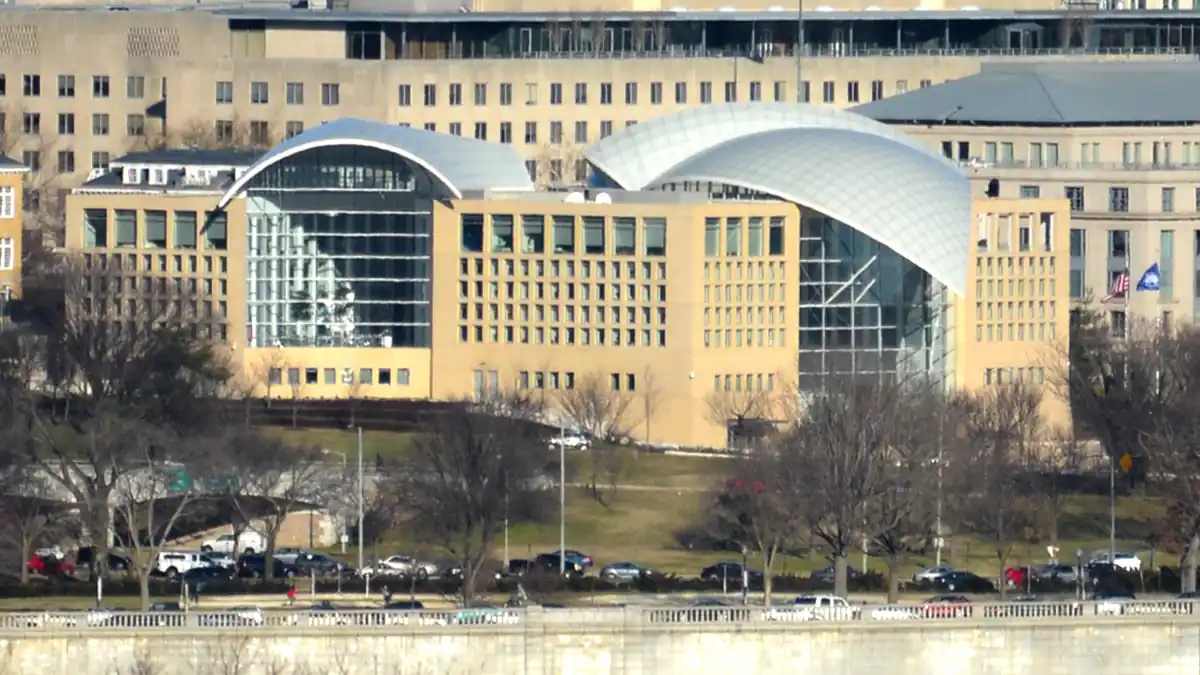
Former board members of the U.S. Institute of Peace have asked a federal appeals court to stop the proposed permanent carving of Donald Trump's name into the facade of its Washington headquarters. The emergency motion, filed with the U.S. Court of Appeals for the D.C. Circuit, argues the alteration would cause irreparable harm while a broader legal dispute over USIP's control is still being resolved.
The two distinct things at issue
There is an important distinction the emergency filing turns on. Trump's name has already been attached to the building's exterior — but in removable silver lettering, not a permanent alteration. The former board members' court filing says the administration now intends to have that name carved directly and permanently into the building's facade, and that a contractor has been selected with preparations possibly already underway.
Congress created USIP in 1984 as an independent, federally funded institution. USIP's lawyers argue that the building's design itself expresses the institute's independent mission, and that a permanent carving would change that message in a way that cannot be undone while litigation continues.
The legal background
This filing sits inside a larger dispute. A federal judge ruled in May 2025 that the administration's earlier actions to dismantle USIP were unlawful, though that ruling was stayed pending appeal. The current emergency motion is not asking for a final ruling on who controls the institution — it is asking the court to preserve the status quo on the building's facade specifically, while those larger questions work through the courts.
The White House had not responded to the filing in the reports available at time of publication. The court has not yet ruled on the emergency motion.
Why a building facade is a legal question
The argument is not primarily aesthetic. Under the laws governing congressionally created institutions, permanent physical alterations to a facility that embodies an organization's stated mission can carry legal weight separate from standard federal property management. The filing frames the carving not merely as a naming issue but as an attempt to permanently rebrand an institution whose independence is written into its founding statute.
The strongest factual point in the record is the difference between what has already been done — removable lettering that can be taken down — and what the filing alleges is planned: irreversible stone carving. Whether the court grants emergency relief will determine whether that line is crossed before the underlying case is decided.
For US readers following the broader question of executive authority over congressionally created institutions, this case sits alongside other disputes about presidential control of federal bodies established by Congress with defined statutory independence.
Frequently Asked Questions
Has Trump's name been permanently carved into the USIP building?
Not according to the available court filings. Trump's name has been attached to the building using removable exterior lettering. Former USIP board members say the administration is now planning to permanently carve the name into the facade, and they have asked a federal appeals court to stop that work.
What is the US Institute of Peace?
Congress created USIP in 1984 as an independent, federally funded institution focused on conflict prevention and resolution. Its headquarters in Washington was designed to express its independent mission. The institute became the subject of litigation in 2025 when the administration moved to dismantle it, with a federal judge later ruling those actions unlawful — a ruling currently stayed on appeal.
What does the emergency court motion ask for?
The emergency petition filed with the U.S. Court of Appeals for the D.C. Circuit asks the court to block any permanent carving of Trump's name into the USIP headquarters while broader litigation over control of the institution continues.
The court's decision on the emergency motion could come quickly. A ruling on the broader USIP control dispute remains pending. Check back for updates as the appeals court responds.
Related Karmactive coverage: Trump-era federal facility repair coverage.