Sunita Somvanshi
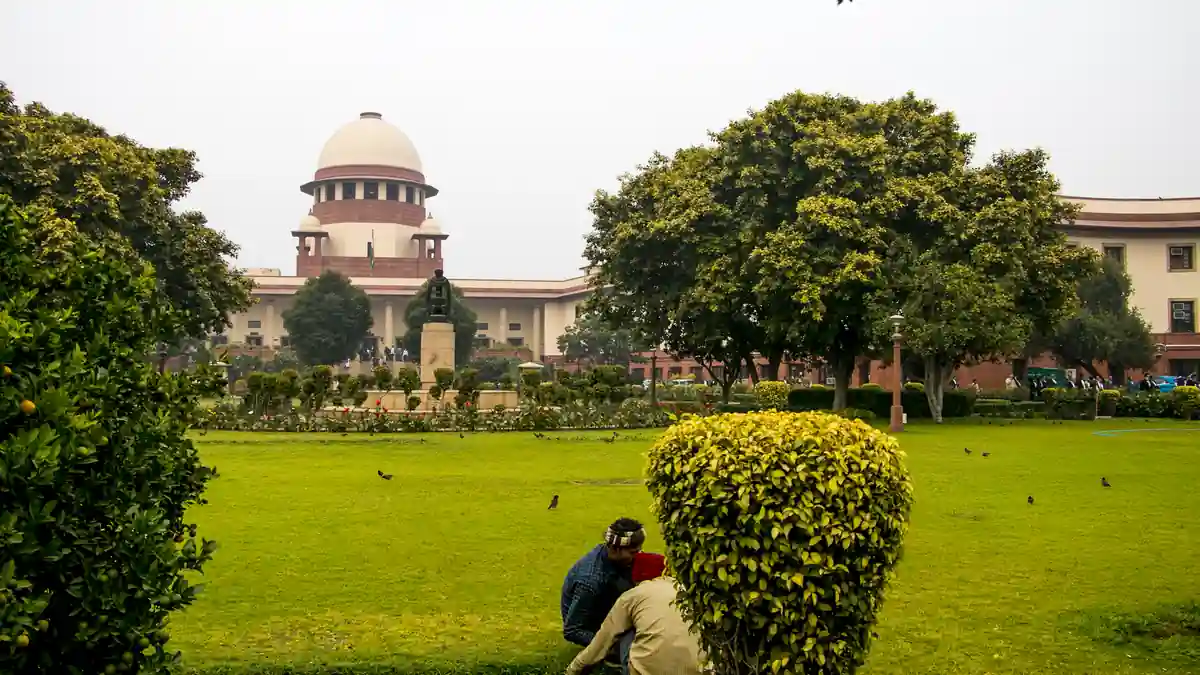
“If you park your electric car in the Supreme Court here, by the time we dismiss the matter, you go back and your car is charged.”
Justice P.S. Narasimha said those words during a hearing at the Supreme Court of India this week. They were not part of any order. They were not directed at a party. The case before him was not about electric vehicles at all.
The remark was made orally by Justice P.S. Narasimha, sitting with Justice Alok Aradhe, during the hearing of Shri Swami Samarth Agencies Pharmaceutical and Consumer Distributors v. M.I.D.C. and Ors. (Diary No. 53282-2026). That case involves a pharmaceutical distribution dispute. Electric vehicle charging infrastructure had no formal bearing on the proceedings. The judge’s observation — that installing EV charging stations at the Supreme Court premises would encourage lawyers and litigants to switch to EVs — arose as an incidental comment, not as a direction to any party or institution.
If you own an EV in India, a Supreme Court judge’s remarks about installing charging stations at the court are a signal, not a policy. Justice Narasimha said it would encourage EV adoption. But the case involved a pharmaceutical dispute, not EV policy. Whether the observation leads to formal action depends on future court proceedings in related matters.
Justice Narasimha also observed that “switching from fossil fuels to electric makes a world of difference in terms of pollution and sustainability.” That statement carries no legal weight in itself. An oral observation is distinct from a formal direction or order; the quoted remarks were reported as oral observations, not as a direction in the case.
A judicial observation is a comment made by a judge during a hearing that is not part of the court’s formal ruling or order. It can indicate the direction of judicial thinking and sometimes precedes formal directions in subsequent hearings — but it is not enforceable on its own in the same way as a court order. Courts regularly make observations on matters tangentially connected to a case before them. Those observations sometimes prompt government departments to take action proactively; more often they remain part of the oral record without procedural consequence.
The Supreme Court of India is one of the country’s most visible institutions. When a sitting judge publicly expresses support for EV infrastructure at the court itself, it enters a policy conversation that the central government has pursued through India’s EV policy framework and state-level charging mandates. It is not a mandate.
What did Justice PS Narasimha say about EV charging?
Justice Narasimha orally observed during a hearing that installing EV charging stations at the Supreme Court would encourage people to switch to electric cars. He said: “If you park your electric car in the Supreme Court here, by the time we dismiss the matter, you go back and your car is charged.” The remark came during a hearing on a pharmaceutical distribution dispute and was a judicial observation — not a court order.
Was this a binding Supreme Court order on EV charging?
No. The statement was an oral observation made during a hearing on an unrelated case. It has no legal force as a court order. An order requiring the installation of EV charging stations at the Supreme Court has not been issued.
If the court issues a formal direction on EV charging infrastructure in a subsequent hearing, this article will be updated.
See also: Epa Proposal To Reverse Climate Finding Could Save 54B Annually
See also: Trump Blocks Californias 2035 Gas Car Ban State Files Immediate