 Sunita Somvanshi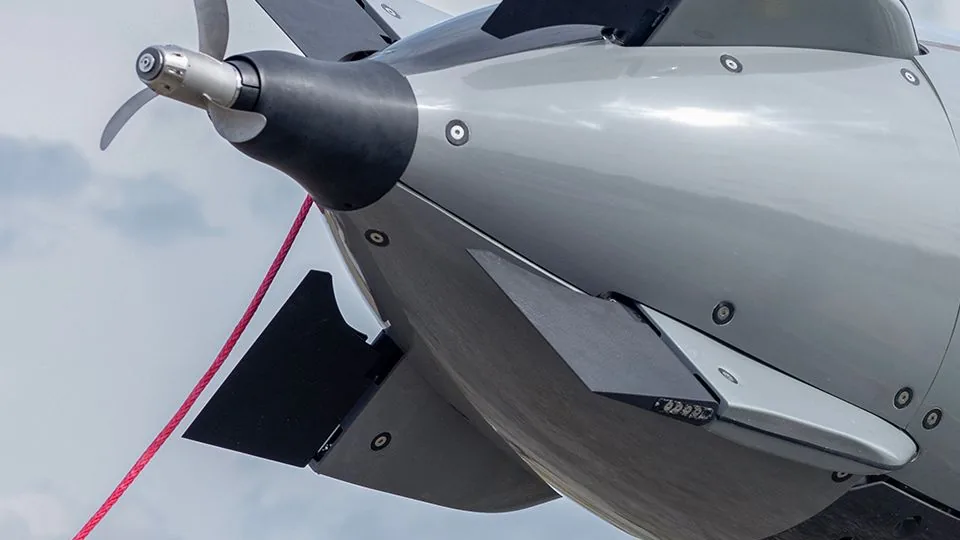
Iran says it captured a U.S. underwater drone near the Strait of Hormuz. The vehicle was not a crewed submarine in the traditional sense. It was an autonomous underwater vehicle, or AUV, an uncrewed, self-guided machine. The specific system is identified as Anduril's Dive-LD.
Iran’s Revolutionary Guards announced the capture. The U.S. Pentagon acknowledged the loss and described the circumstances differently, saying the older vehicle had malfunctioned more than a day earlier and did not contain classified systems or data.
Unlike a crewed submarine, an AUV such as the Dive-LD has no personnel aboard. Some early reports used the phrase “submarine drone,” but that framing is inaccurate; the verified facts identify it as the Anduril Dive-LD AUV.
Public specifications for the Dive-LD show a machine about 5.8 meters long and 1.2 meters in diameter, capable of up to 10 days on a single mission and rated to work at depths down to 6,000 meters.
The listed missions for this class of vehicle include mapping the seabed, surveillance and reconnaissance, mine warfare, seabed operations, hydrographic surveying, and pipeline and cable inspection. In 2024, the U.S. Navy’s Program Office for Advanced Undersea Systems and the Defense Innovation Unit selected Anduril, along with two other vendors, to prototype and develop large unmanned underwater vehicle platforms. The published specs show what the platform can do generally; they do not confirm exactly which sensors or software were on the specific vehicle involved.
Claims that Iran has reverse-engineered the vehicle are not established as fact by the primary material and remain unconfirmed.
The Strait of Hormuz is a critical shipping lane. The verified facts give a clear picture of the vehicle’s design and intended roles, even if the circumstances of the incident stay contested. For broader context on autonomous maritime systems, see this Saildrone Voyager explainer.
—