 Sonali Tiwary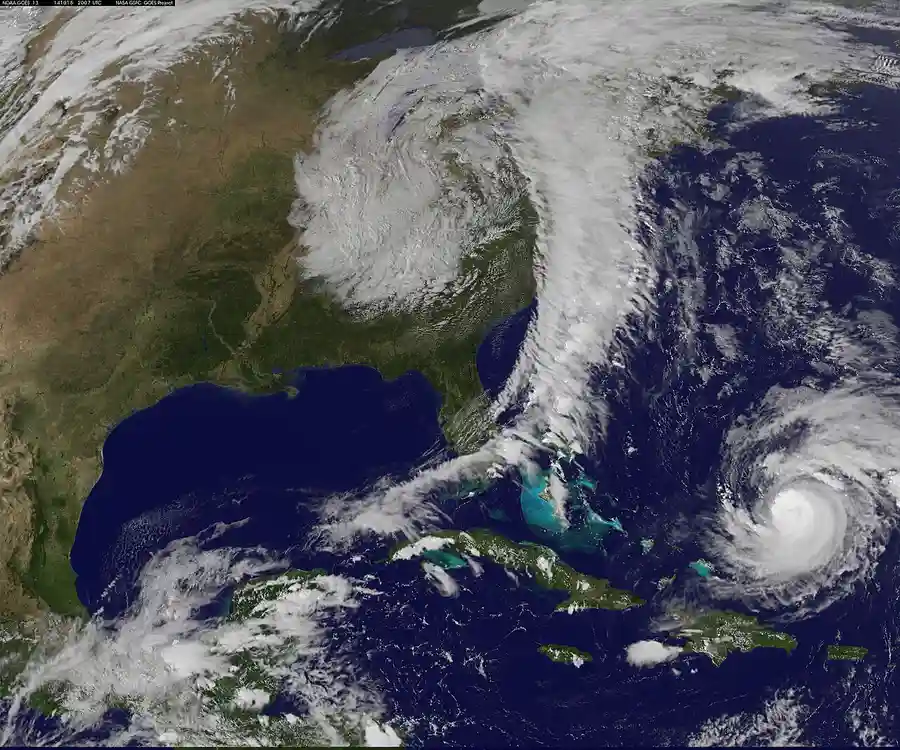
Tropical Storm Dolly has formed in the central Atlantic Ocean as the fourth named storm of the 2026 Atlantic hurricane season. The system is forecast to bring heavy rain to Caribbean islands.
The National Hurricane Center designated Dolly as a tropical storm on August 27, 2026. At the time of designation, the storm was positioned about 1,555 miles east of the Leeward Islands at coordinates 13.6°N, 38.7°W. Maximum sustained winds reached 40 mph with the storm moving west at approximately 24 mph.
Central pressure measured 1007 millibars, indicating a relatively weak system. The storm is embedded within an environment containing moderate vertical wind shear and dry air from the Atlantic basin. These conditions limit rapid intensification.
**Forecast track and impacts:**
The National Hurricane Center’s forecast shows Dolly tracking westward across the Atlantic toward the Caribbean. Models project little change in strength over the next 48 hours, with the system anticipated to weaken and degenerate into a tropical wave as it approaches the Lesser Antilles.
Heavy rain could affect the Leeward Islands late Saturday into Sunday, with the Virgin Islands, Puerto Rico and Hispaniola potentially receiving significant rainfall Sunday and Monday. This heavy rain may produce flash flooding, especially in areas of higher terrain. No coastal watches or warnings were in effect as initial advisories were issued, while interests in the Leeward Islands have been advised to monitor Dolly.
**Atlantic hurricane season context:**
Dolly’s formation in late August comes during a period when storm development typically increases. Atlantic hurricane season runs from June 1 through November 30. The 2026 season is running behind schedule compared to typical patterns, as suppressed activity from El Niño has reduced the number of named storms in August compared to historical norms.
**U.S. threat assessment:**
There are currently no coastal watches or warnings in effect for the United States. The system will be monitored by NOAA, with advisories updated every six hours as the situation develops.