 Rahul Somvanshi
For decades, planetary scientists faced a puzzle: Was Earth’s formation a cosmic accident requiring a precise chain of unlikely events, or a natural outcome of physics? A research team led by Dr. Nader Haghighipour at the University of Hawaii’s Institute for Astronomy presented new computer models at the Origins 2026 conference in Paris that shift how scientists think about this question.
The problem with earlier models was their method. From the 1990s through the 2020s, researchers back-calculated starting conditions for planetary embryos. They ran simulations with predetermined arrangements designed to reproduce the Solar System as it exists today—Earth at 1 astronomical unit, Venus nearby, Mars smaller. This approach worked mathematically, but it was circular: the models were fine-tuned to generate what we already knew, making it impossible to ask whether Earth-like planets form naturally under realistic conditions.
The new approach reverses this logic. Instead of reverse-engineering starting conditions, the team ran over 1,000 simulations with randomized initial conditions and non-uniform material distributions across a protoplanetary disk. They let physics alone determine the outcome. The results were striking: Earth-sized planets at 1 astronomical unit formed in many runs as a standard outcome. Venus emerged in approximately 28 percent of simulations, often in orbits within the habitable zone. Mars-like bodies consistently appeared as smaller embryos.
What made this research computationally feasible was modern hardware. Calculations that previously consumed six to eight months on mainframe systems were completed in six to eight weeks on contemporary computers. This speed enabled thousands of simulations that revealed statistical patterns invisible in smaller sample sizes.
The implications extend beyond our Solar System. For exoplanet researchers searching distant star systems, these models suggest that Earth-like planets are not rare anomalies. However, a critical distinction matters: Earth-like planets and habitable worlds are not identical. A rocky planet orbiting in the right distance from its star remains subject to atmosphere chemistry, water inventory, geological activity, stellar radiation, and long-term climate stability. These factors determine habitability independently of planetary formation.
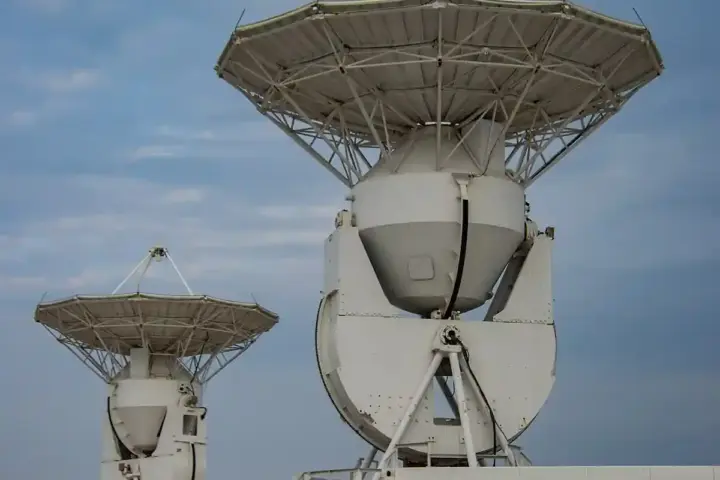
The research reflects a broader shift in planetary science: moving away from fine-tuned, reverse-engineered models toward physics-driven simulations that capture realistic conditions. Modern observations of distant protoplanetary disks from instruments like ALMA show material distributed unevenly—not uniformly. These new models incorporate that reality, making them more aligned with actual star system formation.
The 2026 research does not prove that Earth-like life is common. It suggests that rocky planets resembling Earth emerge naturally through gravitational collisions and orbital dynamics, without requiring improbable initial arrangements. That finding opens new questions about planetary diversity and refocuses where astronomers should look for potentially habitable worlds.