 Sonali Tiwary
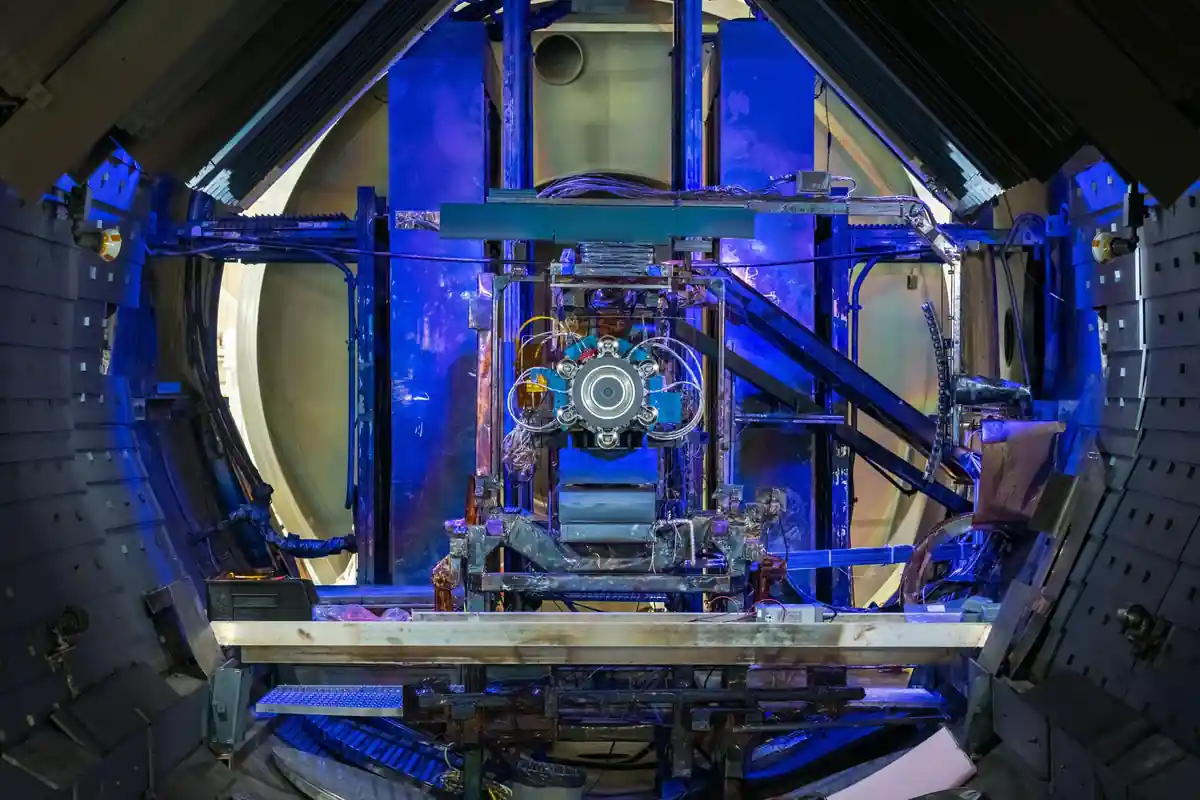
Satellite builders know that proving a new propulsion part can add substantial expense to building it. Electric propulsion testing often requires vacuum test facilities, and licensed technology carries its own costs. On November 9, 2026, NASA opened registration for a competition designed to ease both costs for U.S. companies, and it announced the competition on November 18, 2026. The NASA AMPERE Challenge 2026 offers a $500,000 prize pool, and registration runs through January 27, 2027.
NASA’s Advanced Mid-Power Electric Rocket challenge, known as AMPERE, is the first competition in the agency’s Tech Maturation Prize series. It asks U.S. companies to build prototypes of mid-power Hall effect thrusters. These are electric engines that push a spacecraft by accelerating propellant gas with an electric field. The total prize pool is $500,000, split between up to two winning companies at up to $250,000 each. NASA’s Glenn Research Center in Cleveland and the Jet Propulsion Laboratory in Southern California co-manage the project. Yet2 administers the challenge under contract to NASA. Registration closes January 27, 2027, at 5 p.m. EST.
For a U.S. company building mid-power propulsion, the cost math changes. Teams that reach Phase 2 can gain early access to NASA-developed Hall effect thruster technologies that use krypton as a propellant, through no-cost licensing. Phase 3 prototypes are tested at NASA Glenn without charge. Money that would have gone to licensing fees and test facility bills could go into building hardware instead. That is an inference from the terms, not a NASA estimate.
NASA says Hall effect thrusters use an electric field to accelerate a propellant gas, which suits long-duration missions. Think of it as a steady, gentle push rather than a sudden blast. Chemical rockets generally produce much higher thrust over comparatively short burns. Electric thrusters produce far less force but can run for long periods on a small amount of propellant.
The NASA technologies offered through this challenge are Hall effect thruster technologies that use krypton as a propellant. Krypton is generally cheaper than xenon, the propellant most often used in Hall effect thrusters that have flown, which makes it a practical option for cost-conscious builders.
Deep-space work keeps expanding. NASA’s Dragonfly rotorcraft is set to launch in 2028 for Saturn’s moon Titan. The Rubin Observatory has also flagged a dwarf planet candidate beyond Pluto.
NASA AMPERE Challenge 2026: The Three Phases
Phase 1 asks each team for a concept design, a manufacturing plan, and cost and performance projections. NASA may select two winners to advance. In Phase 2, winning teams build prototypes with NASA collaboration and gain early access to NASA-developed krypton Hall effect thruster technologies through no-cost licensing. Phase 3 sends those prototypes to NASA Glenn for testing at no cost to the teams.
For startups, the in-kind help may matter as much as the cash. Facility access and licensed technology are costs a small company might otherwise have to carry alone. Dr. Jason Frieman, AMPERE project co-owner at NASA’s Glenn Research Center, said the approach “seeks to remove key barriers and facilitate commercialization.”
How much money does the NASA AMPERE Challenge 2026 offer? NASA is offering $500,000 in total. The money is split between up to two winning U.S. companies, with up to $250,000 each. Winners also get no-cost licensing of NASA-developed krypton Hall effect thruster technologies and free prototype testing at NASA Glenn Research Center. Why does krypton matter for Hall effect thrusters? Krypton is a noble gas that is generally cheaper than xenon, the propellant most often used in Hall effect thrusters that have flown. NASA’s challenge technologies use krypton as a propellant, so a lower-cost propellant can make mid-power thrusters more affordable to build and test. That is an inference from general propellant costs, not a NASA cost figure. When is the deadline to register for the NASA AMPERE Challenge? Registration closes January 27, 2027, at 5 p.m. EST. The challenge is open only to companies incorporated in the United States with a primary place of business there. Eligible companies should read the official rules and eligibility requirements before signing up.NASA opened registration for the AMPERE Challenge on November 9, 2026, announced it on November 18, and hosted a Virtual Industry Day on November 19. The prize pool is $500,000, with up to $250,000 for each of two winning U.S. companies. Registration closes January 27, 2027, at 5 p.m. EST. Full rules are posted at the official competition portal.