Karmactive Team
If your local electric bill has climbed while tech giants fight over power grid permits and cooling water in your state, you are looking at the exact bottleneck pushing Silicon Valley toward Low Earth Orbit. What sounded like science fiction two years ago is now sitting in federal regulatory dockets in Washington.
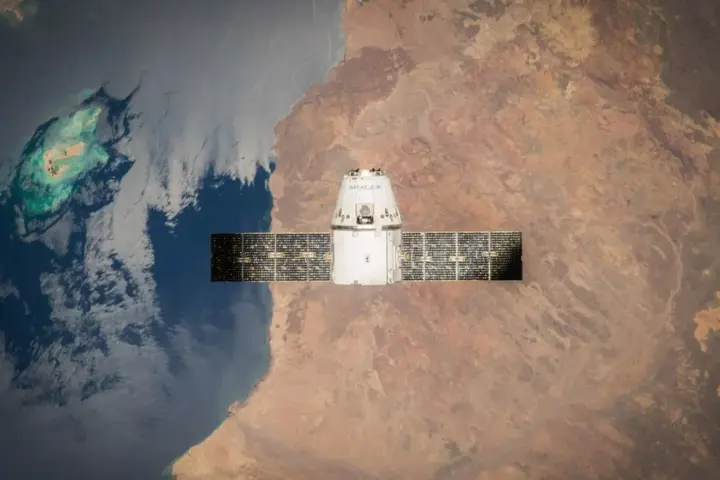
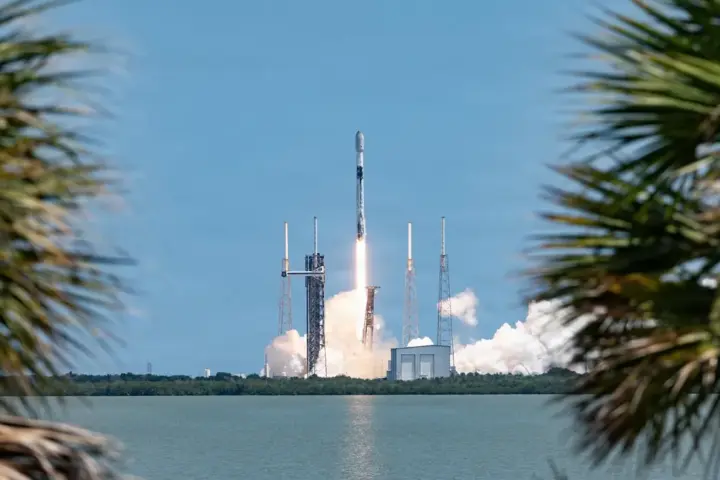
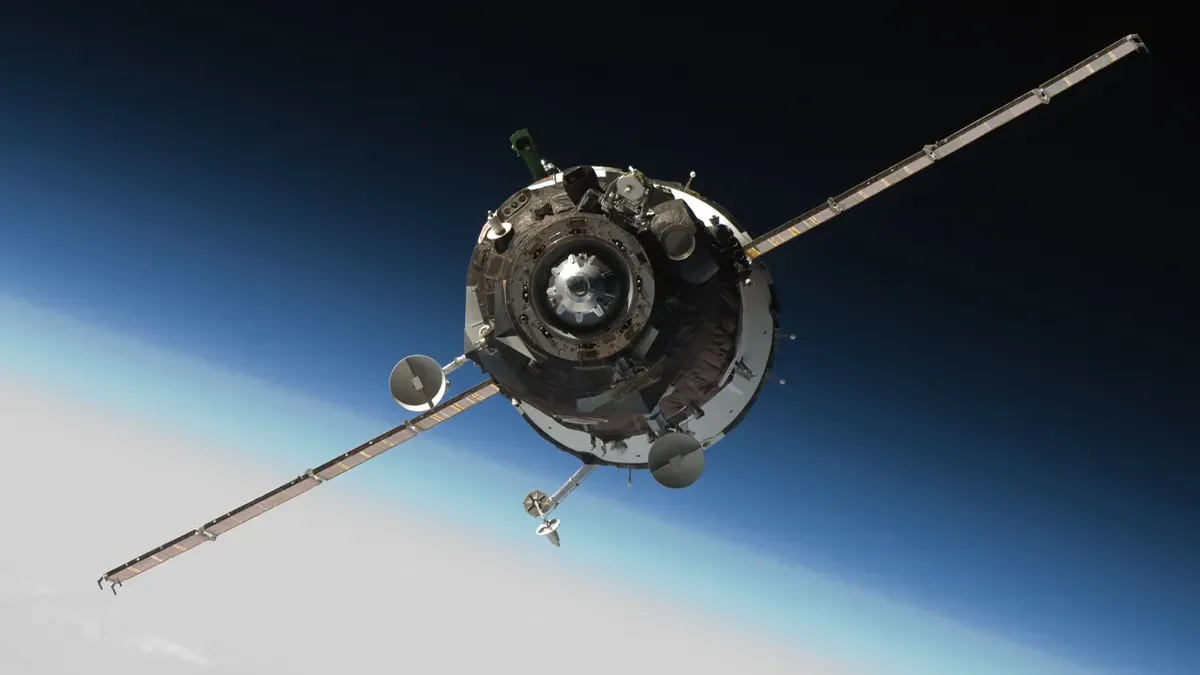
The push to build data centers in space has shifted from theoretical whitepapers to active hardware and federal spectrum applications in 2026. According to the U.S. Government Accountability Office report Science & Tech Spotlight: Data Centers in Space (GAO-26-109012), the Federal Communications Commission (FCC) has received multiple applications from U.S. companies since January 2026 to launch massive satellite constellations designed to process artificial intelligence and cloud workloads in orbit. Simultaneously, hardware is already running overhead: Kepler Communications and Axiom Space launched orbital compute nodes aboard a SpaceX Falcon 9 from Vandenberg Space Force Base on January 11, 2026, following Starcloud’s deployment of an NVIDIA H100 GPU on its 60-kilogram Starcloud-1 satellite.
For American ratepayers and tech investors, orbital compute is a direct response to a terrestrial grid crunch: the U.S. Department of Energy projects AI and cloud facilities will consume up to 12% of all U.S. electricity by 2028. While orbital servers won’t replace local cloud hubs overnight, FCC spectrum decisions and federal debris rules over the next 18 months will determine whether future AI training shifts off-planet or keeps driving up neighborhood utility bills.
The Environmental Tradeoff: Grid Relief vs. Orbital Debris
As we recently examined in our coverage of Google’s Project Suncatcher test on a SpaceX rocket, the primary allure of low Earth orbit is continuous solar energy without taking up land or municipal water on Earth. In sun-synchronous orbits, solar arrays receive roughly 1,361 watts per square meter without nightfall or cloud cover, offering a potential release valve for communities straining under terrestrial data center booms like Cheyenne. Processing raw imagery directly on satellites also cuts the radio bandwidth needed to beam terabytes of Earth-observation data back to ground stations.
The scale of the 2026 FCC filings, however, raises serious environmental and orbital-safety questions of its own:
* SpaceX / xAI Filing: Filed January 30, 2026, proposing up to 1,000,000 orbital data center satellites between 500 and 2,000 km altitude to target 100 gigawatts of AI compute.
* Starcloud Filing: Filed February 3, 2026, proposing an 88,000-satellite processing constellation alongside its Starcloud-2 mission carrying NVIDIA H100, Blackwell, and AWS Outposts hardware.
* Orbital Compute Plan: Unveiled June 30, 2026, outlining a 100,000-satellite inference constellation ahead of a planned 2027 test flight.
Both the GAO and a September 2026 policy brief by the Information Technology and Innovation Foundation (ITIF) warn that cosmic radiation corrupts data and degrades chips faster in orbit than on Earth. Because robotic in-space servicing remains underdeveloped, radiation-damaged server satellites may have to be decommissioned and burned up in Earth’s atmosphere far more frequently than standard communications satellites—multiplying collision risks for crewed missions and adding metallic reentry pollution to the upper atmosphere.
In its April 2026 assessment (`GAO-26-109012`), the U.S. Government Accountability Office directly contradicts the popular startup pitch that the freezing vacuum of space provides “free cooling” for hot AI chips. Because space has no air or water to carry heat away through convection, orbital servers can only shed heat through slow infrared thermal radiation—meaning a satellite packed with high-wattage GPUs actually risks cooking itself unless it unfolds massive, heavy radiator panels that drive up launch costs.
How do data centers in space cool their servers without air or water?
Unlike Earth data centers that use fans or chilled water, orbital data centers cannot use convective cooling in a vacuum. They must transfer waste heat from GPU chips to large external radiator panels that shed heat into deep space as infrared radiation—an engineering constraint the GAO identifies as a major weight and cost hurdle.
Watch for FCC spectrum rulings and Congressional action on space traffic management—such as the proposed ORBITS Act cited by ITIF researchers—as the real gatekeepers for orbital computing. Until radiative cooling mass and launch costs drop, space-based servers will complement Earth’s grid by handling satellite-native data first rather than replacing your regional cloud hub.