Karmactive Team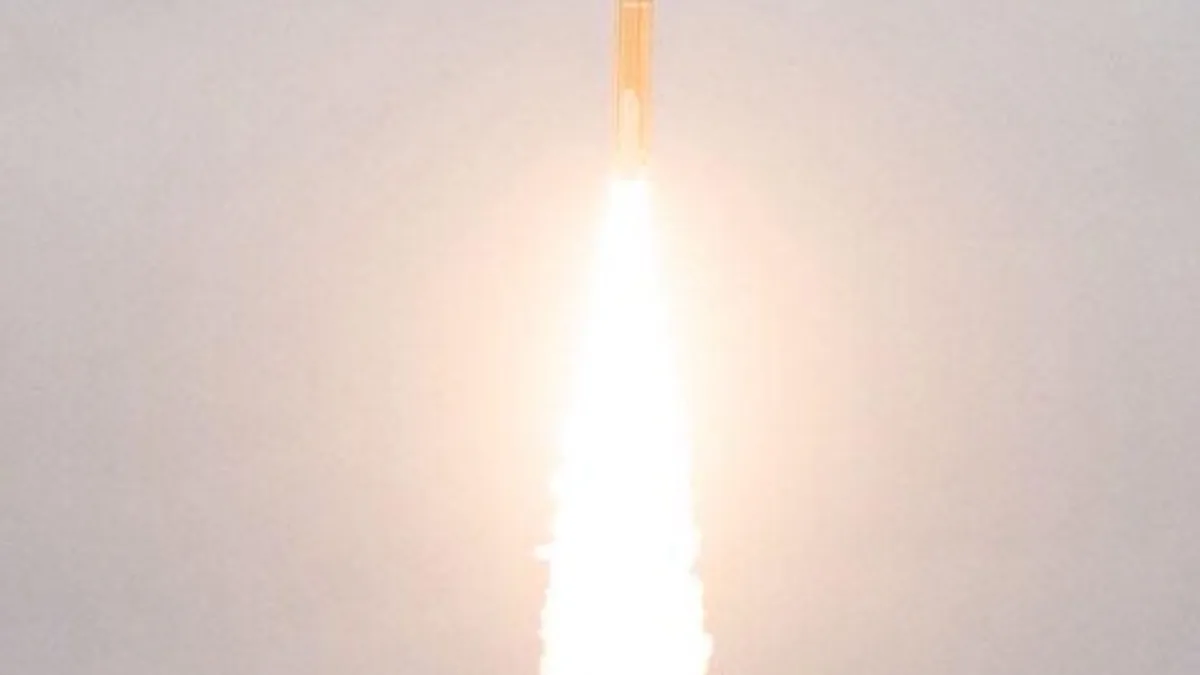
The Japan Aerospace Exploration Agency announced on 18 October 2026 that the Martian Moons eXploration (MMX) spacecraft is scheduled to lift off aboard H3 Flight No. 10 on 20 October 2026 at 04:41:03 Japan Standard Time from the Yoshinobu Launch Complex at Tanegashima Space Center. JAXA has set aside a reserve launch window from 21 October through 9 November 2026 if the primary date cannot be used. That gives observers a defined time and backup window to follow the start of a mission designed to run for about five years.
According to the official MMX project, MMX is designed to be the world’s first mission to collect and return a sample from the Martian sphere, with Phobos as its primary target. The mission’s scientific goal is to investigate the origin and evolution of the Martian moons and the Mars system. JAXA says detailed study of the returned material and the mission’s observations is intended to clarify how the Martian sphere and the wider Solar System developed.
JAXA states that once MMX reaches the Martian sphere, it will study Phobos’s topography, internal structure, composition and gravity before attempting two separate soft landings on its surface. During those landing operations, the spacecraft is intended to collect material from Phobos, with JAXA aiming to return more than 10 grams of material to Earth. The agency describes MMX as the first sample-return mission from the Martian sphere.
The mission carries thirteen scientific instruments to support its observation and sampling objectives. JAXA has outlined a multi-year flight profile for the spacecraft following launch. MMX is scheduled to travel to the Martian sphere in 2027, then conduct detailed Phobos observations from 2027 to 2030. In the final phase of its work there, it is also planned to observe Deimos. The sequence combines remote observations, landing operations and sample collection before the return journey begins.
Per JAXA’s schedule, MMX is set to depart the Mars system in 2030 after completing its observation and sampling activities at Phobos and Deimos. The spacecraft will then begin its return journey to Earth, with JAXA targeting recovery of the sample-return capsule in Australia in 2031.
JAXA’s announcement set out the mission’s launch schedule and the multi-year timeline that follows, spanning transit, observation, two landing attempts, and the return voyage to Earth. The primary launch date remains set for 20 October 2026, with the agency’s reserve window extending into early November should conditions require a delay. The published reserve period runs from 21 October through 9 November.