 Sonali Tiwary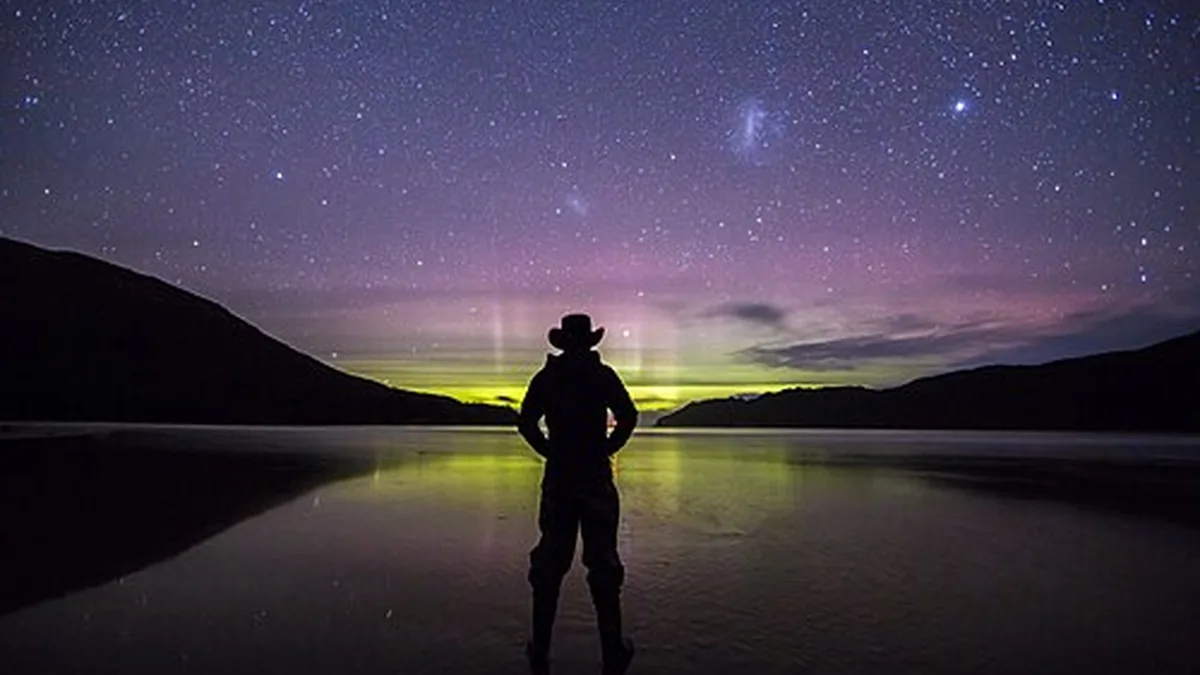
Want to see the Aurora Australis tonight? SBS reports it may be visible from Tasmania, southern Victoria and some parts of New South Wales, and PerthNow says Western Australian skies could also light up on Friday night. Forecasters expect the possibility of Southern Lights on Friday, October 9, 2026. Here are the places and the phone settings that work.
The NOAA Space Weather Prediction Center has issued a G2 (moderate) geomagnetic storm watch for October 9. NOAA says G1 (minor) to G2 storms are likely as a coronal mass ejection arrives. A coronal mass ejection is a cloud of charged particles thrown out by the Sun. This one is linked to an M1.4 solar flare on October 6. Whether you see anything depends on the strength of the storm and local cloud cover.
To see tonight's Aurora Australis, head to an unlit, south-facing coastal spot away from metropolitan light domes. The aurora may look like a faint grey glow to your eyes. A phone in night mode on a tripod can pick up colour that your eyes miss. Check live space weather readings from NOAA and the Australian Space Weather Forecasting Centre before you leave.
Why does your phone see more than you do? Human eyes switch to low-light vision in the dark, and that vision sees little colour. A camera sensor keeps collecting light, so it records the greens and pinks. Knowing that stops disappointment. night-sky observation coverage
The colours come from charged particles from the Sun hitting oxygen and nitrogen high in the atmosphere, typically 100 km to 300 km above Earth. Oxygen gives the green glow at 557.7 nm and a red glow at 630.0 nm. solar-weather coverage
Many guides leave out one detail. A high Kp number alone is not enough. Aurora forecasts also depend on the strength and direction of the Sun's magnetic field near Earth, so a forecast watch is not a guarantee of a display.
What camera settings should I use for the Aurora Australis? Put your camera on a tripod. On a phone, use Night Mode or a long exposure. On a DSLR, use manual focus at infinity with a wide aperture and a long shutter. These steps may improve your chance of recording the aurora; they do not guarantee it.
Tonight's G2 storm watch gives parts of southern Australia a chance of Southern Lights. Go south-facing and dark. Forecasts can change as the CME arrives. Check back for updates.