 Govind Tekale
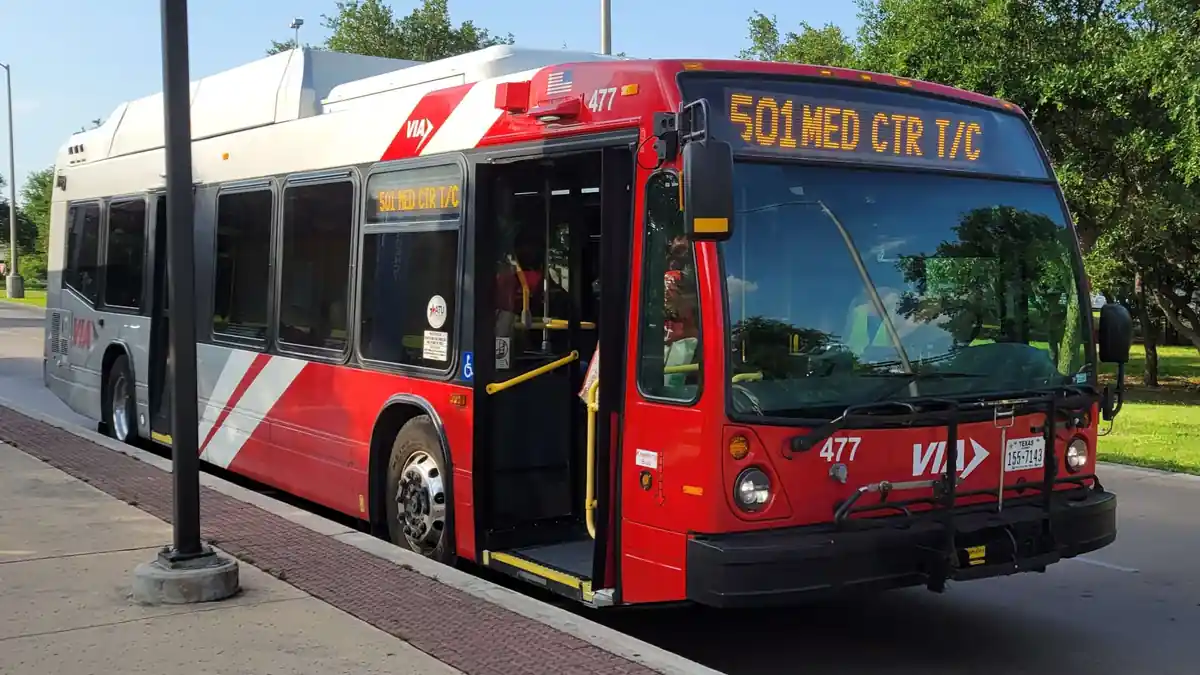
While bus ridership across the United States barely budged at 0.1 percent through August 2026—and shrank in both Dallas and Austin—San Antonio’s VIA Metropolitan Transit surged 10.1 percent, adding more than 2 million rides. Federal Transit Administration data ranks VIA second in ridership growth among the 50 largest U.S. transit systems. Houston METRO grew 3.8 percent, while Austin CapMetro fell 4.5 percent and Dallas DART dropped 5.3 percent. Weekend ridership at VIA grew at two to three times the rate of weekday ridership, driven by hospitality, healthcare, and retail shift workers.
VIA expanded its full-time bus operator workforce from 799 in December 2024 to 1,021 in September 2026—a gain of 222 operators, a 27.8 percent increase and a nearly 50-year agency record—using hiring incentives up to $4,000 for drivers and $6,000 for mechanics. The FY2027 Proposed Budget, effective October 1, 2026, projects 35.3 million total customer trips, 61 fixed routes running every 30 minutes or better, 150 Transit Ambassadors, and 70 percent of the Better Bus Plan already implemented.
For San Antonio riders, VIA’s 10.1 percent ridership surge and its $382.8 million FY2027 budget—which took effect October 1—translate directly into shorter wait times on 61 fixed routes now operating every 30 minutes or better, alongside a new VIA Link late-night microtransit pilot between Downtown and Loop 410. However, commuters along the VIA Rapid Green Line corridor should prepare for utility relocation and lane detours as the agency pushes to get 80 percent of the rapid transit line under construction this year.
How Operator Hiring and Sales-Tax Shifts Funded the Surge
Solving the driver/mechanic bottleneck first meant scheduled frequency actually materialized on the street. VIA’s FY27 budget document reveals that growth in its Advanced Transportation District (ATD I) sales tax slowed sharply to just 0.4 percent in FY26, meaning the agency is funding its $37.1 million operating expansion and 61 high-frequency routes by integrating the newly activated ATD II (2026) 1/8-cent sales tax allocation—combining for $102.4 million in FY27. The environmental and fleet upgrade includes 33 new 40-foot Gillig buses replacing aging vehicles, with 80 percent construction completion targeted for the VIA Rapid Green Line corridor by the end of FY27. VIA Board Chair Laura Cabanilla noted the agency has shifted over 2 million trips off San Antonio highways since January.
Why did VIA bus ridership grow 10.1% in San Antonio in 2026?
VIA Metropolitan Transit grew ridership by 10.1% through August 2026 by implementing 70% of its Better Bus Plan, boosting service to every 30 minutes or better on 61 routes, and expanding weekend frequency for hospitality, healthcare, and retail workers. VIA supported the expansion by hiring 222 additional operators, reaching a 50-year high of 1,021 drivers.
VIA targets 35.3 million total trips in FY2027 as the remaining 30 percent of the Better Bus Plan rolls out.