 Govind Tekale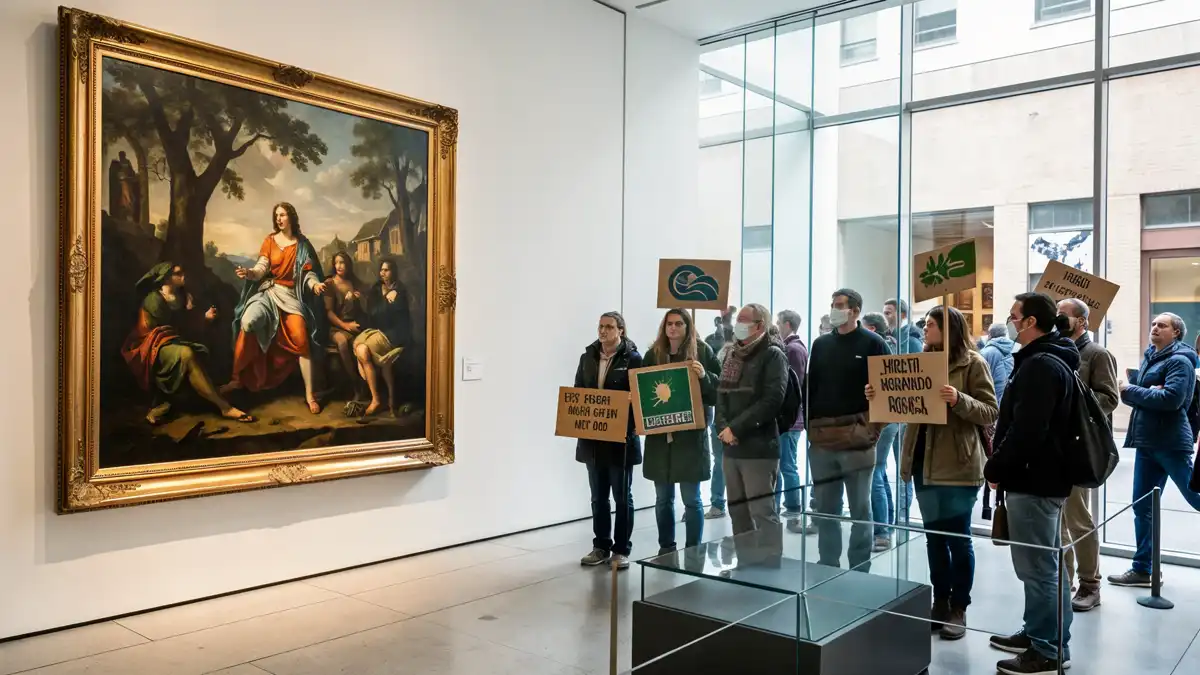
In October 2022, two Just Stop Oil activists threw tomato soup at Vincent van Gogh’s “Sunflowers” at the National Gallery in London. The painting was behind glass and unharmed, but the image went viral. Millions saw it. Millions talked about it. The question that remained was whether any of it helped the climate.
A 2025 peer-reviewed study published in Science of the Total Environment suggests that climate protests targeting famous artworks do draw significantly more public attention than other forms of climate activism. The study, titled “Art as a target for climate activism: Does it raise public attention?” by researchers Vincenzo Alfano and Massimo Guarino, analyzed Google Trends data and news coverage metrics to measure public interest before and after artwork attacks.
The findings confirmed that protests targeting art generated substantially higher media attention compared to conventional climate demonstrations. The researchers used a methodology that tracked search interest and news volume, finding that artwork attacks produced spikes in public awareness that other protest forms did not match.
However, the study also raised a more difficult question: attention is not the same as persuasion. Research from Penn State’s Center for Science, Sustainability, and the Media found that while throwing soup at art shifted people’s views of climate protests, the shift was not necessarily in a positive direction. The extreme nature of the protest appeared to reduce public sympathy for the movement even as it increased visibility.
This phenomenon is known in social movement theory as the “radical flank effect.” A 2025 study in the Journal of Environmental Psychology, titled “The climate activist’s dilemma: Extreme protests reduce support,” further documented that extreme protest actions can decrease public backing for a cause even as they generate headlines.
The history of art-targeting as a protest tactic extends back more than a century. In 1914, suffragette Mary Richardson attacked the Rokeby Venus at the National Gallery to protest the imprisonment of Emmeline Pankhurst. Other suffragettes followed, targeting works by Rembrandt and other masters. These actions drew attention to women’s suffrage, though historians continue to debate whether they advanced or hindered the cause.
In late 2025, Just Stop Oil announced it was ending disruptive protests — an acknowledgment that the tactic had reached its natural limits. Museums worldwide had increased security, and public surveys indicated growing negative sentiment toward the protests.
Karmactive has covered related topics including how artists transform waste into art and the broader dynamics of climate activism and policy.
The withdrawal of the most prominent group behind artwork attacks suggests a broader strategic question for climate activism: what forms of protest are most effective in the long term? While artwork attacks generate attention, the conversion of that attention into policy action or behavioral change depends on multiple factors, including public sympathy, media framing, and political context.
The evidence so far suggests that high-visibility protests targeting cultural objects can succeed in generating public discussion, but whether that discussion translates into lasting climate action remains an open question.