 Tejal Somvanshi
In early September 2026, a coordinated raid by Uttar Pradesh’s Food Safety and Drug Administration and state police raided premises suspected of operating a counterfeit pharmaceutical network running between Saharanpur and Lucknow. What they found was not a primitive setup. It was a working production line built to deceive.
Investigators seized heavy packaging machinery, counterfeit foil strips, and fabricated labels carrying the names of well-known pharmaceutical companies. The operation was producing tablets and capsules designed to look like genuine medicines — antibiotics, painkillers, and gastrointestinal drugs that patients depend on daily.
What made this particular operation notable to investigators was its scale and organization. A small-scale counterfeiter might produce a few hundred units in a makeshift space. This operation had dedicated packaging lines, storage for bulk materials, and a distribution network that included genuine-looking wholesale documentation. The level of capital investment required for machinery of this kind suggests the operation had been running long enough to turn a profit — and long enough for its products to have entered the supply chain before detection.
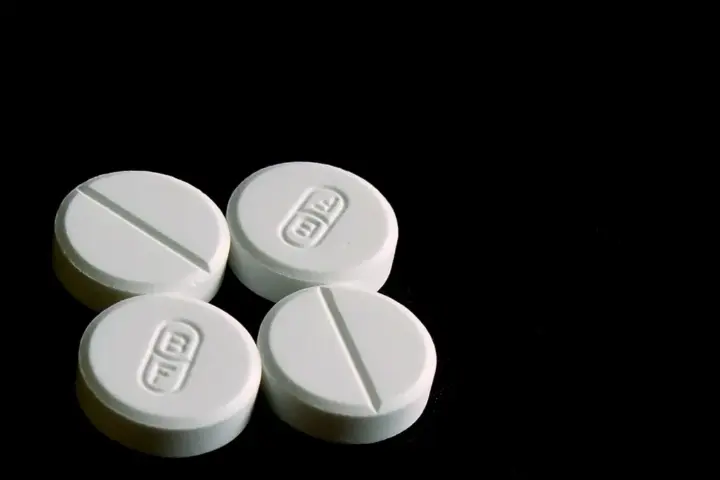
The suspected method involved compressing inert or low-grade filler materials into tablet or capsule form without quality controls, then sealing them in branded-looking packaging and introducing them into supply channels.
Antimicrobial resistance is one of the documented downstream consequences of counterfeit antibiotics. When a patient takes what appears to be a full course of antibiotics but receives only filler, the underlying bacterial infection can persist and may develop partial resistance through repeated subtherapeutic exposure. The World Health Organization has specifically flagged counterfeit antibiotics as a contributor to resistance patterns in regions where such products are more prevalent.
There is a global scale to this problem. The World Health Organization estimates that at least one in ten medicines in low- and middle-income countries is either substandard or falsified. These are different categories. A substandard medicine fails quality standards — perhaps too little of the active ingredient, or impure manufacturing. A falsified medicine deliberately misrepresents its identity, composition, or source. WHO has linked both categories to treatment failure, antimicrobial resistance, and in some cases poisoning.
Under India’s Drugs and Cosmetics Act, where spurious drugs are found to cause serious harm, penalties can extend to life imprisonment. Charges in this case were filed under the Act and relevant sections of the Bharatiya Nyaya Sanhita.
For pharmacists and distributors, the legal framework also carries liability. Under the Act, knowingly storing or selling a spurious drug — even without involvement in its manufacture — can result in criminal prosecution. This is why the Track and Trace system matters at the dispensing level: a pharmacist who proceeds despite a failed verification cannot use ignorance as a legal defense.
How can a buyer reduce the risk?
India’s Track and Trace system requires manufacturers of specified drug categories — initially India’s top pharmaceutical brands, now expanded in a June 2026 amendment to include vaccines, antimicrobials, anti-cancer drugs, and narcotics — to apply barcodes or QR codes to their packaging. Scanning that code allows pharmacists and patients to verify the batch number, manufacturer, and product details before dispensing.
The Uttar Pradesh FSDA operation also shows that counterfeit medicines are not just a problem at the pharmacy counter. They enter supply chains upstream, which means detection and enforcement need to happen at multiple points in the distribution network.
The raids are ongoing. Investigators have not yet publicly finalized all charges and arrests in the operation.