 Govind Tekale
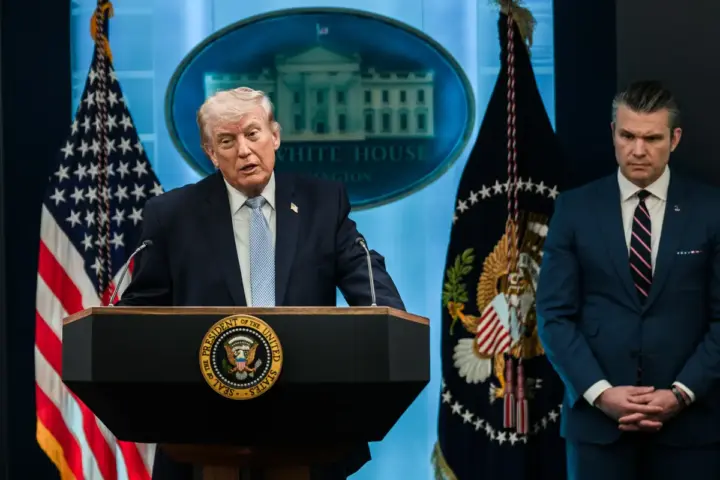
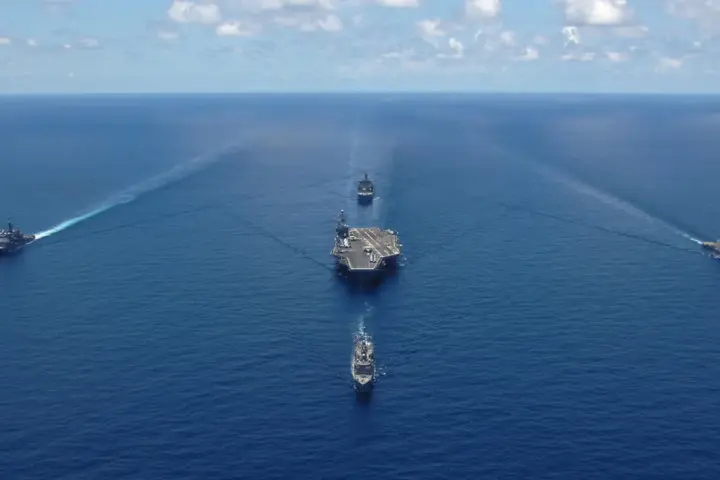
President Donald Trump declared the Strait of Hormuz “New U.S. Territory” in a Truth Social post, accompanied by a map image, as a 60-day ceasefire with Iran expired without renewal.
“There are no talks or conversations going on, or scheduled, with the Islamic Republic of Iran,” Trump wrote. He added: “The Naval Blockade remains in full force and effect. The Hormuz Strait is open and operating. All water mines have been removed or detonated.”
U.S. Central Command did not confirm the mine-clearing claim when asked, referring questions to the White House.
The ceasefire’s expiration Monday leaves the conflict between the U.S. and Iran without a formal truce in place. Both sides have effectively abandoned the agreement, though neither has issued a new declaration of hostilities.
The strait is a waterway between Iran and Oman that connects the Persian Gulf to open ocean. Tankers use it to move oil from Gulf producers to buyers worldwide. Before the conflict, roughly 20% of the world’s oil trade passed through the passage; that flow has since been reduced to a trickle. Oil prices climbed for a third consecutive trading session.
The United Arab Emirates reported detecting two ballistic missiles fired from Iran toward its territory, adding a flashpoint to a conflict that has already involved regional neighbors.
In a Fox News interview, Trump said he would “bomb the s—” out of Oman if the country interfered with U.S. operations in the strait. Oman shares the waterway’s opposite shore and has previously served as a mediator between Washington and Tehran.
Speaking in the Oval Office, Trump described asserting control over the strait as “a great idea,” adding: “I mean, we control it. We control it with the blockade.”
Experts say a U.S. claim to control or toll the strait would conflict with the United Nations Convention on the Law of the Sea, an international treaty ratified by most nations. Under the treaty’s “transit passage” provision, ships and aircraft of any nation are guaranteed the right to pass through international straits like Hormuz without interference from the bordering countries. Notably, the United States has never ratified the convention. Trump floated a related plan earlier in the conflict — a 20% toll on cargo passing through the strait — but dropped it without implementation.
The standoff carries direct consequences for consumers and businesses far from the Gulf. Oil that cannot move through the strait would push up fuel costs and raise shipping expenses for goods that rely on tanker traffic, effects that compound the longer the passage remains constrained. A prolonged disruption also affects countries dependent on Gulf oil imports for electricity and manufacturing.
Neither Washington nor Tehran has announced a timeline for resuming talks. The absence of scheduled negotiations, combined with the ceasefire’s lapse and the reported missile launches toward the UAE, leaves the region without a clear path out of the nearly six-month conflict.