 Karmactive Staff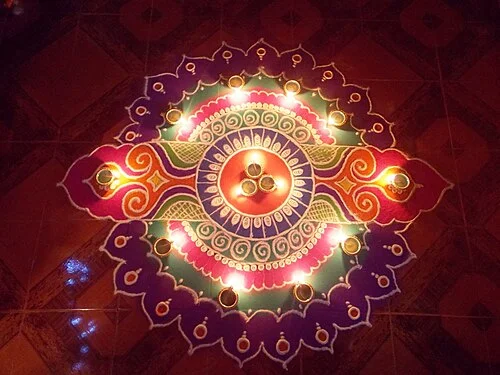
Rangoli—the colorful floor art created during Navratri—is a practice rooted in Indian spirituality and aesthetics. For centuries, artists have crafted rangoli using materials from the earth: turmeric, flowers, colored rice, and spices. The practice celebrated color and creativity while leaving no toxic trace. Modern rangoli has shifted dramatically. Synthetic colors made from industrial chemicals now dominate, creating vibrant patterns that look stunning but damage waterways and poison aquatic life when they wash into drains. You can create beautiful rangoli using natural materials, honoring tradition while protecting the environment.
Navratri begins around October 11th, and rangoli decorates homes, temples, and public spaces throughout the nine-day festival. Rangoli is an offering to the Divine Feminine, a way of saying “welcome” to Goddess Durga and her different forms across the nine nights. Creating rangoli is a meditation, a creative practice, and an expression of devotion. It’s also an opportunity to embed environmental consciousness into daily spiritual practice. Natural rangoli colors accomplish all this while leaving the earth cleaner than you found it. See Rangoli.
Read this article and you’ll know how to create vibrant, lasting rangoli using natural, non-toxic materials. You’ll understand why synthetic rangoli colors harm aquatic ecosystems and why natural alternatives matter. You’ll learn where to source natural materials and how to prepare them for rangoli creation. You’ll discover techniques that make natural colors vivid and lasting. This knowledge lets you practice rangoli as a complete spiritual art—creative, meditative, and aligned with environmental values.
Synthetic rangoli colors are manufactured from heavy metals and organic compounds developed for industrial textiles. They’re cheap to produce, stable over long periods, and brilliant in color. But they’re toxic. When it rains, rangoli washes off and flows through drainage systems into rivers and wetlands. These colors bind to water, making it cloudy and reducing light penetration needed by aquatic plants. They can be absorbed by fish and shellfish, concentrating in their tissues. Downstream communities that depend on these waterways for drinking water face contamination. The chemicals persist for years or decades. See Water pollution.
Waterways in India carry measurable loads of synthetic rangoli colors during and after Navratri. The pollution is visible—water changes color. The ecological damage is less visible but severe. Fish populations decline. Water quality deteriorates. Treatment plants struggle to remove synthetic dyes. A single Navratri season’s worth of synthetic rangoli across a large city can require months of water treatment to remediate.
What makes natural rangoli truly beautiful?
Turmeric creates a warm golden yellow that’s been used in Indian art for millennia. It’s affordable, food-safe, and leaves no trace of toxicity. The color is subtle rather than neon bright, which some artists prefer for its elegance. Mixed with other natural materials, turmeric creates warm, earthy tones that traditional rangoli art celebrates. Turmeric also has antimicrobial properties, so rangoli made with turmeric actually sanitizes the floor surface slightly. See Natural dye.
Flower petals provide the most vibrant natural colors. Marigold petals create golden orange. Rose petals range from pale pink to deep red depending on variety. Hibiscus flowers create magenta and coral tones. Chrysanthemum petals offer burgundy and yellow variations. These flowers are inexpensive during Navratri and beautiful in their natural form. The downside is that flower petals dry and fade after a few hours, so rangoli made with flowers is meant to be ephemeral—destroyed by evening or the next day. This ephemerality actually aligns with Hindu philosophy about impermanence.
Rice flour dyed with natural materials creates lasting base colors. Mix rice flour with turmeric for yellow, with hibiscus flower infusion for pink, with indigo for blue. Create the dye by steeping flowers or ground spices in water, then mixing the colored liquid with rice flour. The resulting powder creates vibrant rangoli that lasts for days while remaining completely natural. These dyes were the primary rangoli materials before synthetic colors were invented.
Indigo deserves special attention. This blue dye has been used in Indian textiles for over two thousand years. It comes from the indigo plant, which was cultivated across India. Indigo is non-toxic, biodegradable, and creates a blue so beautiful that it defined Indian textiles globally. Sourcing indigo powder from natural dye suppliers or textile specialists adds cost but creates a truly authentic blue rangoli. Mixed with rice flour or as a base layer, indigo creates depth and sophistication.
Charcoal powder creates black and dark gray tones. Burnt coconut shells or purchased food-grade charcoal powder work equally well. Charcoal is completely non-toxic and actually improves soil when it washes away. It creates dramatic outlines in rangoli and can be used to create shading and dimension. Combined with other natural colors, charcoal creates sophisticated color palettes.
Spices as rangoli materials offer both color and cultural connection. Red chili powder creates warm reds and oranges. Cinnamon powder provides brown tones. Fenugreek creates yellow-green. Using spices in rangoli ties the art form to Indian culinary traditions and makes the rangoli partially edible—some animals and insects can safely consume spice-based rangoli without harm. This detail reflects traditional understandings of how art should harmonize with the living world.
Sand and stones mixed with natural colors create texture and durability. White sand, colored with rice flour or flower petal dyes, provides a stable base for more delicate elements. Colored stones from riverbeds or purchased from suppliers create dimension and permanence. These materials weather well and leave no toxic trace.
Application techniques matter for durability. Dry natural dyes adhere better to dampened floors. Lightly spray water on the floor surface before creating rangoli. Mix natural powders with a small amount of gum or rice paste to help them adhere. This prevents colors from blowing away or getting disturbed by foot traffic. The paste is food-based and biodegradable, so it creates no environmental burden.
An irreplicable observation: Rangoli traditions vary considerably by region and community. Coastal Karnataka uses different materials than inland Bihar. Muslim families creating rangoli may use different patterns and materials than Hindu families. Urban rangoli often incorporates modern tools like stencils, while rural rangoli remains freehand. There’s no single national standard, which means your family’s approach is valid—your task is simply to choose natural materials within your tradition.
How do you create natural rangoli for Navratri? Source turmeric, flower petals, rice flour, and natural dyes. Mix rice flour with flower-based or spice-based dyes. Create base colors the day before. Lightly dampen your floor and apply dyes using traditional tools—your fingers, brushes, or cotton pads. Create designs that represent your artistic vision and spiritual intention. When the rangoli fades or washes away, know that nothing toxic has entered the water system.
The spiritual satisfaction of creating natural rangoli differs from creating synthetic rangoli. You’re using materials that connect you to centuries of tradition. You’re working with your hands and natural elements. You’re creating something beautiful that will fade, embodying Hindu philosophy about impermanence and the cycle of creation and dissolution. That meaningfulness deepens your practice and your relationship to Navratri.
Communities are beginning to recognize that natural rangoli is superior to synthetic even from an aesthetic standpoint. The subtle colors, the texture of real materials, the connection to tradition—these elements create rangoli that photographs beautifully and moves viewers emotionally. Competitions and festivals increasingly celebrate natural rangoli, recognizing it as the authentic continuation of tradition rather than a compromise.
Priority PAA: What are natural rangoli colors made of? Turmeric, flower petals, rice flour, indigo, charcoal, spices, sand and stones.
—
Related: Witness The Rare Blooming Of Brahma Kamal; Campa Approves Gangetic Dolphin Recovery Plan Brahmap