 Tejal Somvanshi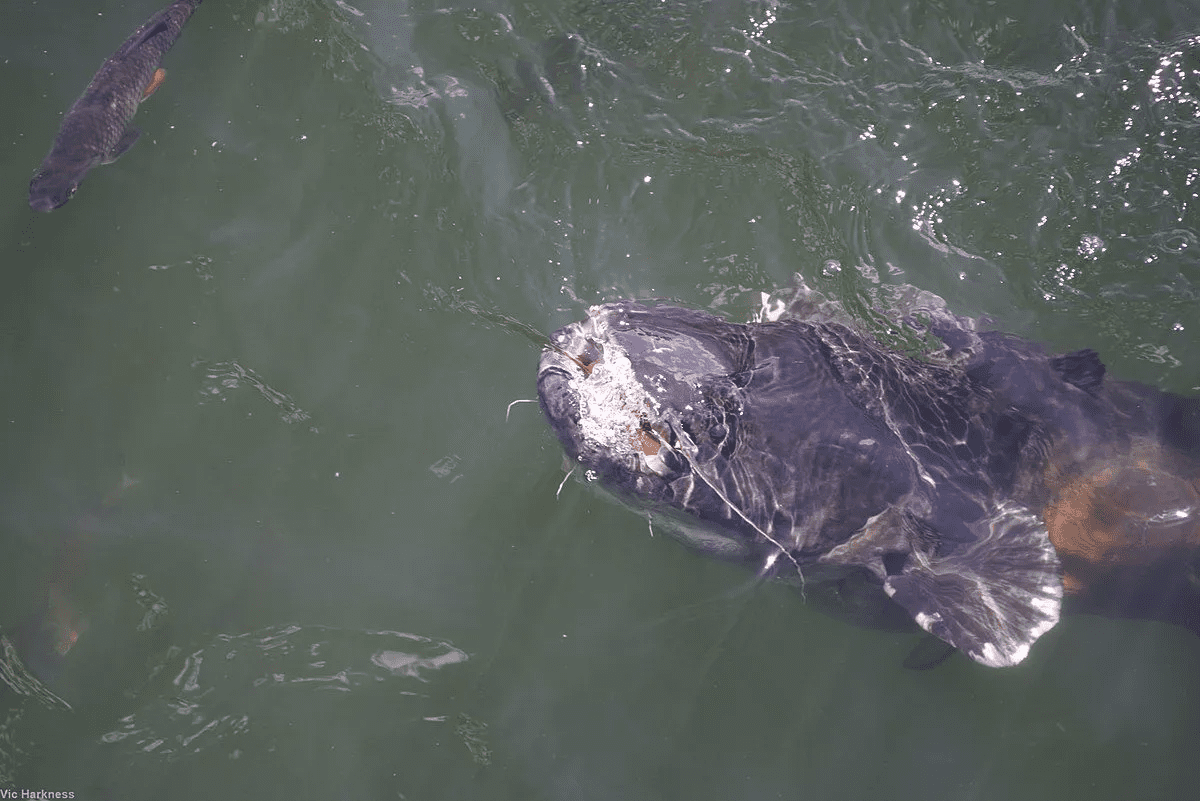
About one in three catfish pulled from Lake Memphremagog carries a cancer passed to them by other infected fish. The lake straddles the border between northern Vermont and Quebec. For over a decade, nobody knew exactly what was wrong.
Now they do. A study published July 22, 2026 in Nature confirms that the raised black tumors blanketing brown bullhead catfish in the lake are melanoma — and that the cancer is contagious, jumping between individual fish. Led by Julie Dragon, a molecular geneticist at the University of Vermont, the study identifies this as the fourth transmissible cancer ever documented in nature and the first ever found in a fish.
Cancer normally starts and stays inside one body. A transmissible cancer is different: living tumor cells leave one host, survive in the environment, and invade a new animal. They stop acting like a disease and start acting like a parasite.
Melanoma is a skin cancer most closely linked to sun damage in humans. Finding it in a scaleless, bottom-dwelling lake fish made no immediate sense. “This was surprising,” Dragon said. “We wanted to know how a bottom-dwelling fish was getting a cancer we associate with exposure to too much sunlight.”
Dragon’s team first suspected a virus. Genomic sequencing ruled that out. When researchers compared the full genomes of tumors and healthy tissue — across multiple fish — the results were clear. Tumor DNA from one fish matched tumor DNA from other fish far more closely than it matched the DNA of the fish actually carrying it. Hundreds of thousands of genetic variants were shared across tumors from separate animals, absent from all healthy tissue. This is similar in concept to how external environmental factors can alter fish biology in unexpected ways.
“Those cells can somehow escape the host, maybe live in the environment — the aquatic environment — and then infect a new host,” Dragon said.
Before this study, only three types of transmissible cancer had been confirmed in any animal. The most well-known is the facial tumor disease in Tasmanian devils, which has collapsed some local populations by up to 90 percent. Dogs carry a transmissible venereal tumor that coexists with them more peaceably. Several bivalve species — clams, mussels — also pass cancers through the water. The catfish melanoma is now the fourth type ever documented.
Anglers and Vermont Fish and Wildlife biologists first noticed the dark patches on brown bullhead catfish in Lake Memphremagog around 2012. By 2014, roughly one in three sampled fish showed the lesions. That rate holds today. Some fish carry tumors stacked on tumors, with cancer reaching the brain, liver, and other organs. Many diseased fish still survive for years. What the long-term population toll will be is not yet known. Lake ecosystems already face pressure from threats like invasive species that destabilize fish populations — a transmissible cancer adds another layer of complexity to the challenge.
Researchers don’t know exactly how the cancer transfers. Brown bullheads pile on top of each other during spawning — close contact that could allow tumor cells to pass between fish. Sediment at the lake bottom may also hold free-floating cancer cells.
The disease has turned up beyond Lake Memphremagog, in ponds and lakes in Vermont, New Hampshire, Maine, and New Brunswick. Dragon’s team found no evidence the cancer jumps to other species. “We have not seen this cancer in other catfish or other bottom-dwelling fish in Lake Memphremagog, so we don’t believe that they can pass it to any other species,” Dragon said. The discovery raises broader questions about the health of freshwater fish populations across North America. It also adds to growing concerns about how water-borne threats are affecting fish at a biological level.
There is no known risk to humans. Lake Memphremagog supplies drinking water to more than 175,000 people in Vermont and Quebec — researchers say those supplies are not at risk, and the fish are safe to handle.
What may prove most lasting is what the catfish teach about cancer itself. “By studying how cancers survive and spread, we can learn a great deal about what keeps cancers contained — and what happens when those boundaries break down,” Dragon said. Work like this feeds directly into advances in cancer treatment that scientists are pursuing on multiple fronts.