 Govind Tekale
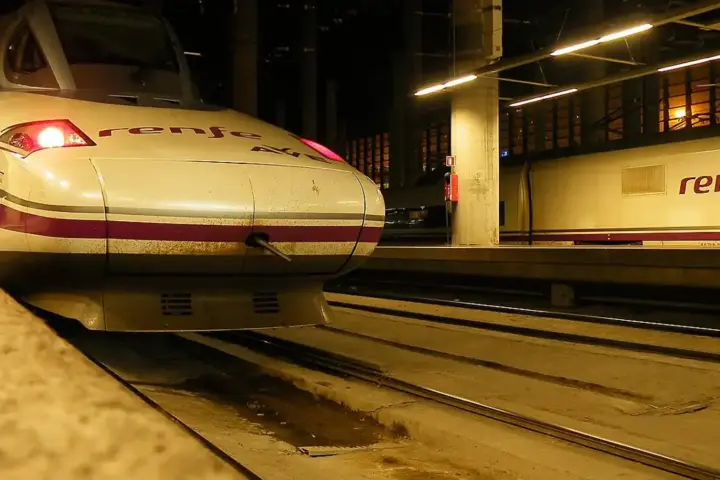
When an automatic safety system stops train traffic, the assumption is that it will stay stopped until a safe restart can be confirmed. Near Urda on Spain’s Madrid–Seville high-speed line, that assumption held — until a human operator at the central control centre manually overrode it and resumed traffic anyway. A moving Renfe train then struck the rear of a stationary Iryo train at an estimated 200 kilometres per hour. At least 68 people were killed, making this Spain’s deadliest rail disaster since the 2013 Santiago de Compostela crash that claimed 78 lives.
Spain’s Transport Minister Óscar Puente said publicly that the decision to resume traffic was “inexplicable.” The automatic control system had detected a problem and halted service on the section of track. An operator at the central control centre then manually overrode that halt and sent trains moving again. The BBC reported that audio recordings of the exchanges between the control centre and the Renfe driver have been obtained by investigators.
Both Renfe and Iryo operate trains on the same infrastructure. Renfe is Spain’s government-owned operator; Iryo is a private open-access competitor that entered the market in 2022. They share track but coordinate through separate dispatching arrangements. Whether those coordination arrangements contributed to the operator’s decision to restart traffic is one of many questions the investigation must address.
Prime Minister Pedro Sánchez declared three days of national mourning. Hospitals in the Toledo region received dozens of injured passengers. Initial reports placed the toll between 68 and 69; the Spanish government has confirmed at least 68.
What the investigation will need to answer
High-speed rail in Europe uses layered automatic protection systems — specifically ETCS (European Train Control System) standards — designed so that a train cannot enter a section of track with a conflicting occupancy without an explicit safe authority to proceed. These systems are supposed to prevent a single human error at a dispatch desk from causing a collision. The central question is whether the override was a permitted action under the procedures in place, or whether it circumvented protections that should have blocked it outright.
Spain has built one of Europe’s largest high-speed rail networks over the past three decades. Critics have argued for years that the pace of infrastructure expansion has not always been matched by investment in operational staffing and safety oversight. The New York Post noted this is the second fatal crash on the Spanish rail network in recent memory.
Opposition parties are calling for a full public inquiry. Far-right groups staged protests outside government buildings in Madrid, using the disaster to pressure the Sánchez coalition. The political timing is difficult. Europe has been managing a range of institutional crises, with France navigating its own fiscal and street-protest pressures (https://www.karmactive.com/france-bond-yields-protests-limoges-fire-2026/), while governments elsewhere have faced contested public-trust tests (https://www.karmactive.com/israel-election-2026-exit-polls-coalition-math/). A rail disaster caused by a human override at state infrastructure adds a domestic front to an already stretched administration.
Renfe and the infrastructure manager Adif have both said they are cooperating fully with accident investigators. No criminal charges have been filed at the time of writing. If the audio recordings confirm the operator was warned of the risk or that protocols were breached, that could change quickly.
For travellers, Spain’s high-speed network carries tens of millions of passengers each year and its overall safety record remains strong. But the specific circumstances here — a manual override of a system designed to prevent exactly this kind of collision — mean that pointing to statistics alone does not settle the matter. Rail passengers and freight operators will want to see what concrete changes the investigation recommends. The difficulty of turning safety rhetoric into operational enforcement is not unique to Spain: transport authorities in other countries have been grappling with deteriorating outcomes at the same time, with Australia recording its worst road toll in 15 years (https://www.karmactive.com/australia-road-toll-15-year-high-1334-deaths-2026/), illustrating how hard it is to arrest a trend once failure modes are embedded in a system.
The 2013 Santiago de Compostela crash led to mandatory automatic speed-control upgrades. This crash may produce its own set of mandates. What investigators and transport authorities must now answer publicly is why, more than a decade after that earlier disaster, an operator could still manually override a safety-critical hold on a line carrying trains at 200 km/h.