 Sonali Tiwary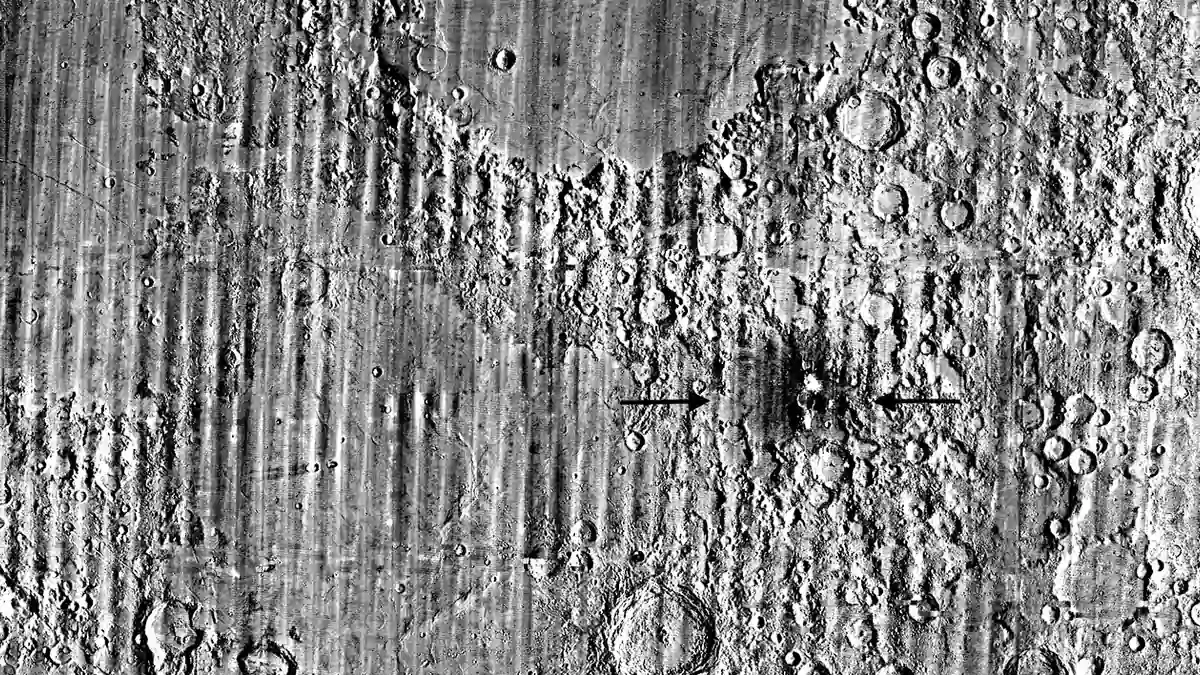
Scientists using NASA's Lunar Reconnaissance Orbiter have confirmed the existence of a new crater on the Moon — one that formed sometime in spring 2024 and went undetected for nearly two years until a researcher noticed an anomaly during a routine data review. The crater is 728 feet across and 141 feet deep, and it came with a thermal fingerprint that extends four miles in every direction.
The McGetchin crater formed between April 11 and May 22, 2024, when an object estimated at three to six stories tall struck the Moon’s surface. The impact was large enough to excavate a crater roughly the size of a New York City block — wide enough that if it appeared in a populated area, it would be unmistakable. Impacts of this scale occur on the Moon approximately once every 132 years, according to NASA’s assessment.
NASA’s instruments didn’t catch the impact as it happened. The crater was found during a routine data quality check by researcher Robert Wagner, who paused what he was doing when he noticed an unusually bright patch in LRO imagery. That brightness — freshly exposed lunar material reflecting more sunlight — led to a full investigation that confirmed the crater’s formation window and dimensions.
This discovery is not just about a hole in the Moon. When an impactor strikes lunar regolith — the layer of fragmented rock and dust covering the surface — it doesn’t just dig a crater. It loosens the material around the impact zone, making it less dense. Less dense regolith holds heat differently. NASA's Diviner thermal instrument measured a 4-mile-wide cold region around the McGetchin crater that runs about 16°F cooler than the surrounding surface at night. That cold spot is the thermal signature of disturbed, fluffed-up soil.
Why the Cold Spot Matters for Future Missions
For space enthusiasts, a 728-foot crater is the headline. For NASA’s Artemis program — which is working toward establishing a long-term presence on the lunar surface — the four-mile cold spot is equally important. Looser, disrupted regolith behaves differently under rover wheels and human foot traffic than undisturbed surface material. Understanding how far an impact event affects the surrounding terrain is directly relevant to where future landing zones and base sites are safe to operate.
The LRO has been surveying the Moon since 2009 and has catalogued over 100,000 surface changes. The McGetchin discovery stands out because of the scale — it is the largest new crater confirmed since the mission began — and because nearly two years passed between the impact and its detection. That delay is a function of how LRO works: it revisits surface areas on a schedule, not in real time. Its value is in the archive, not in live monitoring.
How big is the new Moon crater? The McGetchin crater measures 728 feet wide and 141 feet deep, formed between April 11 and May 22, 2024. It was created by an impactor estimated at three to six stories tall — the kind of impact NASA says happens roughly once per century.
The full findings were published in Science Advances. Follow NASA's Artemis program updates for how this and similar discoveries inform mission planning. More on how the LRO monitors the lunar surface is available directly from NASA’s science team.