 Sunita Somvanshi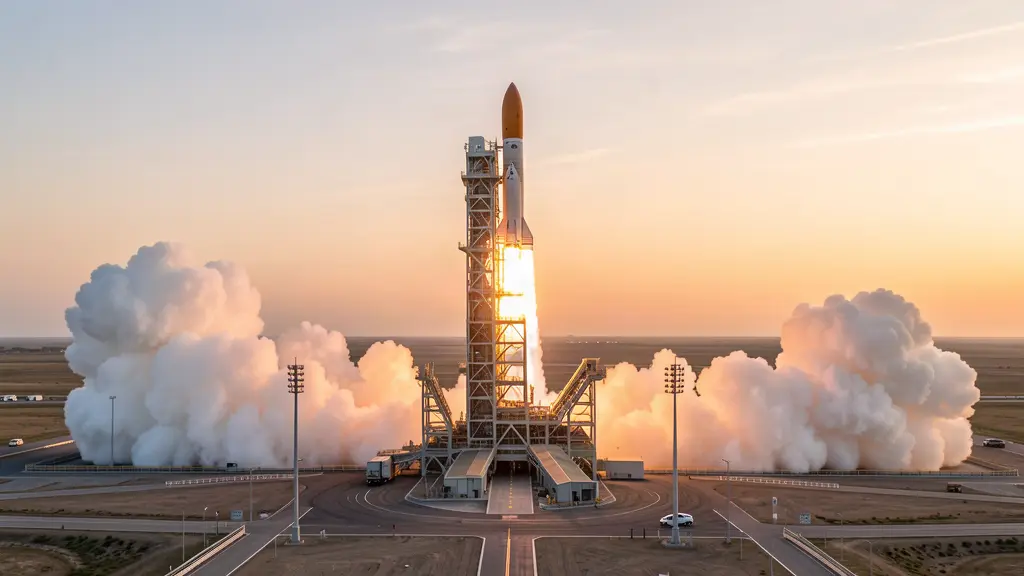
The United States has set a target of up to 1,000 commercial rocket launches a year as part of a new national space policy signed this week. The directive is designed to make launches a routine industrial activity rather than a rare event.
The policy directs federal agencies to cut the time and cost of getting a launch approved. The Department of Transportation, through the Federal Aviation Administration, handles commercial launch licensing, and the memo instructs it to streamline the process. The Department of Defense and the National Oceanic and Atmospheric Administration are also told to remove bottlenecks in their own approvals. Details of the licensing push are outlined on the FAA’s space activities page.
Transportation Secretary Sean Duffy announced the plan alongside the White House. He said the goal is to build capacity for roughly three launches a day by the end of the decade, up from the current pace of a few hundred a year. The policy also calls for identifying federal land that could host a new spaceport, since existing launch sites face growing scheduling pressure.
The numbers reflect how fast the sector has grown. The United States already leads the world in launch cadence, driven largely by SpaceX and a growing set of smaller launch companies. Reaching 1,000 flights a year would require not just more rockets but more simultaneous operations across multiple sites, along with air-traffic and range systems that can handle the load safely. Recent missions such as NASA’s Roman telescope launch show the rising tempo of government and commercial flights.
Supporters argue that faster, cheaper access to orbit protects American leadership in satellites, national security, and the commercial services built on them. Critics note that the environmental and community effects of many more launches — noise, emissions, and growing debris in orbit — need addressing at the same time.
The policy does not by itself build rockets or pads. It changes the regulatory posture of the government toward the industry, betting that fewer delays will unlock private investment. Whether the 1,000-launch goal is reached will depend on demand for the satellites those rockets would carry, and on whether the supporting infrastructure keeps pace. The growing footprint of space activity is visible from the ground too, as images of a crater left on the Moon by a SpaceX rocket illustrated.
For now, the signal is clear: the administration wants spaceflight treated as infrastructure, not spectacle. The coming years will show whether the licensing reforms deliver the volume promised.