 Sunita Somvanshi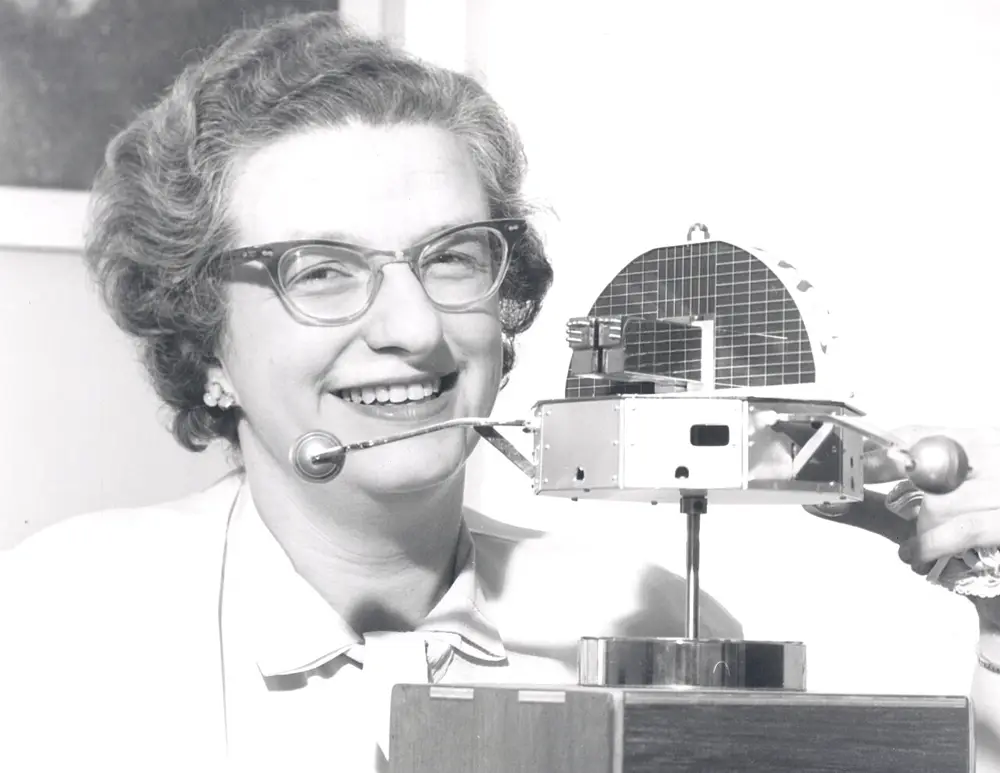
NASA has cleared its Nancy Grace Roman Space Telescope for launch after teams completed a flight readiness review on Wednesday. The telescope is scheduled to lift off on August 30 at 7:26 a.m. Eastern time atop a SpaceX Falcon Heavy rocket from Launch Complex 39A at Kennedy Space Center in Florida.
Roman is NASA’s next flagship observatory for studying the wider universe. It will fly to a point about 1 million miles from Earth called the Sun-Earth L2 Lagrange point, where the James Webb Space Telescope also operates. From there, its wide field of view and infrared instruments will let it survey the sky far faster than earlier missions.
The telescope is named for Nancy Grace Roman, NASA’s first chief astronomer, who is often called the “mother of Hubble” for her role in planning the agency’s great observatories. The Roman observatory is newer, faster and far better than Hubble in its breadth of survey. Construction finished in late 2025, and crews finished fueling the spacecraft in mid-2026.
Roman’s science spans three big questions. It will map the distribution of galaxies across cosmic history to probe dark energy, the unknown force speeding up the expansion of the universe. It will hunt for exoplanets by watching for the brief brightening of a star when an unseen planet passes in front of it, a method called gravitational microlensing, and it is expected to find thousands of worlds far from the solar system. NASA has also laid plans to identify habitable planets with a future telescope that builds on Roman’s groundwork.
The mission builds on lessons from Hubble and Webb but covers ground they cannot. Where Webb studies small patches of sky in great depth, Roman will sweep large areas, giving astronomers a broader statistical map to pair with targeted follow-up.
The launch follows years of delays and a tighter budget environment for NASA’s science division. Agency officials have said Roman remains on track for a five-year prime mission. If the countdown holds, the telescope will spend roughly two months reaching its orbit and cooling its instruments before routine science begins.
For skywatchers and researchers, the review is the last major gate before liftoff. A successful flight would open a new window on dark matter, dark energy, and planets beyond the solar system, with data released to the scientific community and the public.