Karmactive Team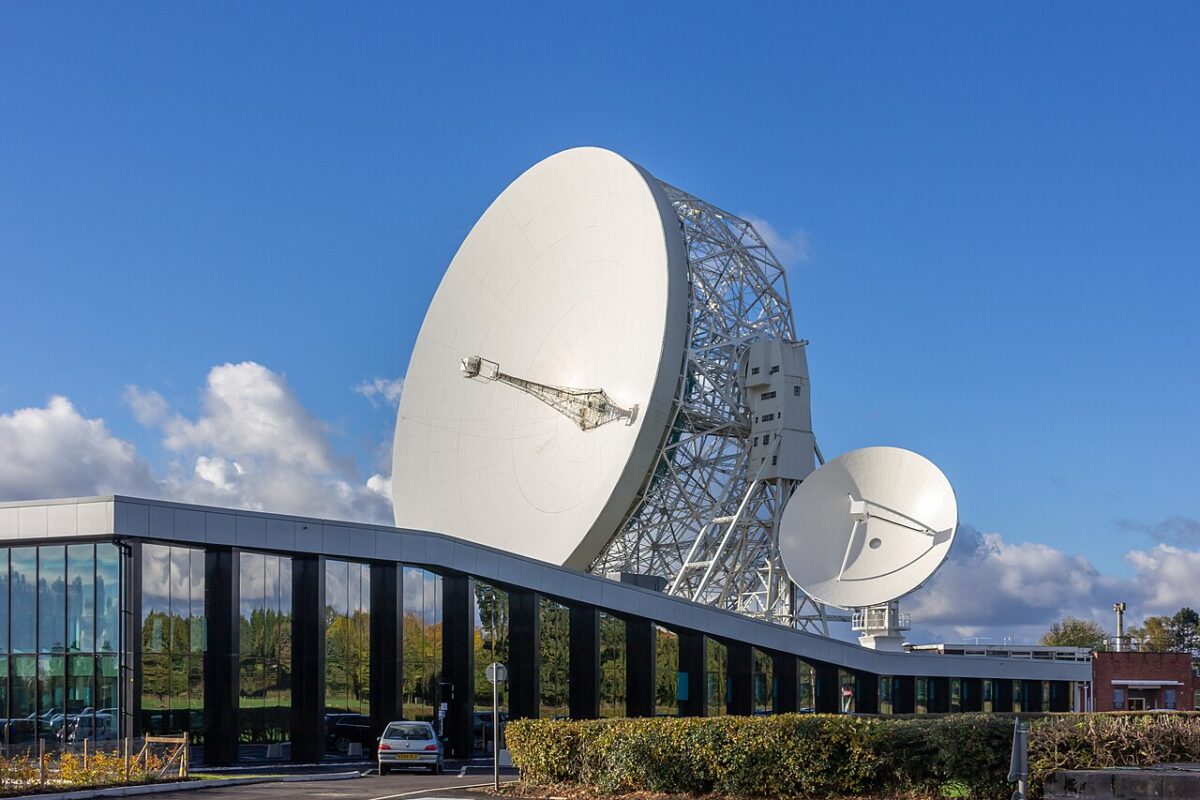
Jodrell Bank Observatory, a UNESCO World Heritage Site and landmark of British astronomy research, is at risk of closure by April 1, 2028 when a major funding source ends, threatening thousands of researchers and critical space exploration work. UK Research and Innovation (UKRI) announced it will stop funding e-MERLIN, the radio telescope network that forms the core of Jodrell Bank’s operations, when the current funding agreement expires in March 2028.
The impact extends across the scientific community. The facility employs 28 people directly but supports nearly 3,000 researchers conducting observations using the equipment. The e-MERLIN network comprises seven UK radio telescopes, including the iconic Lovell Telescope at Jodrell Bank, which collectively form one of the world’s most powerful radio astronomy systems—providing resolution comparable to the Hubble Space Telescope for observing cosmic phenomena.
The UK’s £2.8 million annual funding contribution is crucial to maintaining operations. Without this support, the observatory cannot continue functioning at current capacity, severely limiting its ability to conduct pioneering astronomy research that has made it internationally significant. The move forms part of wider funding reductions by the Science and Technology Facilities Council, which simultaneously cut UK involvement in Hawaii’s James Clerk Maxwell Telescope, reduced Square Kilometre Array (SKA) Regional Centre funding by 20%, and cut other major observing networks.
Scientific community leaders responded with alarm. The Royal Astronomical Society president stated this decision represents “devastating news for UK astronomy,” warning that at a time when technological innovation is crucial to Britain’s prospects, abandoning unique, globally significant observatories threatens both the nation’s scientific future and inspiration of future generations of astronomers.
Scientists rely on Jodrell Bank for cutting-edge research into black holes, neutron stars, gravitational waves, and deep space phenomena. The potential loss of this capability represents a significant step backward for British science and international collaborative research. The coming 20 months are critical for securing alternative funding to preserve this irreplaceable scientific asset.