 Rahul Somvanshi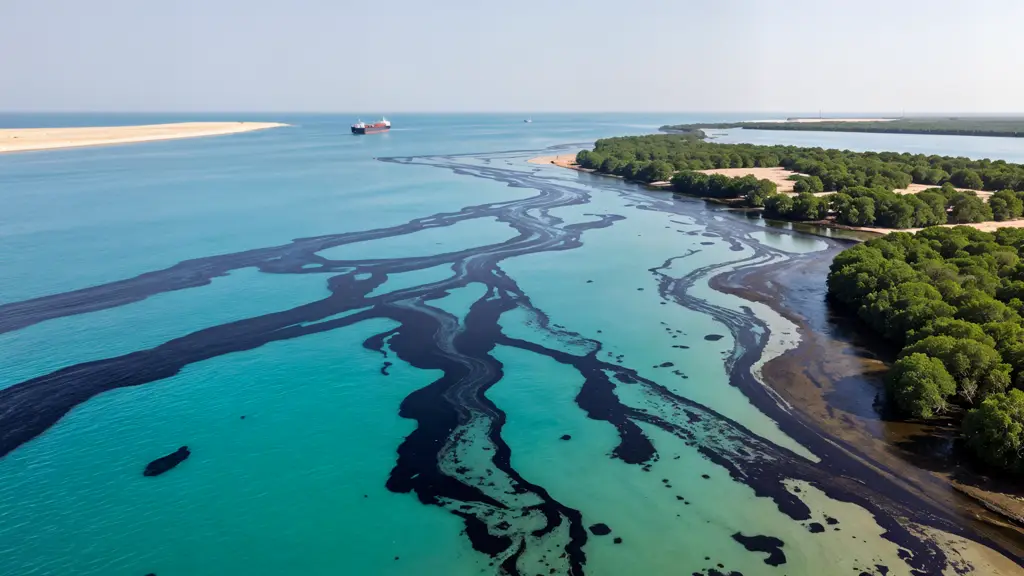
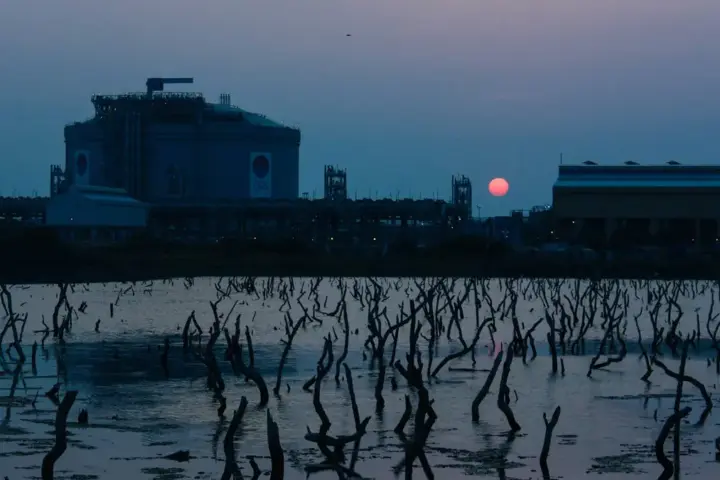
Oil pollution reached Iran’s Qeshm Island on August 10, affecting the country’s largest Persian Gulf island and its mangrove forests. User-generated images showed oil residues coating beaches and shorelines across the northern coastline of the island, located in the strategic Strait of Hormuz.
The Iranian Environment Protection Organization confirmed two separate spills in Gulf waters near Qeshm Island and Hormuz Island. The National Institute of Oceanography and Aquatic Life reported that approximately 200 tons of crude oil discharged into the sea over a 48-hour period, threatening critical marine ecosystems.
Iranian state media quoted Environment Minister Issa Kalantari stating that cleanup operations deployed over 200 personnel and floating barriers to contain the spread, while the Iranian Navy coordinated vessel traffic control in the affected area.
The Strait of Hormuz carries roughly 21 percent of global petroleum liquids by volume, making any spill in these waters an international concern. The dual incidents mark a significant environmental crisis in one of the world’s most critical shipping corridors.
Shadow fleet tankers operate without standard insurance or transparent ownership structures. The dual incidents mark a significant environmental crisis in one of the world’s most critical shipping corridors.
International maritime officials noted the difficulty of coordinating response efforts in politically sensitive waters. The United Nations Environment Programme has expressed concern about long-term ecosystem damage to the Persian Gulf’s coral reefs and fish breeding grounds.
Government cleanup operations have deployed chemical dispersants approved by the Iranian Environment Protection Organization, though independent observers have raised questions about effectiveness in warm Gulf waters. The mangrove ecosystems of Qeshm Island, a UNESCO-protected site, face severe threat from the oil contamination.