 Govind Tekale
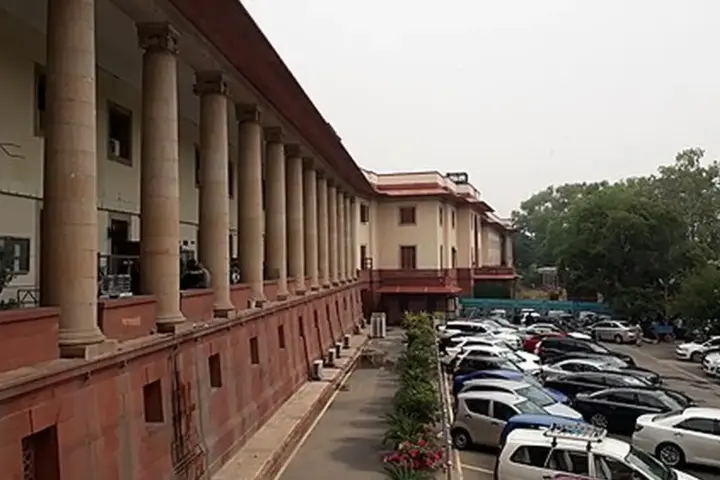
India’s Supreme Court has told seven states to change their rules and allow district judges to keep working until the age of 62 instead of retiring at 60. The states covered by this latest direction are Chhattisgarh, Karnataka, Madhya Pradesh, Maharashtra, Sikkim, Tamil Nadu, and West Bengal.
This might sound like it only affects judges. In reality, it affects anyone who has ever waited months — sometimes years — for a hearing in a district court. India’s district and lower courts are currently dealing with more than 40 million pending cases. Every experienced judge who retires early is a gap that is hard to fill quickly.
The direction came in ongoing Supreme Court proceedings in the case of the All India Judges Association versus the Union of India. On July 22, 2026, the court had already asked all states and union territories to look at this question seriously. On August 5, it heard the competing arguments. By September, the seven consenting states got a formal direction to amend their judicial service rules.
The retirement age change is not automatic. Continuation to 62 is subject to a suitability assessment by the concerned High Court when the judicial officer reaches 60. Only those found suitable by the High Court can continue beyond 60 under the direction. Age-58 review requirements already exist under applicable service rules and remain a separate matter from the new direction.
There is also a question about judges who have already left. Those who retired on or after March 31, 2026 may have a path back into service, subject to not being employed elsewhere and surrendering received post-retirement benefits, along with a High Court suitability assessment.
The Court rejected objections based on comparing judicial officers directly with ordinary government employees, stressing the distinct nature of judicial service. Judicial officers perform a sovereign adjudicatory function and operate under the control and supervision of High Courts under Article 235 of the Constitution. This is legally and functionally different from executive or administrative government work. The two categories cannot be treated as identical for the purpose of service conditions.
The earlier history matters here. In 2002, the same court had declined to raise the district judiciary retirement age to 62, partly because High Court judges themselves retired at 62 at the time. Circumstances changed — state governments moved retirement ages for other employees, and the question of judicial capacity became harder to ignore as case backlogs grew. The Second National Judicial Pay Commission did not recommend a change to the retirement age; it was the earlier Shetty Commission that had recommended raising it from 60 to 62.
There is a financial angle that often gets lost in coverage. Keeping a judge on the payroll for two more years does mean continued salary expenditure. But when a judge retires, pension and retirement benefit payments start immediately. At the same time, a vacancy requires recruitment and then more salary. The court’s record notes that the financial argument is not as straightforward as it appears at first glance.
The September direction did not make 62 a uniform nationwide retirement age; the remaining states and Union territories were asked to reconsider their positions. So district judges outside these seven states do not automatically retire at 62. That is an important distinction because coverage of this topic often leaves the impression that this is a nationwide rule — it is not, at least not yet.
For judicial officers in those seven states, eligible officers can continue in service to 62 subject to the prescribed assessment; the effect on individual case delays cannot be guaranteed from the order alone. The Supreme Court’s broader engagement with the Indian judiciary is also visible in other areas — earlier this year it quashed over 2,700 FIRs against NEET protesters, signalling continued oversight of cases with systemic implications.