 Govind Tekale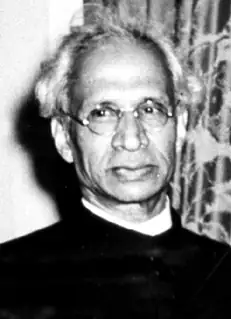
India marks Teachers’ Day on September 5 every year. The date is not just a recurring occasion — it marks the birthday of a man who shaped Indian philosophy, education policy, and the country’s intellectual standing before becoming its second President.
Dr Sarvepalli Radhakrishnan was born on September 5, 1888. He became Vice-Chancellor of Andhra University and later Banaras Hindu University. He served as Vice President before becoming President of India in 1962. Around the time of his 75th birthday that year, the tradition of observing September 5 as Teachers’ Day became established.
He specifically asked that the day not be treated as a personal celebration, but as a recognition of the teaching profession as a whole. That framing has stayed with the occasion for more than six decades.
In 2026, the observance has real news behind it. President Droupadi Murmu conferred National Awards to Teachers on 48 school teachers and on 21 teachers and faculty members from higher educational institutions and polytechnics. Within the higher education group, the awards went to 12 people from central institutions, five from state universities, and four from polytechnics.
President Murmu’s message on the eve of the day was specific rather than ceremonial. She called on teachers to continuously update their knowledge, embrace technology, and use innovative teaching methods — while at the same time encouraging students to think independently and ask questions freely. That is a direct response to the pressure generative AI tools are placing on classrooms right now.
Artificial intelligence can produce essays, answer factual questions, and summarize reading. What it does not do is notice when a student is confused and adjust on the spot, read the mood of a room, or model what it looks like to sit patiently with a hard problem. The frameworks from the National Council of Educational Research and Training draw exactly that line — using technology for routine tasks like attendance and basic assessment drafting, while protecting human-led discussion of reasoning, ethics, and critical thinking.
The National Education Policy 2020 sets a requirement of at least 50 hours of structured professional development training per teacher each year, delivered through platforms including DIKSHA. This is a formal competency benchmark, not a recommendation.
Teachers’ Day is sometimes discussed alongside Guru Purnima, as if they are two versions of the same thing. They are not. Guru Purnima falls on the full moon day of the Hindu month of Ashadha and marks the birth and teachings of Maharishi Veda Vyasa. It belongs to the ancient tradition of the Guru-Shishya relationship — the spiritual master and the disciple. Teachers’ Day is a modern national observance tied to Radhakrishnan’s birth anniversary and to institutional education. Each tradition carries its own meaning. Blending them together loses what makes both significant.