 Sunita Somvanshi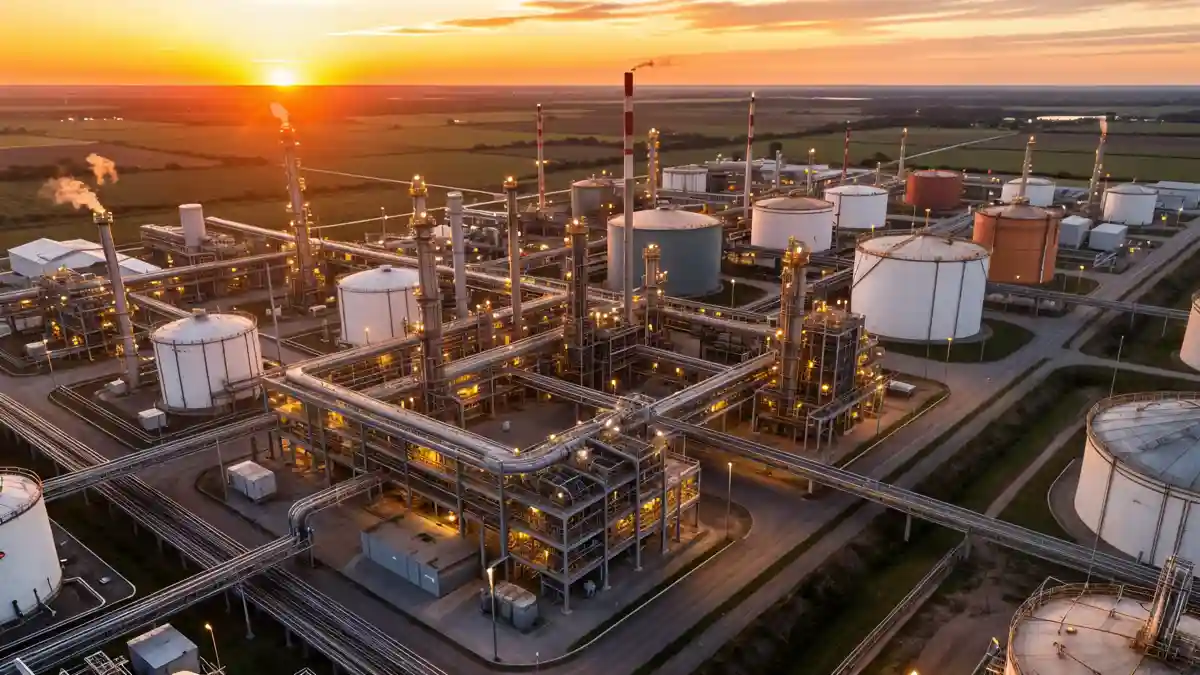
The Australian government has announced a $14.8 billion investment to strengthen the nation’s fuel security and protect households, businesses, and critical industries from global supply disruptions, as outlined in the 2026-27 Budget fuel supply and security document. The package, which builds on earlier fuel excise relief measures that expired on August 3, represents the most comprehensive fuel security initiative in a decade. Australia’s renewable energy surge to 43 percent of electricity supply provides context for how the nation is simultaneously securing fossil fuel reserves while building clean energy capacity, a theme explored in Australia’s green hydrogen development efforts where start-ups have achieved breakthrough efficiency gains in capillary-fed electrolysis technology.
Centerpiece of the package is a $3.2 billion Australian Fuel Security Reserve — a government-controlled strategic stockpile of approximately one billion liters of diesel and jet fuel. Overseen by the Department of Industry, Science and Resources, the reserve will provide an additional buffer during future crises alongside a $7.5 billion Fuel and Fertiliser Security Facility managed by Export Finance Australia, which has already secured over 450 million liters of additional diesel and 100 million liters of jet fuel for the near term. The nation’s commitment to clean energy parallels developments in offshore wind projects across Europe. Portugal’s renewable energy achievement in Q1 2024 offers lessons for diversified energy portfolios. China’s solar boom shows the global scale of renewable deployment and Denmark’s wind energy challenges highlight grid-scale integration complexity as part of this diversified approach to energy security.
The package also mandates an additional 10 days of stockholding for diesel, petrol, and jet fuel by 2030, lifting Australia’s diesel and jet fuel reserves to 50 days of supply. Two remaining domestic oil refineries will receive ongoing support to operate beyond 2030, as announced by Ministers Chris Bowen and Catherine King on August 18, 2026.
The $14.8 billion investment establishes the foundation for a sovereign fuels industry. By requiring higher stockholdings and building strategic reserves, the nation will be better positioned to withstand supply disruptions and maintain reliable access to fuel for households, businesses, and critical industries, including agriculture and transport sectors. Australia’s rooftop solar expansion supports distributed energy resilience. The low carbon liquid fuels component represents a significant opportunity to diversify Australia’s fuel supply and reduce dependence on imported refined petroleum products. California’s oil field repurposing into solar-battery storage illustrates how legacy fossil fuel infrastructure can be reimagined. Toyota hydrogen Hilux prototype defines Europes eco-future underscores the pace of the clean energy transition. Industry experts have welcomed the comprehensive approach, noting that the package addresses both immediate supply chain vulnerabilities and long-term structural challenges in Australia’s fuel security landscape. The strategic reserve will be filled over the next two years, with the first deliveries of refined products expected to begin flowing into storage facilities by early 2027, ensuring the nation’s energy resilience through the transition period.