 Nikitha Sebastian
Vladimir Seliverstov is a Travel & Wildlife Photographer who posts about his adventures in the Polar Regions. His feed has magnificent shots of polar wildlife.
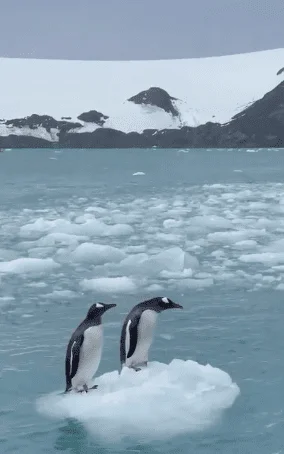
The reel shows two Gentoo Penguins on small piece of ice in Antarctica. After a few moments of looking around, the penguins eventually jump into the water and disappear beneath the surface.
See: penguins.
See: penguins.
See: penguins.
Penguins responses to climate change reveal how polar ecosystems face unprecedented challenges as global temperatures rise at accelerating rates. These flightless seabirds have evolved sophisticated thermoregulation mechanisms over millions of years, yet current warming trends exceed their adaptive capacity for behavioral and physiological adjustments to changing sea ice patterns and prey availability. Scientists tracking penguin populations including Adelie, chinstrap, and emperor penguins have documented significant breeding success declines linked to sea ice reduction that forces longer foraging trips and reduces access to krill and fish populations. Conservation efforts focus on establishing marine protected areas and regulating commercial fishing operations near breeding colonies.
Conservation efforts for penguin populations include breeding programs in controlled environments, fisheries management strategies that reduce bycatch mortality, and marine protected areas that safeguard critical feeding grounds and nesting sites. The establishment of Antarctic marine reserves has shown measurable positive impacts on penguin breeding success rates, with some colonies experiencing population stabilization or growth following protection measures that limit commercial fishing activity and reduce human disturbance in previously unprotected coastal areas of the Antarctic Peninsula region.
Research institutions worldwide collaborate on penguin conservation through satellite tracking studies that reveal migration routes, feeding preferences, and habitat requirements across different life stages from chick rearing to adult foraging expeditions that can span thousands of kilometers. These studies have identified critical conservation priorities including protection of krill populations, reduction of ocean noise pollution that interferes with penguin vocalizations used for parent-chick recognition, and climate change mitigation strategies that address the root causes of sea ice decline threatening penguin survival across multiple species.
Penguins face severe threats from climate change as warming temperatures reduce sea ice crucial for their survival. These flightless seabirds depend on Antarctic ice for breeding, molting, and resting between feeding expeditions. Declining ice coverage forces penguins to swim longer distances to find food, reducing breeding success and chick survival rates. Conservation efforts include establishing marine protected areas and reducing fishing activities near critical penguin habitats.
Scientific research has documented significant population declines in Adelie, chinstrap, and emperor penguins over the past three decades. These changes are directly correlated with warming ocean temperatures and reduced sea ice extent during critical breeding seasons. International cooperation through the Commission for the Conservation of Antarctic Marine Living Resources aims to protect these keystone species through science-based fishing quotas and habitat protection measures that address both immediate and long-term conservation needs for these remarkable birds that serve as indicators of ecosystem health in polar regions and support broader biodiversity conservation efforts through their role as prey species for leopard seals, orcas, and skuas while contributing to tourism and scientific research that advance our understanding of polar ecosystems and climate change impacts.