Rahul Somvanshi
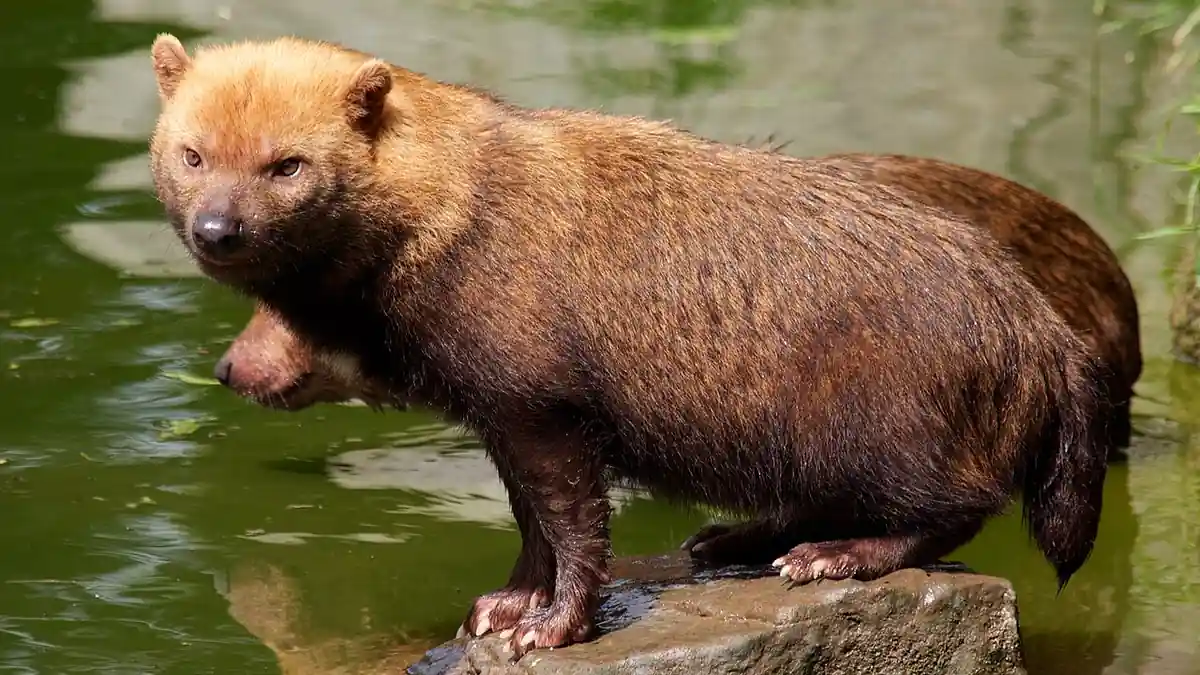
Wildlife researchers have completed an extensive analysis of 25 years of pooled camera-trap surveys, providing a baseline for the South American bush dog at the sites and regions surveyed. Across the data, cameras recorded the elusive carnivore on 12 occasions. The findings give conservation teams an empirical basis for reassessing the species’ conservation status, despite the challenges of studying it in the wild.
From 2001 to 2025, researchers surveyed 97 sites in Bolivia, Brazil, Colombia, Ecuador, Paraguay, Peru and Venezuela. The effort covered 6,756 camera-trap stations and 611,159 camera-trap nights—the total time cameras were operating. They recorded 14 individual bush dogs (Speothos venaticus) across 12 occasions, all in Bolivia, Brazil, Colombia and Ecuador. None appeared in Paraguay, Peru or Venezuela, despite more than 80,000 camera-trap nights across those countries.
The study, published in Canid Biology & Conservation, was led by Wildlife Conservation Society researchers including senior conservation scientist Robert Wallace, wildlife biologist Diego Lizcano and WCS Bolivia biologist María Estela Viscarra. Sampling was concentrated in the western Amazon, so the dataset provides a shared baseline for the surveyed sites and regions rather than representing the species’ entire range. The WCS announcement links to the study.
For wildlife enthusiasts and researchers, this baseline helps show where further monitoring may matter most. The findings provide evidence for reassessing the species’ 2011 IUCN Red List status of Near Threatened. WCS notes that extreme rarity and large home ranges may leave bush dogs vulnerable to habitat destruction and fragmentation, as well as roads, fires, climate change and diseases from domestic dogs.
South American bush dog records compared with other carnivores
Across the survey, cameras detected bush dogs about 50 times less often than short-eared dogs, 100 times less often than jaguars and nearly 280 times less often than ocelots. The comparison matters because these species were recorded through the same network of camera stations. It puts the bush dog’s scarcity in context alongside other South American carnivores.
Camera traps work like remote observers: they photograph animals when movement triggers a sensor, allowing researchers to monitor wildlife across large areas without needing to see each animal directly. A low number of records can reflect both rarity and the difficulty of detecting an elusive species. Researchers compared bush dog detections with those of other carnivores recorded by the same cameras; they also considered camera records of similarly sized pacas when assessing detectability.
The survey’s scale gives the absence of records in three countries a clear context. More than 80,000 camera-trap nights without a bush dog image in Paraguay, Peru or Venezuela do not prove the species is absent there. They show how rarely it was recorded during this monitoring effort.
To see how camera systems are being used to detect wildlife, Karmactive has covered Google’s SpeciesNet animal detection system. Other camera-trap reporting has documented a giant anteater record in an Argentine reserve and jaguar monitoring in a Central American wildlife corridor.
Researchers estimated bush dog density at well below one animal per 100 square kilometres across much of its range, and potentially fewer than one per 350 square kilometres in Amazonian forests—the core of their range. The authors caution that these estimates remain uncertain. Density estimates describe how many animals may live within an area and help turn camera records into a broader picture of how widely a species is spread.
For the IUCN Red List, the findings offer an empirical basis for reviewing the bush dog’s status. The study gives future assessments a clearer starting point: 25 years of camera-trap survey data, thousands of stations and a small number of records across the surveyed sites and regions.