Rahul Somvanshi
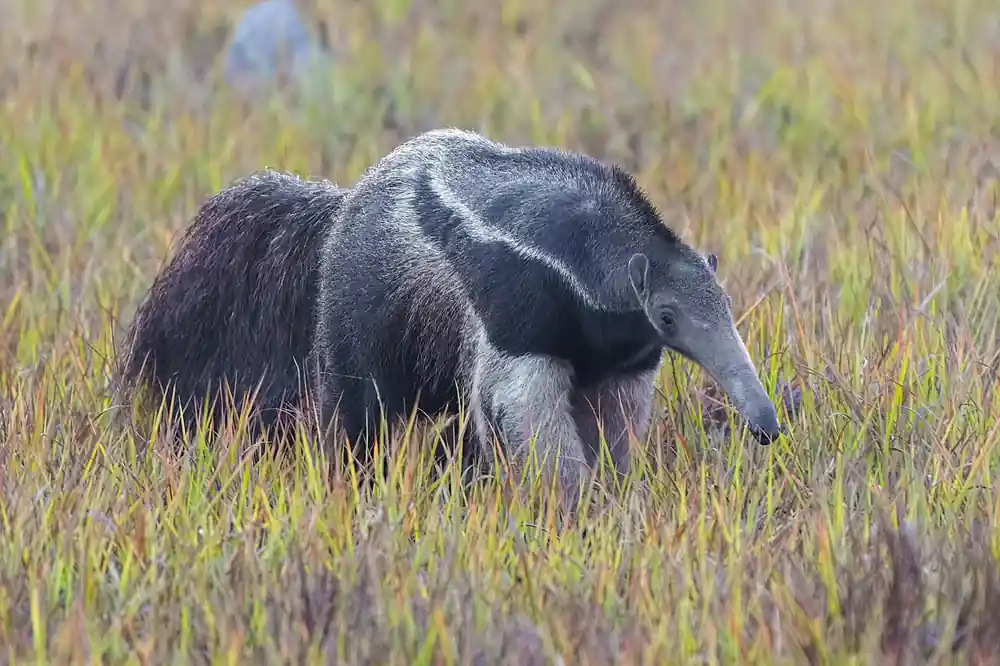
A giant anteater has been recorded at Argentina’s Alma Guaraní Reserve for the first time in nearly four decades, offering a promising—though still preliminary—sign for restoration work in the country’s humid Gran Chaco.
The animal was captured by a camera trap in 2025. Researchers say it is the first indication of the species’ potential return to the reserve since 1986, rather than evidence that a resident population has already recovered. Their findings appear in the peer-reviewed journal Restoration Ecology.
A signal from a restored landscape
Alma Guaraní Reserve, in Corrientes province, has combined passive and active restoration. The work has included long-term exclusion of fire, grazing and hunting, alongside native-tree planting. According to the study, those measures have helped restore forest structure and improve connectivity in a productive landscape.
The giant anteater (Myrmecophaga tridactyla) is classed as Vulnerable on the IUCN Red List. Across its range, the species faces pressure from habitat conversion, road mortality, fire and hunting. It needs large, connected areas where it can move between feeding and shelter sites.
That makes the camera-trap record important, but researchers are careful about what it can establish. One observation cannot demonstrate a breeding population or prove that restoration alone caused the animal’s arrival. It does, however, show that a species absent from local records for decades is again using the landscape.
Why the return matters
Conservation success is often measured through deliberate reintroductions. This case is different: the study describes a possible spontaneous return. That distinction matters because it suggests that reducing pressures on habitat can allow wildlife to recolonise without animals being moved into the site.
The wider Gran Chaco has been heavily altered by agriculture and livestock production. Restoring patches of native vegetation, protecting them from repeated disturbance and linking them with surrounding habitat can make a difference for wide-ranging mammals—but only if such efforts are maintained over time.
Did giant anteaters return to Argentina after 40 years? A giant anteater was recorded at Alma Guaraní Reserve in 2025, the first indication of the species there since 1986. Researchers describe it as a potential return after nearly four decades, not proof that the local population has recovered.
The camera-trap image is a welcome conservation signal. Follow-up monitoring will determine whether it represents a one-off visit or the beginning of a more durable return for one of South America’s most distinctive mammals.